Shopify Development for Luxury and Premium Brands: Building Digital Storefronts That Match the Product
Why Luxury Brands Struggle With Shopify
Luxury and premium brands have a perception problem with Shopify. They view it as a template platform for mid-market ecommerce, not a foundation for premium digital experiences. This perception leads to two outcomes, both bad. Either the brand avoids Shopify entirely and overspends on a custom-built platform that takes 12 months to launch. Or the brand uses Shopify but allocates the storefront to a default theme and a junior developer, producing a digital experience that feels cheaper than the product it sells.
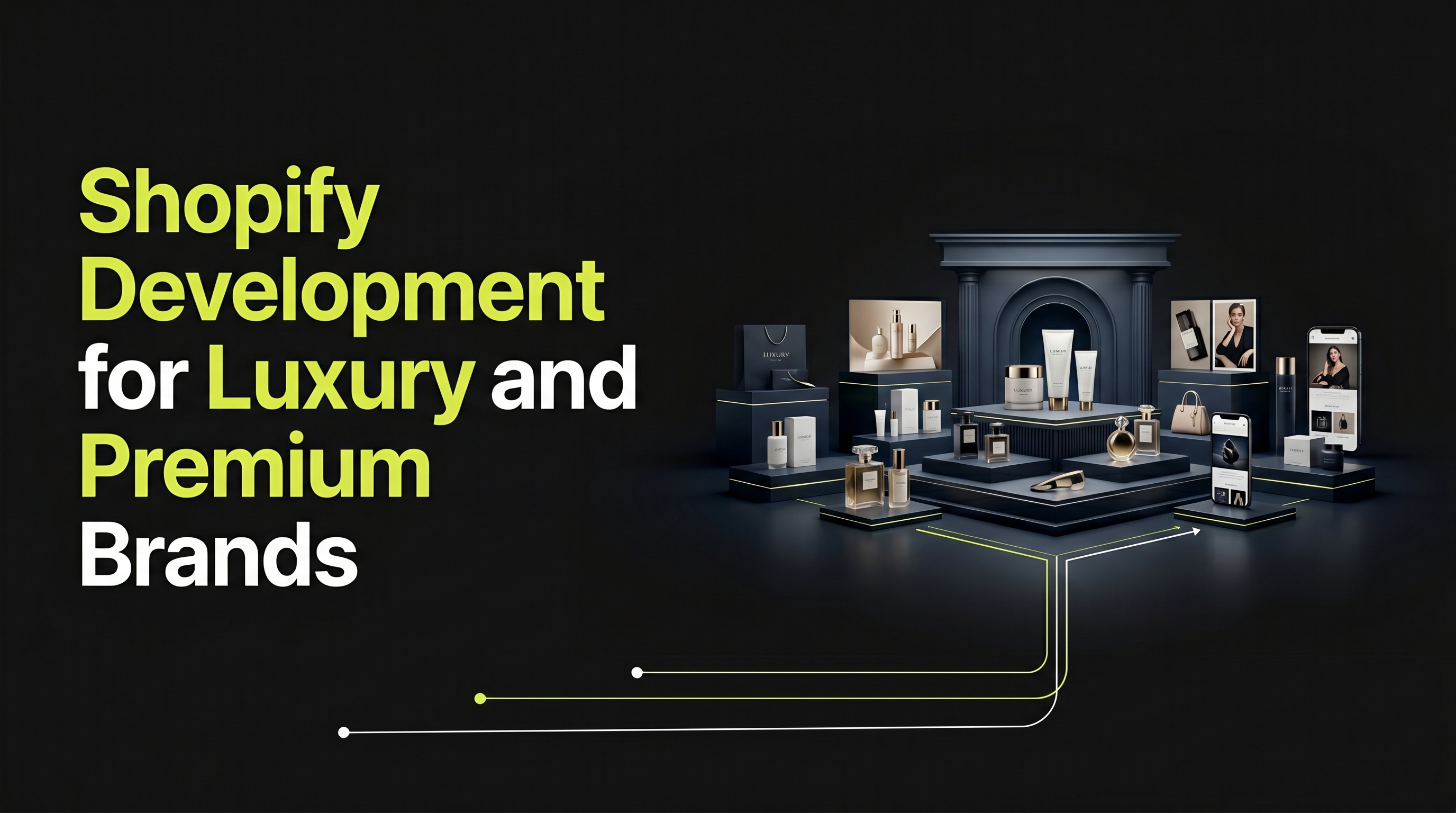
The reality is that Shopify Plus and Shopify's headless commerce capabilities can deliver genuinely premium digital experiences. But only with intentional design and development that treats the storefront as a brand asset, not a technology commodity.
The stakes for premium brands are high. A website that feels cheaper than the product actively damages brand perception and depresses willingness to pay. A customer who holds a beautifully crafted €80 product in a store will pay full price without hesitation. The same customer visiting a generic Shopify template that looks identical to a €15 commodity brand's store will question whether the premium is justified. The digital storefront must match the product.
For luxury and premium brands selling across European markets, the complexity deepens. DACH, Benelux, and France each have distinct expectations around multilingual UX, EU-specific payment methods, cross-border tax logic, and premium delivery standards. A luxury buyer in Munich expects a different checkout experience than a luxury buyer in Amsterdam, and both expect more than a standard Shopify template delivers.
Brand-First Theme Architecture
Off-the-shelf Shopify themes cannot deliver a luxury experience. They are designed for conversion speed and template flexibility, not brand immersion. Every element, from the product grid spacing to the button styles to the typography, is optimized for the broadest possible use case. For a premium brand, "broadest possible" means generic.
Custom theme development is the right path for most luxury Shopify stores. This means building the theme's visual language directly from the brand's packaging and physical retail identity. The colour system derives from the packaging palette. The typography matches or complements the typefaces used on pack. The photography standards bridge shelf and screen. The result is a Shopify storefront that feels like a natural extension of the brand, not a separate digital channel.
For brands with budgets that do not support full custom development, premium theme customization is the middle path. Starting with a well-architected premium theme (Dawn, Prestige, or Broadcast) and customizing it with brand-specific CSS, custom sections, and photography direction can achieve 70 to 80 percent of a custom theme's brand impact at 40 to 50 percent of the cost.
Performance constraints matter for both approaches. Custom animations, video backgrounds, and high-resolution imagery must be balanced against Core Web Vitals thresholds. A luxury storefront that takes 5 seconds to load is not a premium experience. It is a frustrating one. Image optimization (WebP/AVIF delivery, lazy loading, responsive sizing), minimal JavaScript payload, and efficient font loading are non-negotiable even in a visually rich premium context.
Premium Product Page Experience
The product page is where luxury brands must differentiate most aggressively from commodity ecommerce. Standard Shopify product pages are designed for information efficiency: image, title, price, variants, add to cart. Luxury buyers need more. They need immersion.
Image-led storytelling is the foundation. Full-bleed photography with scroll-triggered transitions, 360-degree product views for handcrafted or artisanal products, and detail close-ups that show materials, texture, and craftsmanship. The image gallery should feel like a curated editorial, not a product catalogue.
Materials, craftsmanship, and provenance content is what luxury buyers read before they buy. Where was this made? By whom? What materials were used? What makes this product worth the premium? Standard product descriptions do not answer these questions. Premium product pages must include dedicated content blocks for origin story, materials detail, and artisan profile.
Pricing presentation for premium products requires restraint. Countdown timers, urgency banners, "only 3 left" scarcity tactics, and aggressive discount displays actively undermine luxury positioning. The price should be displayed clearly, confidently, and without apology. For high-ticket items, Klarna or instalment payment options can be presented as a convenience, not as a financial necessity.
Gift packaging, personalization, and bespoke options are premium add-on services that luxury buyers expect. The UX for these must be elegant: a gift wrapping toggle with preview imagery, a personalization field with character count and preview, a bespoke options selector that does not feel like a complex form.
Checkout and Post-Purchase for Premium Ecommerce
Standard Shopify checkout undermines luxury. The default checkout looks identical whether you are buying a €5 phone case or a €500 handcrafted product. For premium brands on Shopify Plus, checkout customization is essential.
Branded checkout with the brand's colour system, typography, and logo creates continuity from the storefront to the payment step. Custom scripts can add order-level gift messaging, delivery date selection, and premium packaging options directly in the checkout flow. Post-purchase upsell flows can present complementary products or care accessories without the aggressive urgency tactics that commodity brands use.
EU payment method integration for premium buyers requires market-specific attention. Klarna instalment plans for high-ticket items in Germany and Austria. iDEAL for Dutch buyers. Bancontact for Belgian buyers. Carte Bancaire for French buyers. These must appear prominently, not buried behind "Other payment methods." For luxury ecommerce, the payment step must feel as premium as the product page.
Premium shipping and delivery UX goes beyond "Standard" and "Express" options. White-glove delivery for fragile or high-value items. Gift wrapping selection with premium packaging photography. Delivery date selection for gift purchases. Branded tracking pages that extend the brand experience through the delivery journey. Post-purchase email sequences with premium unboxing content, care instructions, and loyalty programme enrollment.
Multilingual and Multi-Market Shopify for EU
Shopify Markets is the platform's built-in internationalization tool, offering multi-currency, multi-language, and duties/tax calculation from a single store. For most premium brands targeting 2 to 3 EU markets, Shopify Markets combined with Shopify Translate & Adapt provides a workable foundation.
However, locale-specific product descriptions must be localized, not machine-translated. A luxury product description written for an English audience and run through automated translation into German will read as exactly that: a translated English description. German luxury buyers expect native-quality language that reflects the product's premium positioning in their cultural context.
Currency, tax, and duties handling for cross-border EU luxury ecommerce requires configuration. Prices displayed inclusive of VAT (standard in most EU markets), clear duties indication for shipments to Switzerland (outside EU customs union), and transparent total cost display before checkout completion. Surprise costs at the final step are the fastest way to lose a premium buyer.
The SEO implications of Shopify's internationalization approach matter. Shopify Markets uses subfolders by default, which is the strongest structure for consolidated domain authority. Hreflang tags are generated automatically but must be validated for accuracy, especially for locale variants with similar content.
SEO and AI Search Visibility for Premium Shopify Stores
Product schema for luxury brands should include attributes beyond the standard: materials ("handcrafted sterling silver"), craftsmanship method ("hand-engraved"), origin ("made in Tuscany"), and artisan details where applicable. These attributes give AI models richer signals for recommendation queries. When someone asks ChatGPT "recommend a luxury handcrafted brand in Europe," the AI model extracts these specific attributes from structured data to construct its answer.
Understanding how AI models choose sources is critical for luxury brands. AI-generated answers for premium product queries weight brand entity signals, editorial mentions, and curated review content more heavily than raw review volume. A luxury brand with 30 detailed, narrative reviews outperforms a commodity brand with 3,000 star ratings in AI recommendation responses.
Technical SEO foundations, E-E-A-T signals, and strong entity profiles across AEO and GEO dimensions are what push a premium Shopify store from "indexed" to "recommended." The shift from optimizing for clicks to optimizing for AI citations is especially impactful for luxury brands where each conversion carries high margin.
Luxury brands that rely on Instagram and paid media alone are invisible to AI recommendation engines entirely. The brands that appear in AI responses are the ones with structured data, editorial content, and third-party validation on their own domain.
What This Looks Like in Practice
We built a premium Shopify storefront for a Singapore-based luxury D2C brand entering the European market. The brand sold handcrafted products in the €30 to €80 price range. Their existing website was a default Shopify template that communicated none of the brand's premium character. The product photography was inconsistent, the checkout was generic, and the mobile experience was a compressed desktop layout.
Our development focused on four interventions. First, a custom theme architecture derived from the brand's packaging design language: colour system, typography, and photography direction all bridging physical product to digital storefront. Second, immersive product pages with full-bleed imagery, scroll-driven narrative, and materials/provenance content blocks that standard Shopify templates do not include. Third, mobile-first checkout optimization with EU payment method integration and premium shipping options. Fourth, complete product schema with luxury-specific attributes for AI search visibility.
The results: mobile engagement improved significantly. Customer trust metrics (measured through post-purchase surveys) increased. The brand-to-product experience became cohesive across physical packaging and digital storefront. The storefront now serves as a genuine brand asset, not just a transaction endpoint.
In a separate engagement, we built a Shopify store for a premium European wellness brand with a complex product matrix. Scalable product architecture with faceted navigation, mobile-first D2C UX design, and complete product schema for every SKU.
Shopify vs Webflow for Premium Brands
The platform choice depends on the brand's primary need. Shopify is the right choice for brands with inventory management requirements, subscription models, complex product variants, and high-volume transactional needs. Webflow is the right choice for brands where editorial content and brand storytelling are primary, with simpler ecommerce needs.
The hybrid approach works for brands that need both: Webflow for the brand experience, content hub, and SEO-optimized editorial pages, connected to Shopify for transactional ecommerce via headless architecture or buy-button integration. This gives the brand the design freedom of Webflow and the commerce infrastructure of Shopify.
Ultimately, the platform choice matters less than the design and development quality. A beautifully designed Shopify store outperforms a poorly designed custom platform every time. The investment should go into design, UX, and brand translation, not into platform licensing and infrastructure.
How We Approach Luxury Shopify Development
Phase 1: brand and ecommerce audit (2 weeks). We audit the existing brand identity, current digital presence, competitive landscape, and target EU market requirements.
Phase 2: UX wireframing and interaction design (2-3 weeks). We design the product page experience, checkout flow, navigation architecture, and mobile interaction patterns specific to the premium positioning.
Phase 3: custom Shopify theme development (4-8 weeks). We build the storefront with brand-derived design system, Core Web Vitals optimization, product schema markup, and analytics tracking for every conversion touchpoint.
Phase 4: EU localization, payment integration, and compliance (2-3 weeks). We configure Shopify Markets for target EU locales, integrate market-specific payment methods, set up tax and duties logic, and conduct a compliance review.
Phase 5: post-launch CRO, product SEO, and AI visibility monitoring (ongoing). We track conversion rate, average order value, cart abandonment, product page engagement, Google Business Profile performance, and AI citation frequency.
Typical investment: €6,000 to €15,000 for a premium Shopify storefront targeting 2+ EU markets.
Working With Us
UnFoldMart specializes in Shopify development, web design, SEO, AEO, and GEO for luxury and premium brands across European markets. We operate from Frankfurt, Germany and Gurugram, India, with deep expertise in DACH and Benelux. Our work is backed by verified client results on Clutch.
We do not build template stores for premium brands. We build Shopify experiences that match the product.
For related reading: SEO for Food & Beverage Brands, Web Design for Consumer Products Brands, UX Design for D2C & Scaling Brands, and International SEO for DACH & European Markets.


.jpeg)
FAQs
Got Questions? We’ve Got Answers – Clear, Simple, and Straight to the Point
Luxury brands should look for a Shopify development agency that understands both ecommerce performance and premium brand positioning. Beyond technical expertise, the agency should be capable of translating packaging, visual identity, storytelling, and customer experience into a cohesive digital storefront. At UnFoldMart, we help luxury and premium brands create Shopify experiences that balance brand storytelling, conversion optimization, international expansion, and AI search visibility, ensuring the website supports both growth and long-term brand value.
Localization is essential for luxury brands targeting European markets. Premium customers expect native-language content, market-specific payment methods, localized pricing, and culturally relevant messaging. Simply translating content is often not enough. Luxury buyers in Germany, France, the Netherlands, and other European countries have different purchasing expectations and shopping behaviors. Proper localization improves customer trust, increases conversion rates, and helps brands create a more premium and personalized shopping experience across multiple markets.
The right platform depends on the brand's business model and growth goals. Shopify is often the better choice for brands that require advanced ecommerce functionality, inventory management, subscriptions, and multi-market selling. Webflow excels when brand storytelling, editorial content, and design flexibility are the primary priorities. Many premium brands adopt a hybrid approach, using Webflow for content and brand experiences while leveraging Shopify for ecommerce operations. This allows businesses to combine powerful commerce infrastructure with exceptional design flexibility.
A luxury Shopify store focuses on brand immersion rather than simple product presentation. Premium brands typically invest in custom design systems, editorial-style product pages, high-quality photography, storytelling content, and refined user experiences. Features such as craftsmanship narratives, material details, provenance information, personalization options, and premium packaging experiences help justify higher price points. The goal is to create a digital experience that reflects the same quality and exclusivity customers expect from the physical product.
Yes, Shopify can be an excellent platform for luxury and premium brands when implemented correctly. While many brands associate Shopify with standard ecommerce stores, Shopify Plus and headless commerce capabilities can support highly customized and premium digital experiences. The key difference lies in design, development, and brand execution. A custom Shopify storefront that reflects a brand's identity, craftsmanship, and positioning can deliver a luxury experience, whereas an off-the-shelf template often fails to communicate premium value effectively.

Want to Turn Your Brand Into a Scalable Growth Engine?
We help modern businesses unify branding, websites, SEO, and paid media into one performance-driven system designed to scale.