Top Packaging Design Trends in India for 2026
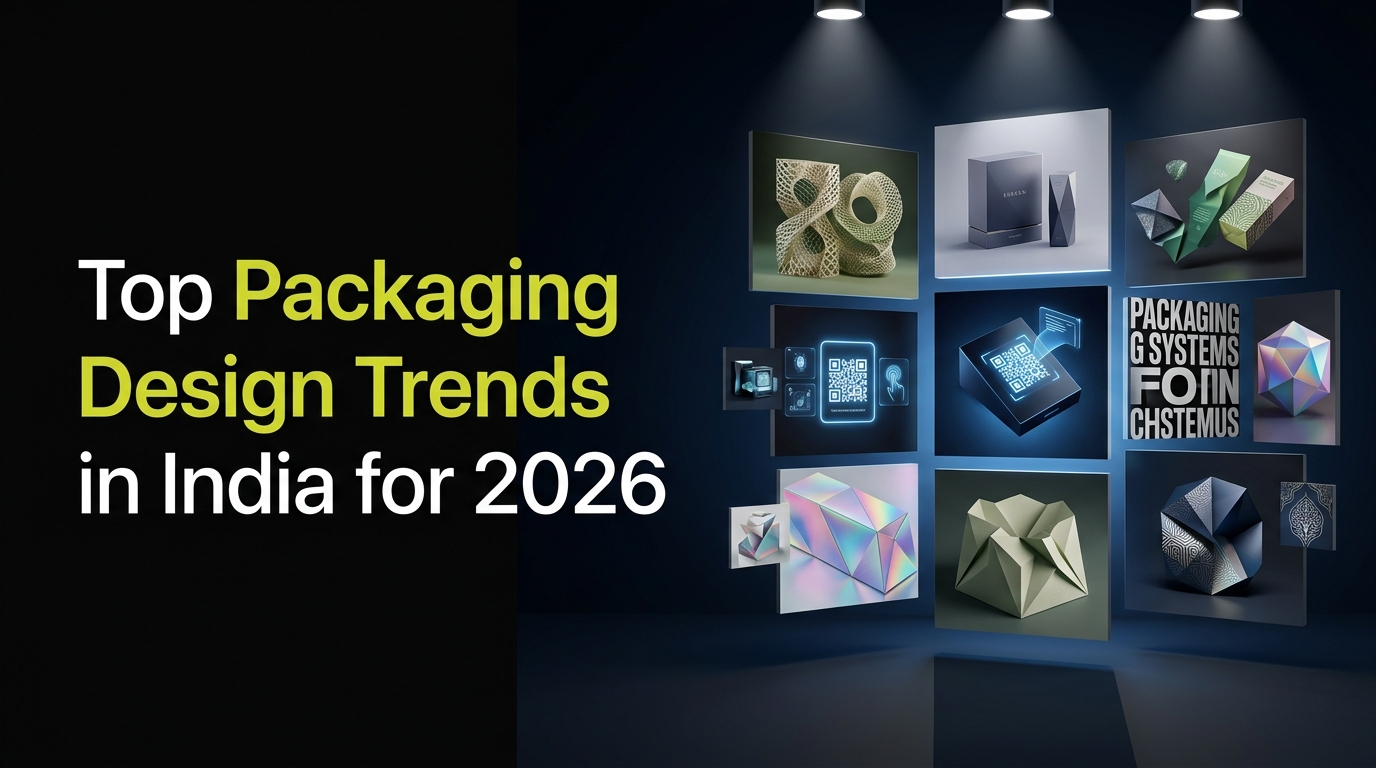
Packaging in India is changing faster than at any point in the last decade. Tighter sustainability rules, the rise of quick commerce, more demanding shoppers, and design tools that move at a different speed have all reset what good packaging looks like. For brands, the trends are not just aesthetic preferences. They shape whether a product gets noticed on a crowded shelf, whether it survives a longer e-commerce journey, and whether it earns the price on the label.
This guide breaks down the packaging design trends shaping India in 2026, what each one actually means in practice, which categories they fit, and how to decide which are worth adopting for your brand rather than chasing every fad.
Quick Answer: Packaging Design Trends in India for 2026
Key Takeaways
- Sustainability has moved from a differentiator to a baseline expectation, driven by both consumer demand and tightening regulation.
- Minimalism and bold typography sit at opposite ends of the same idea: cutting through shelf noise with a single clear message.
- E-commerce and quick commerce have made functional, durable, parcel-ready packaging a commercial necessity, not a nice-to-have.
- Heritage-inspired and culturally rooted design is helping Indian brands stand apart in both home and export markets.
- AI-assisted design is the newest 2026 shift, speeding up iteration and personalisation without replacing strategic judgment.
Packaging Trends at a Glance
The Packaging Design Trends Shaping India in 2026
1. Sustainable and circular packaging
Sustainability is no longer the headline a brand earns credit for; it is increasingly the baseline a brand is judged against. In 2026, the shift is moving past simply swapping plastic for paper and toward circular thinking: materials that are recyclable in practice, not just in theory, mono-material structures that are easier to process, refill and reuse formats, and honest labelling that tells shoppers what to do with the pack.
Regulation is part of the pressure. Extended Producer Responsibility obligations and plastic-reduction rules are pushing brands to design with end-of-life in mind from the start. The brands getting this right treat sustainability as a design constraint that sharpens decisions rather than a sticker added at the end. For a deeper look at where this is heading, our guide to sustainable packaging trends in 2026 goes further.
2. Minimalist design systems
Minimalism continues to gain ground in India, especially in premium food, wellness, and personal care. The appeal is simple: on a shelf packed with loud, busy designs, a calm and confident pack reads as higher quality. Generous white space, a restrained palette, a single clear focal point, and disciplined typography all signal that a brand is sure of itself.
The discipline is harder than it looks. Minimalism is not about removing things until a pack looks empty; it is about deciding which one or two messages matter most and making them impossible to miss. Done well, it also travels better across formats and markets, which matters for brands with export ambitions.
3. Bold and expressive typography
At the other end of the spectrum, bold typography is having a strong moment, particularly for brands targeting younger consumers. Oversized, confident lettering and custom or hand-drawn type turn the pack itself into the brand's voice. In beverages, snacks, and lifestyle products, type-led packaging can do the work that a logo alone cannot.
Minimalism and bold type are not opposites so much as two routes to the same goal: clarity and instant recognition in a fraction of a second. The choice depends on the category and the audience, not on which trend is louder.
4. Cultural and heritage-inspired design
Indian brands are increasingly drawing on regional craft, traditional motifs, and local storytelling, reinterpreted in a contemporary way rather than copied literally. This resonates with domestic shoppers who value authenticity, and it gives export brands a genuine point of difference in crowded international categories where generic minimalism is everywhere.
The risk is surface-level decoration. The strongest heritage-led work connects the visual language to a real story about origin, ingredients, or craft, so the design feels earned rather than borrowed.
5. Smart and connected packaging
QR codes became normal during the last few years, and in 2026 brands are using them with more intent: authentication for premium and regulated products, reorder and subscription prompts, provenance and sustainability information, and richer brand content. Augmented reality and NFC remain more selective, reserved for categories where the added cost earns its place.
The win here is turning a one-way pack into a two-way channel. A scan can verify a product, tell its story, and bring a customer back, all from an asset the brand was already paying to produce.
6. Premium and tactile finishes
As urban incomes rise, more categories are borrowing cues from luxury. Foil stamping, embossing and debossing, soft-touch and textured surfaces, and rigid or structural packaging all raise the perceived value of a product and make it feel worth gifting. This is spreading well beyond traditional premium segments into everyday food, wellness, and personal care.
The judgment call is restraint. Tactile finishes work when they reinforce a genuine quality story; piled on without reason, they read as costume rather than substance. If you are weighing the investment, our take on why premium packaging is worth the cost breaks down the maths.
7. Functional, e-commerce-first packaging
The growth of D2C, subscriptions, and quick commerce has made function a front-line design concern. Packaging now has to survive a longer and rougher journey, protect the product, resist tampering, and still deliver an opening experience worth remembering. Resealable closures, easy-open features, right-sized structures that cut waste and shipping cost, and designs that look as good in a delivery photo as on a shelf are all in demand.
For quick commerce in particular, packaging has to read instantly on a small phone screen and survive fast, high-volume handling. Brands that design for the parcel as carefully as the shelf turn every delivery into a reason to reorder.
8. AI-assisted design
The newest shift in 2026 is how packaging gets made. AI tools are accelerating early concept exploration, generating variations across a range, supporting localisation for different languages and markets, and helping brands personalise packaging at a scale that was previously impractical. For multi-SKU portfolios and brands expanding across regions, this compresses timelines significantly.
What AI does not replace is strategy. The technology speeds up execution, but the decisions about positioning, what a pack should say, and which trend actually fits the brand still rest on human judgment. The brands that benefit most use AI to iterate faster on a clear strategy, not as a substitute for having one.
What These Trends Mean for DACH and Export Brands
For Indian brands eyeing Europe, and for European brands sourcing design from India, these trends do not transfer one to one. The DACH region in particular sets a higher bar on several fronts. Sustainability expectations run ahead of many home markets, EU labelling and materials rules are strict, and shoppers tend to reward restraint and clarity over visual noise.
In practice this means sustainability and honest, compliant labelling are non-negotiable rather than optional, minimalist and clearly structured design tends to land better than busy layouts, and heritage-led storytelling can be a strength when it is authentic rather than decorative. A pack that performs in India will not automatically perform in Germany, the Netherlands, or Switzerland, which is why cross-market design experience matters when expansion is on the roadmap.
How to Apply These Trends Without Chasing Fads
Trends are inputs, not instructions. The brands that get packaging right in 2026 will not adopt all eight; they will pick the few that fit their category, audience, and commercial goals, and execute them well.
A simple filter helps. Start with what the shopper in your category actually responds to, not what looks current in a design awards feed. Check that any trend you adopt can be produced affordably and at the scale you need. Make sure it strengthens, rather than dilutes, what your brand already stands for. And weigh whether it will still feel right in two or three years, since packaging is not cheap to redo. A trend that passes those tests is worth adopting; one that only looks good in a mockup is not.
Final Thoughts
Packaging in India in 2026 is being pulled by two forces at once: rising expectations from shoppers and regulators, and faster, more flexible ways to design and produce. The brands that win will treat these trends as a toolkit rather than a checklist, choosing the ones that serve a clear strategy and ignoring the rest.
If you want packaging that reflects where the market is heading while staying true to your brand, UnFoldMart's packaging design team combines strategy, consumer insight, and manufacturing-ready execution across Indian and international markets. To pressure-test your current packaging against these trends, book a free packaging strategy consultation and we will map out where the biggest opportunities are. For a related read, see our guide to the top packaging design agencies in India.
About the author: This guide was produced by the UnFoldMart editorial team, drawing on the agency's work in branding and packaging design for FMCG, healthcare, and consumer brands across India and international markets. UnFoldMart is recognised by Clutch as a top packaging design company.


.jpeg)
FAQs
Got Questions? We’ve Got Answers – Clear, Simple, and Straight to the Point
The cost of packaging design in India varies depending on factors like design complexity, materials, and production volume. Basic designs may start at ₹20,000, while more complex or premium packaging can cost up to ₹2,00,000.
At UnFoldMart, we offer custom packaging solutions that focus on sustainability, consumer engagement, and brand identity. Our team specializes in creating innovative, eco-friendly packaging that helps brands stand out in India’s competitive market.
Smart packaging enhances the consumer experience through interactive features like QR codes and NFC tags. It also provides real-time product tracking data and ensures product authenticity.
Sustainable packaging is crucial in India due to environmental concerns and growing consumer demand for eco-friendly products. It helps businesses reduce waste and meet regulatory standards while appealing to eco-conscious buyers.
The top trends include sustainable packaging, minimalist design, smart packaging, and vibrant colors. Brands are increasingly focusing on eco-friendly solutions and innovative designs that connect with consumers.

Want to Turn Your Brand Into a Scalable Growth Engine?
We help modern businesses unify branding, websites, SEO, and paid media into one performance-driven system designed to scale.