Sustainable Packaging Trends Brands Are Adopting in 2026
Discover the top sustainable packaging trends in 2026, from recycled materials to circular systems, and learn how brands are reducing environmental impact.
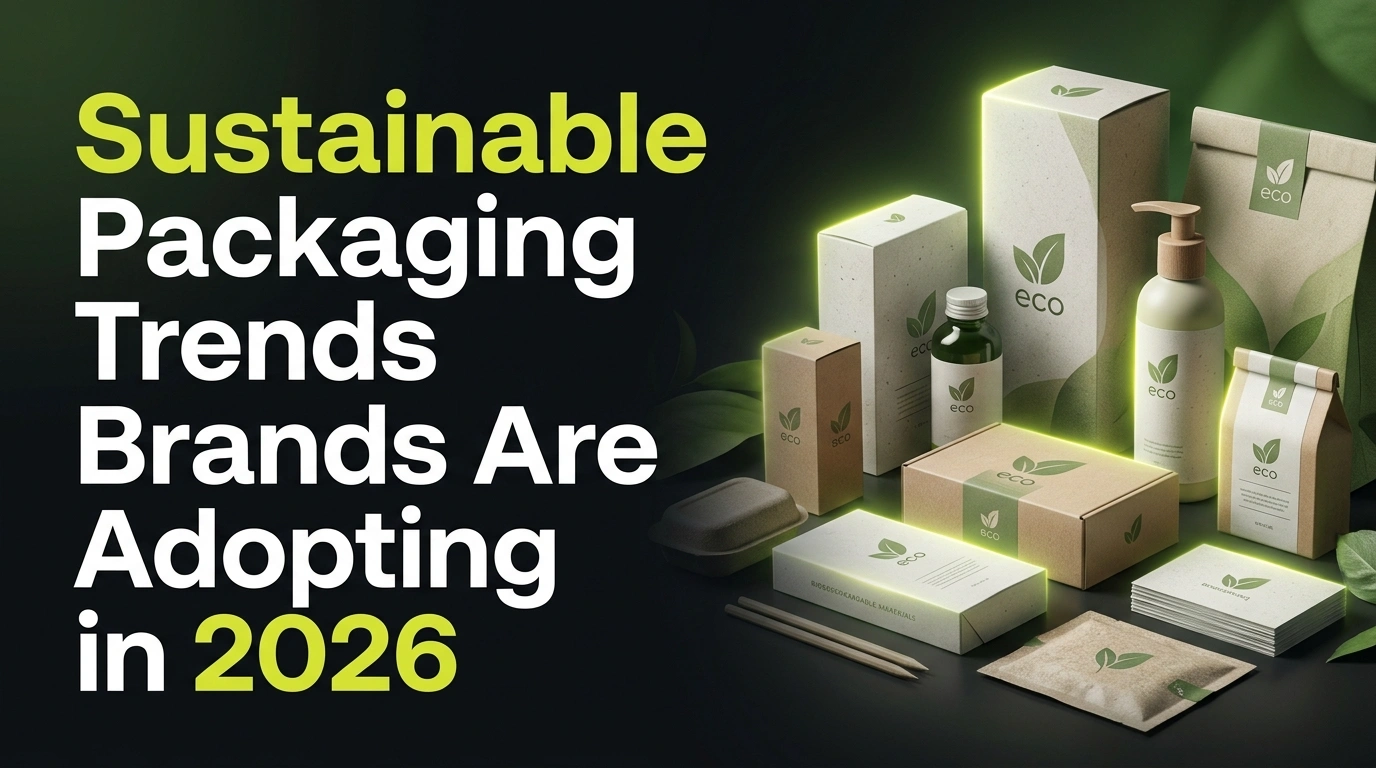
Discover the top sustainable packaging trends in 2026, from recycled materials to circular systems, and learn how brands are reducing environmental impact.
Real projects across branding, packaging, websites and growth.
Straight answers on this topic from the UnFoldMart team.





From branding and packaging to Webflow websites, SEO, AEO and GEO, UnFoldMart brings strategy, design and growth under one team for 250+ brands across 8 markets. Tell us where you want to grow and we'll show you the fastest way there.


In 2026, sustainable packaging is no longer a niche initiative.
It is a business expectation.
Consumers are more environmentally aware. Governments are tightening regulations. Investors are evaluating ESG commitments. And brands are realizing that packaging is not just a protective layer. It is a public statement.
Packaging now reflects values.
If your product is sustainable but your packaging is not, customers notice. And in a digital-first world, they talk about it.
So what are forward-thinking brands doing differently?
Let’s explore the sustainable packaging trends shaping 2026 and how companies are adopting them strategically.
Packaging waste remains one of the largest contributors to landfill overflow and ocean pollution.
At the same time:
Sustainable packaging is no longer about brand image alone. It impacts:
Brands that ignore this shift risk falling behind competitors who embed sustainability into their core operations.
One of the strongest movements in 2026 is the shift toward recycled content.
Brands are increasingly using:
Mono-material packaging is especially important. When packaging combines multiple materials, recycling becomes complicated. Simplifying composition improves recycling rates.
Forward-thinking companies are reducing virgin plastic usage and increasing recycled content percentages across product lines.
The benefit is twofold. It lowers environmental impact and appeals to environmentally conscious buyers.
Compostable materials are gaining traction across food, beauty, and e-commerce industries.
Common materials include:
These materials break down naturally under specific conditions, reducing long-term waste impact.
However, brands must be careful. Compostable packaging often requires industrial composting facilities. Clear labeling and education are essential to prevent misuse.
The goal is not just biodegradable materials, but responsible disposal systems.
Sometimes sustainability is about reduction.
Minimalist packaging focuses on:
By designing packaging that uses less material overall, brands reduce waste at scale.
Minimalism also aligns with modern aesthetic trends. Clean packaging designs communicate clarity and responsibility.
In many cases, reducing material also lowers production and shipping costs.
Less can be more, both environmentally and financially.
Circular packaging systems are becoming more popular.
Brands are experimenting with:
For example, beauty brands now offer refill pouches to reduce single-use containers. Food brands implement reusable jar programs. E-commerce companies explore returnable shipping boxes.
Reusable systems encourage customer participation in sustainability efforts.
The key is convenience. If reuse is easy, adoption increases.
Circularity transforms packaging from disposable to durable.
Packaging sustainability goes beyond the material itself.
Inks and adhesives can also impact recyclability.
Many brands are shifting toward:
Traditional solvent-based inks can contaminate recycling streams. Eco-friendly alternatives improve recyclability and reduce toxic residues.
Sustainability must be considered at every layer of packaging, not just the outer material.
Consumers want proof, not promises.
Transparent labeling now includes:
Some brands include lifecycle assessments directly on packaging. Others use QR codes to share sourcing transparency.
Clear communication prevents greenwashing accusations and builds credibility.
Sustainability messaging must be factual, specific, and verifiable.
Shipping efficiency plays a major role in sustainability.
Lightweight packaging reduces:
Brands are redesigning packaging to optimize space and weight.
Even small material reductions across millions of shipments create significant environmental savings.
Sustainability is not only about material choice. It is also about supply chain efficiency.
Carbon accounting is becoming mainstream.
Brands are investing in:
Some companies now label packaging as carbon-neutral after offsetting emissions through certified projects.
While offsets are not a complete solution, they demonstrate accountability when paired with reduction strategies.
Carbon transparency strengthens ESG positioning and investor confidence.
Successful implementation typically follows a phased approach.
First, brands conduct a packaging audit to understand:
Second, they evaluate suppliers who align with sustainability goals.
Third, they pilot changes with selected products before full-scale rollout.
Brands also communicate changes clearly to customers, explaining why adjustments were made and how to dispose of packaging responsibly.
Implementation requires cross-functional collaboration across procurement, design, marketing, and operations.
Sustainability is not a marketing project. It is an operational shift.
Regulations are pushing sustainability forward.
In many regions:
Brands must proactively align with evolving policies to avoid penalties and disruption.
Sustainable packaging is becoming a legal requirement in addition to a strategic advantage.
Sustainable materials can cost more upfront.
However, the long-term value often outweighs the initial investment.
Benefits include:
Consumers increasingly reward brands that demonstrate environmental responsibility.
Sustainability is becoming a differentiator, not just a compliance measure.
If your brand is considering sustainable packaging, begin with:
Start small. Improve consistently.
Sustainability is a journey, not a one-time shift.
Avoid these pitfalls:
Greenwashing damages trust quickly.
Transparency and data-backed claims build credibility.
Sustainable packaging is not just about waste reduction.
It influences:
At UnFoldMart, we help brands align packaging design with strategic positioning. Sustainable packaging should enhance brand storytelling, improve operational efficiency, and strengthen customer loyalty.
If your packaging does not reflect your brand values, it may be time to rethink your strategy.
Talk to our team and build packaging systems that support both growth and responsibility.
Got Questions? We’ve Got Answers – Clear, Simple, and Straight to the Point
Begin with a packaging audit, choose eco-friendly materials, work with responsible suppliers, and implement changes gradually.
It may cost more initially but can reduce long-term costs and improve brand value.
Only if disposed of correctly, as many require industrial composting facilities.
Due to consumer demand, stricter regulations, ESG goals, and the need to build trust and competitiveness.
Packaging designed to reduce environmental impact using recyclable, reusable, biodegradable, or minimal materials.

We help modern businesses unify branding, websites, SEO, and paid media into one performance-driven system designed to scale.




Taunustor 1, Frankfurt am Main, 60310, Germany

Huis te Landelaan 130-a Zuid, 2283 SJ Rijswijk, Netherlands
Basisweg 10, 1043 AP Amsterdam, Netherlands

32 London Bridge St, London SE1 9SG, United Kingdom

75 Avenue de la Grande Armée, 75016 Paris, France

P.º de la Castellana, 259C, Planta 19, Fuencarral-El Pardo, 28046 Madrid, Spain

plac Europejski 1, 00-844 Warszawa, Poland

555 Burrard St Vancouver, BC, V7X 1M8, Canada

604 Elias Rd, #03-200, Singapore 510604

Suite 18, Level 18 The Executive Centre, Tower A, DLF Epitome, DLF Cyber City, Gurugram, 122002











.jpeg)
.jpeg)
.jpeg)













.jpeg)

.jpeg)


.jpeg)

.jpeg)



.jpeg)
.jpeg)



.jpeg)
.jpeg)
.jpeg)
.jpeg)


.jpeg)


.jpeg)