Top Branding Agencies in the Netherlands 2026: Complete Selection Guide for Benelux Brands
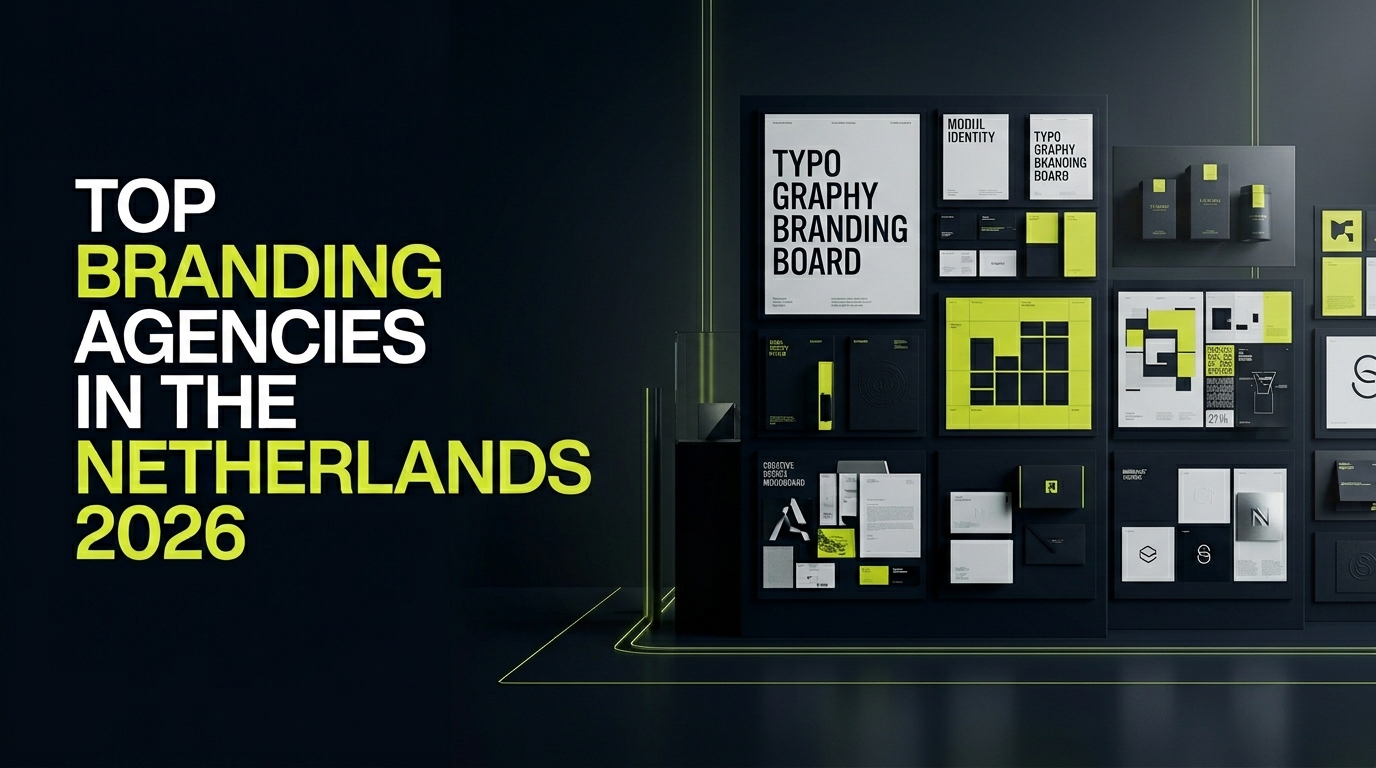
Choosing a branding agency in the Netherlands in 2026 depends on three Netherlands-specific variables: design-forward culture and high creative bar (Dutch design has international recognition disproportionate to market size), bilingual EN and NL delivery capability with English fluency expectation in Dutch business contexts, and AVG (Dutch implementation of GDPR) regulatory fluency.
Most Dutch market branding agencies fit one of three tiers: top-tier Dutch design firms based primarily in Amsterdam and Rotterdam; mid-market branding agencies serving Benelux with bilingual delivery; and boutique Amsterdam studios with creative distinctiveness.
For mid-market Benelux brands with annual branding budgets between 35,000 and 250,000 EUR, mid-market branding agencies serving Benelux typically deliver the best price-to-quality ratio. UnFoldMart sits in this band, charging 18,000 to 65,000 EUR for full brand identity programmes and 4,500 to 14,000 EUR per month for retainer engagements through unfoldmart.nl.
Top-tier Dutch design firms (Studio Dumbar/Dept, Edenspiekermann Amsterdam, Lava, Sid Lee Amsterdam, Build in Amsterdam) are appropriate for brand-defining programmes with substantial budgets, typically 70,000 EUR plus per engagement scaling to multi-million EUR partnerships. Boutique Amsterdam studios serve narrow-scope creative work.
This article covers the three agency tiers operating in the Dutch market, what to look for during Netherlands-specific evaluation, the red flags that disqualify agencies regardless of credentials, a 10-dimension scoring framework with Netherlands-specific weights, EUR pricing context, where UnFoldMart fits, and a 10-question pre-engagement qualification checklist.
Why Netherlands-specific branding expertise matters
Branding agency selection in the Netherlands has different requirements than the UK, US, or Germany, for six structural reasons.
Dutch design has international recognition disproportionate to market size. Studio Dumbar, Edenspiekermann, Lava, and many other Dutch design firms have shaped contemporary global design language. Dutch design schools (Design Academy Eindhoven, Gerrit Rietveld Academie) produce internationally recognised designers. The creative bar is high by global standards, and audience expectations match. Agencies bringing average creative work struggle in the Dutch market.
Bilingual EN and NL delivery is the norm. Dutch business contexts use English fluently for B2B and increasingly for consumer-facing brand expression. Dutch language fluency matters for Dutch-language brand voice, but English fluency from the agency is expected. Many Dutch brands launch with English-first or bilingual brand expression rather than Dutch-first. The bilingual baseline differs from Germany where DE-first is the norm for B2B.
AVG (Algemene Verordening Gegevensbescherming, Dutch GDPR implementation) fluency for brand digital applications. AVG enforcement in the Netherlands has produced substantive fines particularly for data breaches and cookie consent violations. Brand digital applications need AVG-compliant cookie consent, privacy policy depth, and data flow handling. Branding agencies serving Dutch market need AVG operational fluency.
Direct communication culture and informal collaboration. Dutch business culture is famously direct (sometimes called Dutch directness) with informal collaboration style. The default is jij rather than u (informal versus formal address), first-name basis from the start, and willingness to disagree openly in meetings. Communication cadence is faster than German conventions and decision making is often more decentralised. Agencies adapting from German Sie-convention culture or formal British style need to adjust.
Compact geography and tight design network. The Netherlands is geographically compact with most design activity concentrated in Amsterdam, Rotterdam, Utrecht, The Hague, and Eindhoven. Personal connections and reputation networks matter, and most Dutch designers know each other within one or two degrees of separation. Reference checks within the Dutch design community produce substantive feedback quickly.
Sustainability and circular design positioning is mainstream in Dutch market. Dutch brands increasingly position around sustainability, circular economy, and B Corp certification. Agencies need fluency in sustainability brand positioning, Green Claims Directive substantiation for environmental claims, and circular design principles. This positioning is mainstream in Dutch market rather than niche.
The three branding agency tiers in the Netherlands
The Dutch branding agency landscape clusters into three distinct tiers in 2026.
Top-tier Dutch design firms include Studio Dumbar (Rotterdam, now part of Dept), Edenspiekermann (Amsterdam), Lava (Amsterdam), Sid Lee Amsterdam, Build in Amsterdam, COBA (Amsterdam), and similar firms. Team sizes range from 30 to 200 designers, brand strategists, content specialists, and adjacent roles. Strongest at brand-defining programmes for Dutch and international clients, complex brand systems, design-led brand strategy, and global recognition that contributes to brand positioning. EUR ranges typically span 70,000 EUR per engagement to multi-million EUR partnerships. Best fit for established brands and design-led organisations with substantial branding budgets.
Mid-market branding agencies serving Benelux including UnFoldMart and comparable firms typically have 15 to 60 designers, brand strategists, content specialists, and adjacent roles. Strongest at mid-market Dutch and Benelux brand identity programmes, multi-market launches across DACH and Benelux, brand-plus-packaging integrated programmes for D2C launches, brand-plus-digital integrated programmes for SaaS, and bilingual EN and NL delivery.
EUR ranges typically span 18,000 to 90,000 EUR for project-based work and 4,500 to 14,000 EUR per month for retainer engagements. Best fit for mid-market and growth-stage Dutch and Benelux brands.
Boutique Amsterdam and Rotterdam studios typically have 4 to 15 designers and strategists with distinctive aesthetic positioning or vertical specialty. Strongest at narrow-scope brand work with strong creative direction, design-led brand identity, and direct senior involvement. EUR ranges typically span 8,000 to 45,000 EUR for project-based work and 3,500 to 12,000 EUR per month for retainer. Best fit for brands prioritising distinctive creative direction at the leading edge of Dutch design culture.
| Tier | Team size | Strongest at | Typical EUR range | Best for |
|---|---|---|---|---|
| Top-tier Dutch design firms | 30 to 200 | Brand-defining programmes, design-led strategy, international recognition | 70,000+ per engagement; multi-million partnerships | Established brands, design-led organisations |
| Mid-market serving Benelux | 15 to 60 | Mid-market brand identity, multi-market DACH and Benelux, integrated programmes | 18,000 to 90,000 project; 4,500 to 14,000 per month | Mid-market and growth-stage Dutch and Benelux brands |
| Boutique Amsterdam and Rotterdam studios | 4 to 15 | Narrow scope, design-led work, leading-edge creative direction | 8,000 to 45,000 project; 3,500 to 12,000 per month | Brands prioritising creative distinctiveness |
What to look for in a branding agency for the Netherlands
Six evaluation dimensions matter most when choosing a branding agency for the Dutch market in 2026.
High creative bar and design sophistication. Verify the agency's portfolio meets or exceeds the high Dutch creative bar. Dutch audience expectations are calibrated by Studio Dumbar, Lava, Edenspiekermann, and similar firms. Average creative work struggles in this market. Look for portfolios showing distinctive creative direction, not generic brand templates.
Bilingual EN and NL delivery with native Dutch content writers. Verify the agency has native Dutch content writers and Dutch-speaking brand strategists. While English fluency is expected, Dutch-language brand expression for Dutch-speaking audiences requires native fluency. Ask specifically: who are the Dutch content writers on this project, and what is their Dutch market portfolio?
AVG operational fluency for brand digital applications. The agency should articulate specific approach to AVG-compliant cookie consent, privacy policy depth matching brand data flows, and Dutch enforcement context. Vague compliance claims indicate likely friction.
Cultural fit for Dutch directness and informal collaboration. Communication cadence (informal jij convention by default in many contexts), decision making (faster than German, often decentralised), and willingness to engage in direct disagreement differ from UK or German agency norms. Verify cultural fit through trial conversations and reference checks.
Sustainability and circular design positioning capability. If your brand has sustainability positioning, verify the agency has substantive experience in sustainability brand work including Green Claims Directive substantiation, B Corp brand support, and circular economy positioning. This is often a default expectation in Dutch market rather than a premium feature.
Multi-market Benelux and broader European capability if relevant. Dutch brands frequently expand across Benelux (NL, BE), DACH (DE, AT, CH), and broader European markets. Verify multi-market capability through previous Benelux launches, not just single-market Dutch work.
Red flags specific to branding agencies serving the Netherlands
Six red flags indicate a branding agency is not equipped for the Dutch market.
Portfolio shows only American or UK-centric work without Dutch market presence. The Dutch creative bar is high, and agencies whose portfolio leans toward generic American or British work without distinctive Dutch market work often produce design that misfits Dutch audience expectations.
No native Dutch content writers when Dutch-language brand expression is in scope. Translation pipelines without native Dutch content writers produce Dutch-language brand expression that reads as foreign.
Cannot articulate AVG approach. Generic GDPR compliance claims without Dutch-specific AVG context indicate likely operational gaps for Dutch market.
Communication style is overly formal British or German. Dutch directness expects informal, fast-paced, willing-to-disagree collaboration. Agencies bringing formal Sie-convention German style or stiff British corporate style often misfit Dutch culture.
Pricing dramatically below market without scope clarity. A full brand identity quoted at 8,000 EUR when comparable Dutch agencies quote 25,000 to 70,000 EUR signals scoping problems.
Cannot show Dutch design press recognition or substantive Dutch references. Dutch market work produces named Dutch references and Dutch design press recognition. Agencies that cannot share Dutch references likely have not done substantive Dutch market work.
How to score a Dutch branding agency on 10 dimensions
| Dimension | What to verify | Weight |
|---|---|---|
| Creative bar and design sophistication | Portfolio meets high Dutch creative bar, distinctive creative direction | 15 |
| Native Dutch content fluency | Native Dutch content writers and strategists when NL is in scope | 13 |
| Vertical experience in our category | At least 3 Dutch market case studies in our category | 12 |
| AVG operational fluency | Articulated approach for brand digital applications, named legal references | 10 |
| Cultural fit for Dutch directness | Informal collaboration, fast decision making, direct disagreement comfort | 10 |
| Strategy capability | Brand strategy in-house, Dutch audience research methodology | 10 |
| Sustainability positioning capability | Green Claims Directive, B Corp, circular economy fluency where relevant | 8 |
| Multi-market Benelux capability | NL-BE variations, broader European multi-market capability | 7 |
| Team continuity | Named designers, strategists, content writers with hours per week | 8 |
| Pricing transparency | Itemised proposal with scope normalisation | 7 |
Score each dimension 0 to maximum weight. Total scores 75 plus indicate strong candidates. Total scores 60 to 74 indicate functional candidates. Total scores below 60 indicate disqualifying gaps.
EUR pricing context for the Dutch market
Dutch market branding pricing is broadly comparable to DACH baseline. Mid-market specialised agencies in Amsterdam, Rotterdam, Utrecht, The Hague, and Eindhoven typically price brand identity package (logo plus basic system) at 8,000 to 28,000 EUR, full brand identity (logo, system, guidelines, applications) at 18,000 to 60,000 EUR, strategy plus identity (research, positioning, identity) at 28,000 to 90,000 EUR, and complete brand system (foundation through launch) at 40,000 to 150,000 EUR.
Major rebrand of existing Dutch brand runs 45,000 to 200,000 EUR, brand audit runs 2,500 to 12,000 EUR, brand naming with Benelux trademark screening runs 6,000 to 25,000 EUR, and brand retainer runs 4,500 to 14,000 EUR per month.
Top-tier Dutch firms (Studio Dumbar/Dept, Edenspiekermann, Lava, Sid Lee Amsterdam) typically charge 70,000 to 400,000 EUR plus for comparable scope. Boutique Amsterdam and Rotterdam studios typically charge 8,000 to 45,000 EUR for narrow-scope work.
Regional variation within the Netherlands is modest: Amsterdam and Rotterdam are the dominant hubs with comparable pricing. Utrecht and The Hague trend slightly lower. Eindhoven has distinctive Design Academy heritage and competitive pricing for design-led work.
Where UnFoldMart fits
UnFoldMart sits in the international mid-market specialised branding tier serving the Dutch and Benelux market with bilingual EN and NL delivery through unfoldmart.nl domain. Mid-market positioning between boutique Amsterdam studios and top-tier Dutch firms.
Branding engagement models offered: brand audit (2,500 to 9,000 EUR one-time), brand identity package (8,000 to 28,000 EUR), full brand identity (18,000 to 60,000 EUR), strategy plus identity (28,000 to 90,000 EUR), complete brand system (40,000 to 150,000 EUR), and brand retainer (4,500 to 14,000 EUR per month).
Differentiators for Dutch market: bilingual EN and NL delivery, multi-market footprint matching Benelux plus DACH, integrated brand-plus-packaging and brand-plus-Webflow capability, AVG and DSGVO compliance fluency, sustainability brand positioning capability, and EUR pricing transparency.
UnFoldMart is appropriate for mid-market Dutch and Benelux brands needing senior brand talent without top-tier overhead, multi-market launches, integrated brand and adjacent discipline programmes, and EUR-denominated work with bilingual delivery.
Pre-engagement qualification checklist
- Creative bar: Does your portfolio meet the high Dutch creative bar with distinctive creative direction?
- Native Dutch content: Do you have native Dutch content writers when Dutch-language brand expression is in scope?
- Dutch market vertical experience: Do you have at least 3 Dutch market case studies in our category?
- AVG fluency: What is your specific AVG approach for brand digital applications (cookie consent, privacy policy)?
- Cultural fit: How do you adapt to Dutch directness, informal collaboration, and fast decision making?
- Sustainability positioning: If our brand positions around sustainability, what is your Green Claims Directive and circular economy capability?
- Multi-market Benelux capability: Can you handle NL-BE variations and broader European expansion?
- Strategy capability: Do you have brand strategy capability in-house with Dutch audience research methodology?
- Team continuity: Will you name the specific Dutch content writers, strategists, and designers for our project?
- References: Can you provide 2 to 3 Dutch market client references in our category?
Selecting a branding agency for the Dutch market in 2026 requires balancing high creative bar expectations, native Dutch content fluency, AVG operational fluency, cultural fit for Dutch directness, sustainability positioning capability where relevant, and engagement model preference. The right agency at the right tier produces brand work that meets Dutch creative expectations, complies with AVG, and supports Benelux and broader European expansion.
For mid-market Dutch and Benelux brands, mid-market branding agencies serving Benelux in the 18,000 to 90,000 EUR project range or 4,500 to 14,000 EUR per month retainer range typically deliver the best price-to-quality ratio. Top-tier Dutch firms make sense for brand-defining programmes with substantial budgets and design-led positioning. Boutique Amsterdam and Rotterdam studios serve narrow-scope creative work at the leading edge.
A 30-minute scoping call with UnFoldMart establishes your Dutch market scope, multi-market context, sustainability positioning needs, and engagement model preference, with an honest assessment of fit.
.jpeg)
FAQs
Got Questions? We’ve Got Answers – Clear, Simple, and Straight to the Point
Bilingual branding agencies are becoming increasingly important because many Dutch and Benelux brands operate simultaneously in local Dutch-speaking markets and international English-speaking business environments. SaaS companies, technology startups, D2C brands, and international ecommerce businesses often require brand systems that work effectively in both English and Dutch without losing clarity, creativity, or cultural nuance. A bilingual branding approach allows agencies to build cohesive positioning, messaging frameworks, and visual systems across multiple markets while adapting communication styles appropriately for local audiences. This is especially important for brands scaling across Benelux, DACH, and broader European markets where multilingual customer experiences increasingly affect trust, conversion performance, and long-term brand recognition. Integrated bilingual workflows also improve operational consistency because websites, packaging, advertising, social content, and digital experiences are developed strategically from the beginning rather than retrofitted later through translation. In 2026, many successful Dutch brands increasingly treat bilingual branding as a growth and scalability strategy rather than simply a localization requirement because language quality directly influences market credibility and international expansion performance.
One of the biggest red flags when hiring a branding agency in the Netherlands is a portfolio that lacks substantive Dutch-market work or demonstrates only generic American or British branding aesthetics without localized creative depth. Dutch audiences typically expect a higher level of conceptual clarity and design sophistication than many generic international branding systems provide. Another major warning sign is the absence of native Dutch-speaking strategists and copywriters. Translation-based workflows often create messaging that feels unnatural, overly literal, or disconnected from Dutch communication culture and consumer expectations. Businesses should also be cautious of agencies that cannot clearly explain their approach to AVG compliance, cookie consent systems, or privacy-aware digital branding workflows. Modern Dutch branding increasingly intersects with digital product experiences and customer data handling, making compliance awareness operationally important rather than optional. Overly formal communication styles can also create friction. Dutch business culture generally values directness, speed, openness, and informal collaboration, so agencies operating with excessively rigid or corporate communication processes may struggle to integrate smoothly with Dutch teams and stakeholders.
When evaluating a Dutch branding agency, businesses should focus on creative sophistication, bilingual EN and NL delivery, AVG compliance awareness, sustainability positioning capability, and multi-market European experience rather than simply reviewing logo portfolios. A strong agency should clearly explain how they handle Dutch-language messaging, strategic positioning, digital brand systems, and localization workflows for Benelux and broader European markets. Businesses should also verify whether the agency has native Dutch-speaking strategists and copywriters involved directly in the project rather than relying only on translation workflows. While English is widely used in Dutch business environments, Dutch-language brand communication still requires native fluency to feel authentic and credible. Another important factor is cultural fit. Dutch business communication tends to be direct, collaborative, and informal compared to more structured German or British corporate styles. Agencies that align naturally with this communication style generally create smoother collaboration and more efficient decision-making processes. For sustainability-focused brands, agencies with proven experience in circular design thinking, Green Claims Directive awareness, and B Corp positioning may provide additional strategic value in the Dutch market where sustainability expectations are increasingly mainstream.
Dutch design culture is important because the Netherlands has an internationally recognized design heritage that strongly influences local audience expectations and brand standards. Dutch consumers and businesses are accustomed to highly refined, concept-driven, typography-focused design systems shaped by globally respected agencies and institutions such as Studio Dumbar, Edenspiekermann, and Design Academy Eindhoven. As a result, average or overly templated branding work often struggles in the Dutch market because audiences expect clarity, originality, strategic thinking, and sophisticated visual execution. Brands entering the Netherlands therefore need agencies capable of producing distinctive design systems rather than generic international branding styles. Dutch branding also tends to prioritize functional clarity, structured visual systems, sustainability-aware communication, and clean digital experiences over overly decorative or heavily corporate visual language. Agencies unfamiliar with Dutch creative culture may produce branding that feels disconnected from local expectations, even if it performs well in other markets.
Choosing the right branding agency in the Netherlands in 2026 requires evaluating much more than visual aesthetics or creative portfolio quality. The Dutch market has one of the highest creative standards in Europe, with strong expectations around design sophistication, bilingual communication, sustainability positioning, and modern digital brand execution. The best Dutch branding agencies combine strategic brand thinking with high-level design systems, native Dutch content capability, and strong understanding of Benelux and broader European market dynamics. Businesses should therefore prioritize agencies with proven Dutch-market experience, bilingual EN and NL delivery, and strong creative direction rather than relying only on generic international branding portfolios. In 2026, branding in the Netherlands increasingly functions as a strategic growth system that influences digital performance, sustainability positioning, international expansion, and customer perception across both online and offline channels. The right agency can help brands scale across Benelux and broader European markets while maintaining creative distinction and operational consistency.

Want to Turn Your Brand Into a Scalable Growth Engine?
We help modern businesses unify branding, websites, SEO, and paid media into one performance-driven system designed to scale.