Local SEO + AI: New Signals Brands Must Watch
Discover how AI is reshaping local SEO in 2026. Learn the new ranking signals, review strategies, and optimization tactics to generate local leads.

Discover how AI is reshaping local SEO in 2026. Learn the new ranking signals, review strategies, and optimization tactics to generate local leads.
Real projects across branding, packaging, websites and growth.
Straight answers on this topic from the UnFoldMart team.




From branding and packaging to Webflow websites, SEO, AEO and GEO, UnFoldMart brings strategy, design and growth under one team for 250+ brands across 10 markets. Tell us where you want to grow and we'll show you the fastest way there.
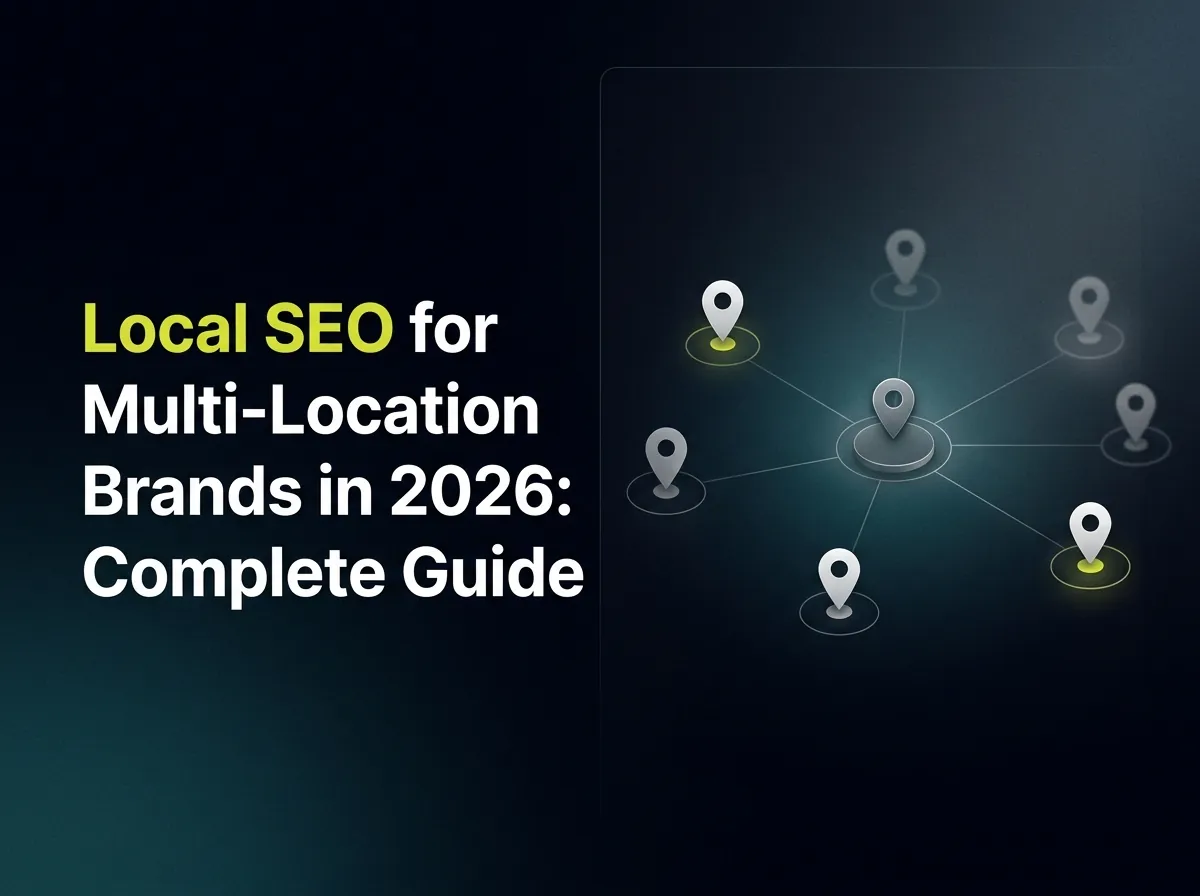
Local search is no longer just about showing up on a map.
For years, ranking in the top three local results meant visibility, calls, and foot traffic. Businesses optimized listings, collected reviews, and competed for proximity-based placement.
In 2026, local discovery works differently.
AI-powered systems now interpret intent, evaluate trust, and recommend specific businesses rather than simply listing nearby options.
Search queries have become conversational.
AI systems interpret these queries contextually, considering urgency, preferences, and historical behavior.
Traditional local SEO focused on ranking positions.
AI-driven systems prioritize recommendations instead of rankings.
A recommendation reflects confidence that a business will satisfy the user's needs.
AI evaluates review detail, emotional tone, recency, and authenticity.
Your business name, address, phone number, services, and operating hours should remain consistent across platforms.
AI considers media coverage, local mentions, and community involvement.
Local SEO is evolving into reputation SEO. Businesses that build trust, maintain accurate information, and demonstrate authority will be recommended more often.
Proximity gets you considered. Reputation gets you chosen.
Got Questions? We’ve Got Answers – Clear, Simple, and Straight to the Point
Voice queries and AI-conducted search share one important pattern: both use longer, conversational phrasing than typed searches. "Where can I get a suspension repair on my Volvo in Amsterdam-Zuid today" instead of "Volvo suspension Amsterdam." Businesses optimised for short-tail keyword phrasing often miss the longer conversational queries that AI and voice increasingly favour. Fix: include natural-language question-and-answer content on service pages that mirrors how customers actually speak the query, add FAQPage schema, and cover time-related qualifiers (today, tonight, near me, open now). UnFoldMart's local content briefs include a conversational query pass as part of standard 2026 workflow because it now materially affects both voice and AI-answer visibility.
Genuine review content — not just star ratings — has become more important. AI engines quote review text directly when composing local recommendations, so reviews containing specific service keywords, use-case details, and outcomes get pulled into AI answers more often than generic "great service, five stars" reviews. Owner responses also carry more weight now because AI engines read them as engagement and quality signals. Practical shift: review-generation processes should encourage customers to describe what they actually got done and their experience, not just leave a rating. Businesses that adjust their review-request messaging usually see a measurable improvement in AI-citation rate within one to two quarters.
Yes, and the effect is under-tracked in most local SEO reports. When AI Overviews surface for a local query ("best pizza near me," "orthodontist in [city]"), users often read the summary and pick a business from the AI-cited options without clicking any listing. Businesses cited in the AI summary see indirect lift (direction requests, calls, brand searches) even without a website click. Businesses not cited but ranking in the local pack lose click-through even from position one. Measuring only local pack rankings and website clicks now understates AI-search impact on local pipeline. Adding brand-search and direct-visit lift tracking closes the gap.
Meaningfully. Google's local pack still leans heavily on proximity, review volume, and GBP data. AI answer engines like ChatGPT and Perplexity weight source diversity and corroboration more — they pull from Reddit threads, industry publications, and community discussions alongside GBP data, and they're less sensitive to raw distance. Perplexity in particular treats "best [service] in [city]" more like a research query than a proximity query, often citing established review sites and forums even for local queries. Practical implication: winning in AI answers for local requires broader off-site presence than winning in Google's local pack, which historically rewards on-listing optimisation more.
Beyond the classical local ranking signals (proximity, prominence, relevance), five newer signals matter in 2026: (1) structured entity coverage on the website tied to the location — not just the GBP; (2) brand mentions on trusted third-party sources that AI engines cite for local queries (local press, Reddit threads about your city or category, industry forums); (3) recency of local content updates, weighted more heavily by AI answer engines than by classical Google local pack; (4) machine-readable service and pricing information (Product, Service, or Offer schema on the website, not just GBP fields); and (5) consistency between website and GBP data — AI engines cross-check both and lose confidence when they diverge. Sites optimising only the GBP miss most of these newer signals.


.webp)