Local Citations Guide: How to Improve Local SEO with Business Listings (2026)
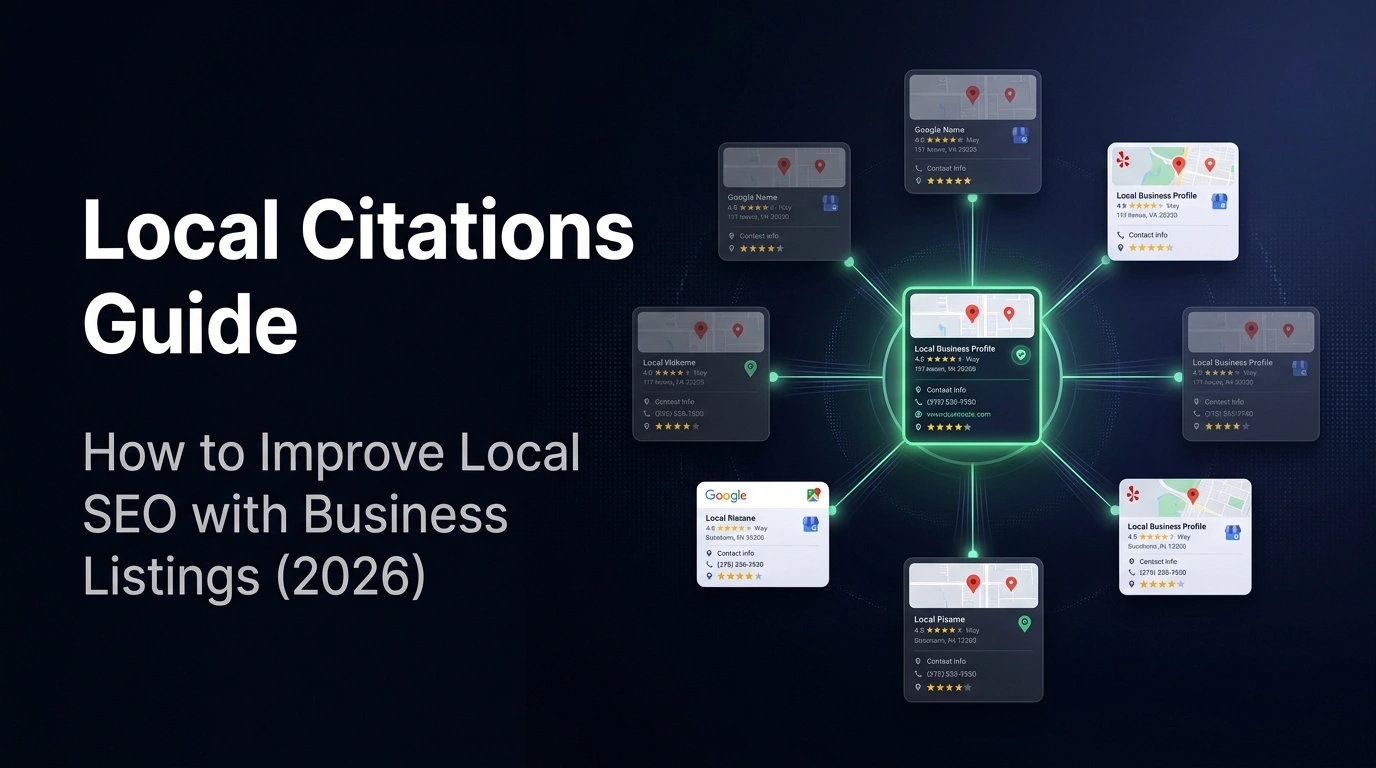
Local citations are a fundamental part of local SEO and play a key role in how businesses appear in search results. When users search for nearby services, search engines rely on business information from multiple sources to determine which listings are trustworthy and relevant.
These mentions, known as local citations, help validate your business details and improve your visibility in local search and map results. Whether someone is searching for a restaurant, a repair service, or a retail store, accurate and consistent citations increase the chances of your business being discovered.
Understanding how local citations work and how to build them effectively is essential for improving local rankings and attracting customers.
What are Local Citations?
Local citations are mentions of a business’s key information across the internet. This typically includes the business name, address, and phone number.
They help search engines verify that a business is legitimate and located where it claims to be.
Common places where citations appear:
- Business directories
- Review platforms
- Social media profiles
- Local websites and blogs
Why are Local Citations Important for SEO?
Local citations directly impact how businesses rank in local search results.
Key benefits:
- Improve local search rankings
- Build trust and credibility
- Help search engines verify business details
- Increase visibility in search and map results
Consistent citations signal reliability, which is a major factor in local SEO.
How Do Local Citations Work?
Search engines collect business information from multiple sources and compare it for consistency. When the same details appear across trusted platforms, it increases confidence in the accuracy of that information.
Important factors:
- Consistency of business details
- Presence on trusted platforms
- Frequency of mentions
If information is inconsistent, it can reduce trust and negatively impact rankings.
What Types of Local Citations Exist?
Structured Citations
Structured citations appear in business directories where information is listed in a standard format.
Examples:
- Business listing websites
- Review platforms
- Local directories
Unstructured Citations
Unstructured citations are mentions of a business within content rather than structured listings.
Examples:
- Blog posts
- News articles
- Social media mentions
Both types contribute to building authority and visibility.
What Information Should Be Included in Citations?
Accurate and complete information is essential for effective citations.
Key details:
- Business name
- Address
- Phone number
- Website
- Business category
Maintaining consistency across all platforms is critical for strong local SEO performance.
How to Build Local Citations Step by Step?
Building citations requires a structured approach.
Steps to follow:
- Identify relevant directories and platforms
- Create business profiles with accurate information
- Ensure consistency across all listings
- Verify listings where required
- Update information regularly
This process helps establish a strong and reliable online presence.
What are the Best Local Citation Sources?
Choosing the right platforms improves the quality of your citations.
Types of sources:
- General business directories
- Industry-specific platforms
- Local and regional websites
- Review platforms
Focusing on reputable sources provides better results than listing on low-quality sites.
What are the Best Practices for Local Citations?
Following best practices ensures your citations support your SEO strategy.
Key practices:
- Maintain consistent business information
- Focus on quality over quantity
- Update listings regularly
- Remove duplicate listings
- Monitor accuracy across platforms
These practices help build trust and improve rankings.
What are Common Local Citation Mistakes to Avoid?
Avoiding common errors is essential for maintaining credibility.
Common mistakes:
- Inconsistent business information
- Duplicate listings
- Listing on low-quality platforms
- Ignoring updates
- Missing important details
These issues can weaken your local SEO performance.
How Do Local Citations Impact Google Maps Rankings?
Local citations support Google Maps rankings by strengthening trust and authority.
Key impacts:
- Improve business credibility
- Reinforce location signals
- Support relevance in local searches
While citations alone are not enough, they play a crucial supporting role in local ranking factors.
How to Track and Manage Local Citations?
Managing citations ensures accuracy and consistency over time.
Key actions:
- Audit existing listings
- Identify incorrect or outdated information
- Use tools to track mentions
- Update listings regularly
Ongoing management helps maintain strong local visibility.
What is the Future of Local Citations?
Local citations will continue to evolve with changes in search technology.
Key trends:
- Greater emphasis on data accuracy
- Integration with AI-driven search systems
- Increased importance of trust signals
- Stronger connection with overall local SEO strategies
Businesses that maintain accurate and consistent citations will remain competitive.
Conclusion
Local citations are a critical component of local SEO. By ensuring consistent business information across trusted platforms, businesses can improve visibility, build credibility, and attract more customers.
A well-managed citation strategy strengthens your overall local presence and supports long-term growth.


FAQs
Got Questions? We’ve Got Answers – Clear, Simple, and Straight to the Point
Duplicate citations happen when the same business ends up with multiple listings on the same directory — usually because of a rebrand, address change, phone number change, or automated re-submission over an existing listing. They dilute ranking signals because Google can't confidently attribute reviews, engagement, and NAP data to a single canonical entry. Cleanup involves: identifying duplicates through tools like BrightLocal or Whitespark, claiming and merging where the directory allows, requesting removal where merge isn't available, and monitoring for re-emergence. Multi-location businesses need formal change control to prevent duplicates during expansions or moves — the single largest source of duplicate citations is uncoordinated updates.
Depends on the goal. Automated services (Yext, BrightLocal, Moz Local, Semrush Listing Management) submit and maintain citations at scale, which is essential for multi-location businesses or teams without local SEO capacity. The trade-off: automated citations often go to lower-authority directories in the long tail, and cancelling the subscription can revert your data. Manual submission to the top 20–30 sources in your industry and country produces higher-quality citations that persist regardless of tooling. The strongest 2026 approach for most businesses: manual submission to the core high-quality sources, automation only for the long tail if scale requires it. UnFoldMart's local citation audits usually prioritise cleaning the top-tier listings manually before scaling anything automatically.
It's the single largest citation-related ranking factor. Google cross-references NAP data across every listing it can find; inconsistencies ("Suite 200" vs "Ste 200," a hyphen missing in a phone number, an old address left on one directory) reduce Google's confidence in the business's location data and cap local pack ranking. A common ceiling: businesses with NAP inconsistencies across even 20% of their citations often can't break into the top three positions no matter how strong their other signals are. Cleanup is unglamorous but usually the highest-ROI local SEO work a business can do in the first quarter of any programme.
Three categories cover the essentials. First-tier data aggregators feed dozens of downstream directories automatically — in the US that's Data Axle, Neustar Localeze, and Foursquare; in Europe, aggregator coverage is more fragmented and country-specific. Core general directories: Google Business Profile, Bing Places, Apple Business Connect, Facebook Business, Yelp, and Yellow Pages (or country equivalents). Industry-specific directories usually deliver higher-quality citations than generic ones — TripAdvisor for hospitality, Avvo for legal, Healthgrades for medical, Houzz for home services. Coverage of the top 20–30 sources relevant to your industry and country matters more than raw citation count.
A local citation is any structured mention of a business's name, address, and phone number (NAP) on a third-party website — a directory listing, industry association profile, review site entry, or chamber of commerce record. Citations don't always include a link back to the website; the value comes from the consistent NAP data itself. Google uses citations to validate that a business is real, at the stated location, and operating in the categories it claims. For businesses with a physical location or service area, citations are among the earliest ranking signals Google evaluates, and inconsistent or missing citations quietly cap local pack visibility.

Want to Turn Your Brand Into a Scalable Growth Engine?
We help modern businesses unify branding, websites, SEO, and paid media into one performance-driven system designed to scale.