How to Choose a Packaging Design Agency in 2026: Complete Decision Framework
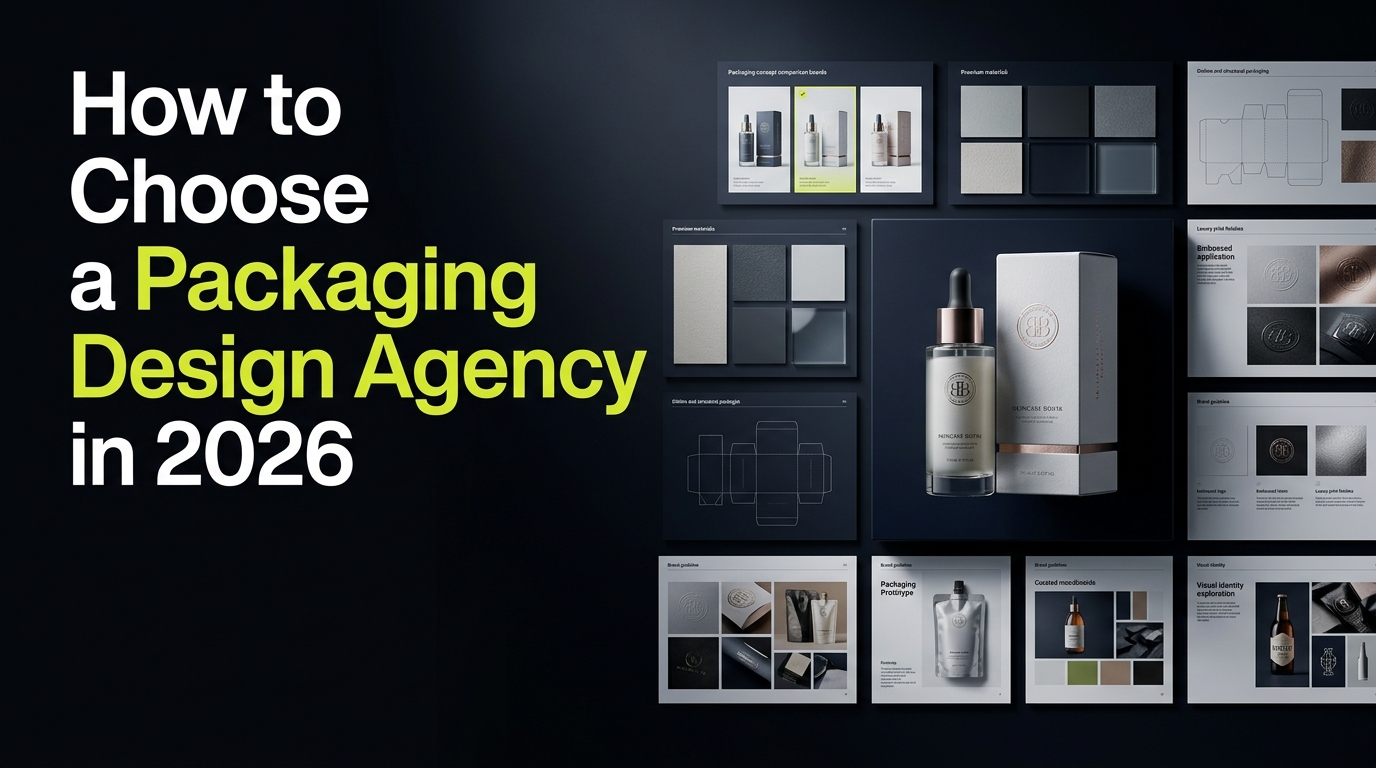
In 2026, choosing a packaging design agency requires more than evaluating creative portfolios. PPWR compliance from August 2026, EU food labelling enforcement, and the Green Claims Directive all require regulatory and sustainability fluency that many agencies don’t have.
The wrong agency produces compliance gaps, sustainability retrofit costs, weak shelf performance, and production friction that erodes margin. The right one produces packaging that performs commercially, scales across markets, and supports ongoing NPD pipelines without friction.
This guide presents a structured 5-step decision framework for mid-market D2C and CPG brands. It starts with 6 pre-selection questions, moves through shortlist composition and normalised RFP issuance, applies a 10-dimension scored evaluation, and closes with reference checks and optional creative concept stages.
The framework typically takes 6 to 12 weeks for mid-market projects.
UnFoldMart sits in the international mid-market specialised packaging design tier. EUR pricing: audit (2,500 to 8,000 EUR), range design (12,000 to 60,000 EUR), portfolio engagement (35,000 to 150,000 EUR), retainer (4,500 to 14,000 EUR per month). This guide applies broadly to any agency selection process.
The 6 questions every brand must answer before agency selection
Six questions determine whether your agency selection process will produce a confident decision or a compromised one. Answer all six before reaching out to any agency.
Question 1: What is the actual scope? Single SKU label refresh is fundamentally different work from multi-SKU range to full CPG portfolio. Scope determines tier (boutique studios serve single SKU and small ranges; mid-market agencies serve ranges to mid-portfolio; top-tier firms serve full portfolios and brand-defining programmes). Without scope clarity, agencies will scope and price the work differently and you cannot compare proposals.
Question 2: What is the regulatory environment? Food, cosmetics, alcohol, and pharma each carry distinct regulatory requirements (EU 1169/2011 food labelling, INCI cosmetics, alcohol country-specific labelling). PPWR compliance from 2026 onward affects most categories. Multi-market launches add country-specific compliance per market. Regulatory complexity dictates what specialist capability the agency must have.
Question 3: What is the sustainability strategy? PPWR effective from August 2026 forces sustainability decisions including material substitution, recycled content minimums, and packaging minimisation. Green Claims Directive substantiation is required for environmental claims. Brands proactively addressing sustainability pay 15 to 30 percent more for design programmes but avoid retrofit cost later. Decide your sustainability ambition level before agency selection.
Question 4: What is the engagement model? Project-based for defined-scope launches, range-based for multi-SKU programmes, portfolio engagement for established CPG brands, retainer for ongoing NPD pipeline support, or brand-plus-packaging combined for new D2C launches. Engagement model determines which agencies are appropriate (some agencies only offer project work; others only retainer; few do both well).
Question 5: What is the EUR budget range? Single SKU work runs 1,500 to 8,000 EUR (mid) or 6,000 to 22,000 EUR (top-tier). Multi-SKU ranges (5 to 10 SKUs) run 8,000 to 35,000 EUR (mid) or 30,000 to 120,000 EUR (top-tier). Full CPG portfolios run 60,000 to 250,000 EUR (mid) or 200,000 to 800,000 EUR (top-tier). Multi-market localisation adds 30 to 60 percent on top of base. Be realistic about budget range before shortlisting agencies.
Question 6: What is the timeline? Packaging programmes typically take 6 to 24 weeks depending on scope and SKU count. Single SKU work is 4 to 8 weeks. Multi-SKU range is 8 to 16 weeks. Full portfolio is 16 to 32 weeks foundation plus retainer. Multi-market launches add 4 to 12 weeks per additional market. Unrealistic timelines force scope cuts or quality compromises.
Step 1: Define scope and engagement model
Before reaching out to any agency, document scope and engagement model in detail. This becomes the brief for normalised RFP issuance — without it, agencies scope different work and quote different prices for nominally similar projects.
Document: SKU count and complexity, formats (carton, label, flexible film, glass, multi-layer composite), regulatory scope (allergen labelling, INCI declarations, alcohol-by-volume, country-specific DRS), sustainability requirements (PPWR compliance level, recycled content targets, Green Claims Directive substantiation), photography needs, multi-market footprint, timeline, and EUR budget range.
Step 2: Build the right shortlist
Shortlist composition matters because tier mix affects what proposals you receive. The following shortlist composition typically produces the best proposal range for mid-market brands.
| Brand profile | Top-tier | Mid-market | Boutique | Total shortlist size |
|---|---|---|---|---|
| Early-stage D2C launching first range | 0 to 1 (benchmark only) | 4 to 5 | 2 to 3 | 6 to 9 |
| Growth-stage D2C with portfolio expansion | 1 (benchmark) | 4 to 5 | 1 to 2 | 6 to 8 |
| Established CPG with brand-defining range | 2 to 3 | 3 to 4 | 1 | 6 to 8 |
| Mid-market scaling across DACH or Benelux | 1 (benchmark) | 5 to 6 | 1 to 2 | 7 to 9 |
| Premium or luxury brand defining flagship range | 3 to 4 | 2 to 3 | 1 | 6 to 8 |
Source agencies through industry references, peer recommendations from other brands in your category, packaging design awards (Dieline Awards, Pentawards, FAB Awards), and direct research into category specialists. Verify each shortlisted agency has at least 3 case studies in your category before adding to the RFP list.
Step 3: Issue a normalised RFP
Provide all bidders the same detailed brief covering scope, regulatory requirements, sustainability ambitions, photography needs, production oversight expectations, multi-market footprint, timeline, and budget range.
Specify proposal format requirements including problem framing (how the agency understands the brief), creative approach (without producing design), team identification (named designers, structural specialists, regulatory leads with hours per week), timeline with milestones, pricing breakdown by phase, and references.
Share the 10-dimension scoring framework as your evaluation criteria. Agencies that respond to the framework directly typically produce more useful proposals than agencies that respond to brief alone.
Allow 3 to 4 weeks for proposal response from RFP issuance. Shorter timelines produce rushed proposals; longer timelines lose momentum.
Step 4: Score on the 10-dimension framework
After receiving proposals from your shortlist (typical response rate is 50 to 70 percent of shortlisted agencies), score each on the 10-dimension framework. Total scores 75 plus indicate strong candidates. Total scores 60 to 74 indicate functional candidates with gaps to address. Total scores below 60 indicate disqualifying gaps.
The 10 dimensions for packaging agency evaluation cover: vertical category experience (15 points), structural design capability (12), regulatory fluency (12), sustainability and PPWR approach (12), production oversight (10), multi-market localisation (10), photography and rendering (8), brand integration (8), team continuity (8), and pricing transparency (5).
This is the point where headline price often gets deprioritised in favour of category fit, regulatory fluency, and sustainability approach. Cheap quotes typically reflect missing scope (no regulatory work, no production oversight, no sustainability strategy), and the missing scope becomes scope creep mid-project.
Step 5: Reference checks and creative concept stage
After scoring, conduct 2 to 3 reference checks per shortlisted agency, asking specifically about delivery against scope, on-time delivery, regulatory accuracy, sustainability outcomes, production friction (or absence of it), and post-launch support quality.
For high-value packaging programmes (60,000 EUR plus), consider a paid creative concept stage with the top 2 candidates. The concept stage typically runs 4,500 to 12,000 EUR per agency for 2 to 4 weeks of work exploring 2 to 3 creative territories without producing final design. Concept stages reveal creative direction quality, collaboration style, and team dynamics far better than proposals or reference checks.
After concept stage, the choice typically becomes clear within the brand team. Award the engagement to the agency that produced the strongest combination of creative direction, category fit, and collaboration quality.
Decision matrix: which tier fits which brand profile
Different brand profiles fit different tiers cleanly. The following decision matrix helps brands self-assess which tier to focus shortlisting on.
| Brand profile | Annual packaging budget (EUR) | Recommended tier focus | Why |
|---|---|---|---|
| Early-stage D2C launching first range | 5,000 to 30,000 | Boutique or mid-market | Senior involvement matters more than scale |
| Growth-stage D2C scaling portfolio | 30,000 to 150,000 | Mid-market specialised | Portfolio thinking with EUR transparency |
| Established CPG mid-portfolio | 75,000 to 300,000 | Mid-market specialised or top-tier | Depends on brand-defining ambition |
| Brand-defining CPG portfolio launch | 200,000+ | Top-tier global | Reputation contributes to brand positioning |
| Multi-market DACH or Benelux launch | 50,000 to 250,000 | Mid-market with regional fluency | Native delivery across markets matters |
| Sustainability-led range or refresh | 25,000 to 150,000 | Mid-market with PPWR fluency | Sustainability as design phase input |
| Premium spirits or cosmetics flagship | 80,000 to 400,000 | Top-tier or boutique with vertical specialism | Creative distinctiveness or category mastery |
Use this matrix to focus shortlisting effort on the right tier rather than spreading thin across all tiers.
Where UnFoldMart fits
UnFoldMart sits in the international mid-market specialised packaging design tier, with vertical strengths in D2C consumer brands, food and beverage, cosmetics and fragrance, and premium consumer goods. The brand profiles where UnFoldMart fits cleanly include growth-stage D2C scaling portfolios, sustainability-led ranges, multi-market DACH or Benelux launches, and brand-plus-packaging integrated programmes for new D2C launches.
UnFoldMart engagement models: packaging audit (2,500 to 8,000 EUR one-time), single SKU project (2,500 to 8,000 EUR), range design (12,000 to 60,000 EUR), portfolio engagement (35,000 to 150,000 EUR), packaging retainer (4,500 to 14,000 EUR per month), and brand-plus-packaging combined (25,000 to 120,000 EUR).
UnFoldMart is appropriate for mid-market D2C and consumer brands using this decision framework who land on mid-market specialised tier as the right fit. For brand-defining premium programmes, top-tier global firms (Pearlfisher, Coley Porter Bell, Robot Food) are typically the better fit.
Pre-engagement qualification checklist
Before final shortlist commitment, qualify each candidate against the checklist below.
- Scope match: Does this agency tier match my actual scope (single SKU, range, portfolio)?
- Category fit: Does this agency have substantive case studies in my exact category?
- Regulatory fit: Can this agency articulate specific regulatory approach for my category and markets?
- Sustainability fit: Does this agency address PPWR and Green Claims Directive directly in proposals?
- Production fit: Does this agency include production oversight in scope, with budget and timeline?
- Multi-market fit: If multi-market, does this agency have native delivery across my markets?
- Engagement model fit: Does this agency offer the engagement model my programme actually needs?
- Budget fit: Does the EUR range match my actual budget range, or am I shopping outside my tier?
- Timeline fit: Can this agency deliver within my actual timeline, or am I forcing scope cuts?
- Reference confidence: After 2 to 3 reference calls, do I have confidence in delivery against scope?
Choosing a packaging agency in 2026 is more demanding than in prior years. PPWR, the Green Claims Directive, and tighter EU food labelling enforcement raise the bar on regulatory and sustainability fluency.
Brands that follow a structured 6-question pre-selection plus 5-step decision framework produce confident agency selections. Brands that skip the framework frequently end up with scope-mismatched proposals, compromised quality, or budget overruns mid-project.
For mid-market D2C and consumer brands, the framework typically lands on mid-market specialised agencies in the 12,000 to 150,000 EUR project range or 4,500 to 14,000 EUR per month retainer as the best price-to-quality fit. Top-tier global packaging firms are appropriate for brand-defining programmes with substantial budgets. Boutique studios serve narrow-scope creative direction. Freelancers serve narrow specialist engagements.
A 30-minute scoping call with UnFoldMart establishes your category, scope, market footprint, regulatory and sustainability requirements, and helps you self-assess which tier to focus on — with an honest assessment of whether UnFoldMart fits or whether another tier serves your situation better.
.jpeg)
FAQs
Got Questions? We’ve Got Answers – Clear, Simple, and Straight to the Point
Long-term packaging partnerships are becoming more common because modern consumer brands continuously expand product lines, launch seasonal variants, optimize sustainability performance, and adapt packaging systems across multiple retail and ecommerce markets. Packaging is no longer a one-time project completed at launch; it has become an evolving operational system tied directly to brand growth. Retainer and ongoing partnership models allow brands to maintain packaging consistency while efficiently extending visual systems across new SKUs, product categories, languages, and markets. This is especially valuable for D2C and CPG brands with active NPD pipelines where frequent launches and packaging updates are part of the business model. Long-term partnerships also improve production efficiency because agencies become deeply familiar with the brand’s packaging architecture, sustainability goals, regulatory environment, and operational workflows. Over time, this reduces onboarding friction, accelerates new product launches, and improves overall consistency across the entire packaging ecosystem. In 2026, many consumer brands increasingly view packaging agencies as strategic operational partners rather than temporary creative vendors because packaging quality directly affects scalability, market expansion, compliance readiness, and long-term brand equity.
One of the biggest mistakes brands make is choosing packaging agencies primarily based on visual style without evaluating regulatory expertise, sustainability capability, or production experience. Attractive mockups alone do not guarantee that packaging will function effectively in manufacturing, retail, ecommerce, or compliance environments. Another common mistake is issuing vague briefs without clearly defining SKU scope, sustainability goals, packaging formats, or regulatory expectations. This causes agencies to estimate completely different scopes of work, making pricing comparisons misleading and often leading to major budget overruns later. Brands also frequently underestimate the importance of production oversight and structural packaging coordination. Agencies that disengage after delivering design files may leave brands handling printer coordination, press checks, material issues, and packaging inconsistencies internally without adequate support. In 2026, businesses that fail to address sustainability strategy during the early design phase often face expensive retrofits later due to evolving PPWR standards and environmental compliance requirements. Packaging decisions now have operational, legal, and commercial implications that extend far beyond visual branding alone.
Before contacting packaging agencies, brands should clearly define their packaging scope, regulatory environment, sustainability objectives, timeline, geographic rollout plans, and approximate budget range. Without this clarity, agencies will scope projects differently, making proposals difficult to compare accurately. Businesses should determine whether the project involves a single SKU, a multi-product range, or a full portfolio system. They should also identify whether the packaging requires structural design, multilingual labeling, sustainability certifications, photography, ecommerce rendering, or region-specific compliance adaptation. Regulatory considerations are especially important for food, cosmetics, alcohol, supplements, and consumer goods because these categories often involve allergen labeling, ingredient declarations, country-specific packaging rules, and sustainability requirements. Brands launching across multiple European markets should also define localization expectations, language requirements, and regional adaptation needs before the agency selection process begins. A clearly structured brief significantly improves proposal quality and reduces scope mismatches, hidden costs, and operational friction during the project lifecycle.
Packaging agency selection has become more important in 2026 because European regulations around sustainability, packaging waste, labeling, and environmental claims have become significantly stricter. Regulations such as PPWR and the Green Claims Directive are forcing brands to rethink packaging materials, recyclability, environmental messaging, and production workflows much earlier in the design process. As a result, packaging agencies now need to combine creative direction with regulatory fluency, sustainability planning, production knowledge, and multi-market operational understanding. Agencies that lack expertise in these areas can create expensive compliance problems, material retrofits, or production delays after launch. Packaging also plays a larger commercial role than before because ecommerce, D2C marketing, influencer culture, and retail competition have increased the importance of packaging visibility, unboxing experiences, and digital shelf appeal. In 2026, packaging directly influences customer trust, conversion rates, retailer relationships, and perceived product quality across both physical and digital channels.
Choosing the right packaging design agency in 2026 requires evaluating much more than creative style or visual portfolio quality. Modern packaging programmes involve regulatory compliance, sustainability strategy, structural packaging systems, production coordination, and multi-market scalability across physical retail and ecommerce environments. The best packaging agency for a brand depends on factors such as SKU count, product category, sustainability goals, geographic expansion plans, and long-term product pipeline needs. A single-SKU cosmetic label refresh requires very different expertise than a multi-country food packaging system with PPWR compliance, recyclability targets, and multilingual regulatory labeling. Businesses should therefore define their scope, regulatory requirements, sustainability ambitions, and engagement model before approaching agencies. In 2026, packaging is increasingly treated as long-term commercial infrastructure rather than isolated design work, meaning the right agency relationship can improve shelf performance, operational efficiency, compliance readiness, and brand consistency across years of product expansion.

Want to Turn Your Brand Into a Scalable Growth Engine?
We help modern businesses unify branding, websites, SEO, and paid media into one performance-driven system designed to scale.