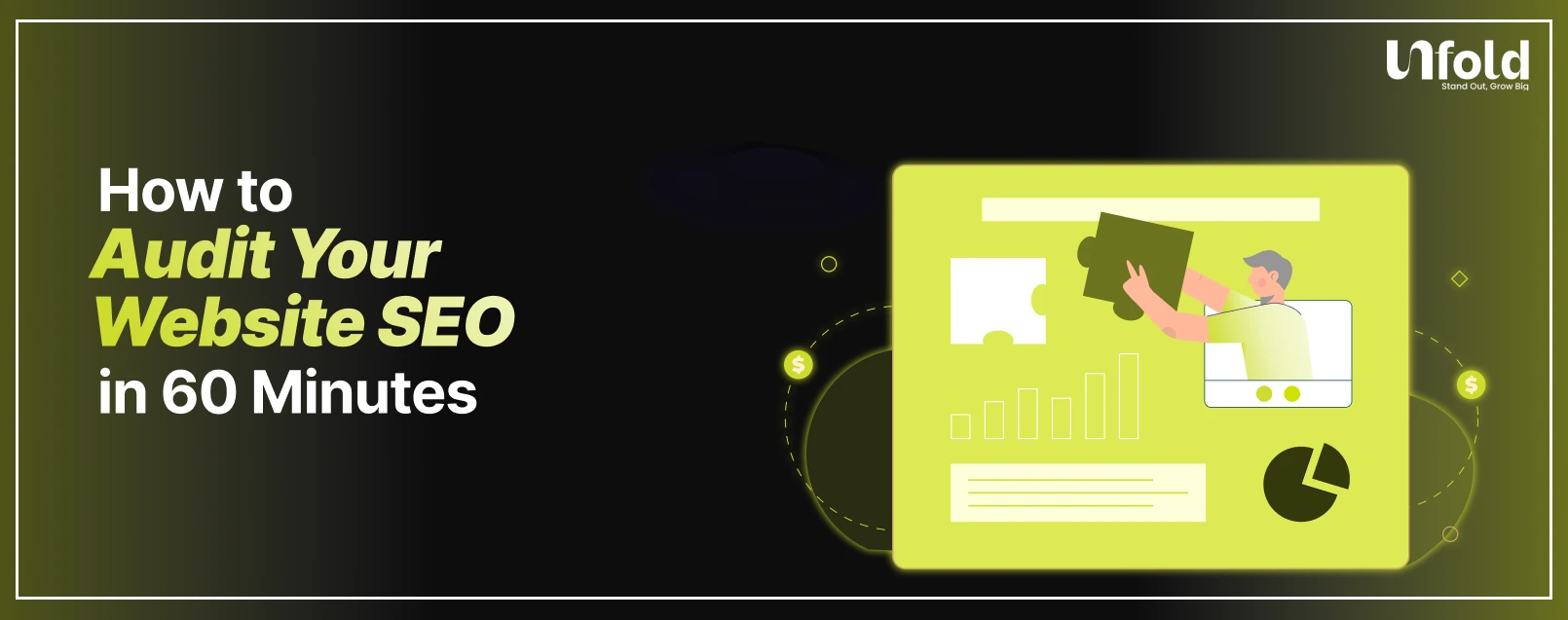
How to Audit Your Website SEO in 60 Minutes
Learn how to audit your website SEO in just 60 minutes. Identify technical, on-page, content, and UX issues with a simple checklist.
Learn how to audit your website SEO in just 60 minutes. Identify technical, on-page, content, and UX issues with a simple checklist.
Real projects across branding, packaging, websites and growth.
Straight answers on this topic from the UnFoldMart team.

From branding and packaging to Webflow websites, SEO, AEO and GEO, UnFoldMart brings strategy, design and growth under one team for 250+ brands across 10 markets. Tell us where you want to grow and we'll show you the fastest way there.
SEO audits have a reputation for being long, complex, and overwhelming. Many businesses delay them because they think audits require days of work, expensive tools, or deep technical expertise.
That is not always true.
A focused 60-minute SEO audit can uncover the biggest issues holding your website back, highlight quick wins, and give you a clear direction for improvement. You will not fix everything in one hour, but you can identify what matters most.
This guide walks you through a step-by-step 60-minute SEO audit that prioritizes impact over perfection.
Before starting, it is important to set expectations.
In 60 minutes, you can:
In 60 minutes, you cannot:
The goal is clarity, not completion.
You do not need dozens of tools. A few essentials are enough.
Open these tools before you start the clock.
Start with technical basics because they affect everything else.
First, check indexing status in Google Search Console. Look for pages that are excluded, not indexed, or blocked. If important pages are missing, that is a priority issue.
Next, confirm that your XML sitemap exists and is submitted. Make sure it includes key pages and is free of errors.
Check mobile usability. Most traffic is mobile, and mobile friendliness directly impacts rankings.
Finally, review a Core Web Vitals snapshot. You are not fixing performance now. You are identifying whether speed and stability are a problem.
If you see widespread issues here, technical SEO becomes a top priority.
Now move to on-page fundamentals.
Pick your top 5 to 10 important pages. These usually include:
Check meta titles and descriptions. Are they unique, clear, and aligned with search intent? Avoid duplication and vague wording.
Review heading structure. Each page should have one clear H1 and logical subheadings. Headings should describe content, not just look good.
Check URLs. They should be short, readable, and descriptive. Avoid unnecessary parameters or random strings.
Finally, look at internal links. Important pages should not be buried. Internal linking helps both users and search engines.
Content quality is one of the most common SEO weaknesses.
Start by identifying thin or outdated pages. Pages with very little information or unclear purpose often underperform.
Next, evaluate search intent. Ask a simple question for each key page:
Does this content actually match what the searcher wants?
If a page ranks for informational queries but pushes sales too aggressively, intent is mismatched. If a page targets a commercial keyword but offers only generic explanations, it will struggle.
Also look for signs of experience and expertise. Clear explanations, examples, and practical insights matter more than word count.
Now assess trust and authority at a high level.
Check your backlink profile overview. You are not auditing every link. You are looking for patterns. Do links come from relevant and credible sources, or are they low quality and random?
Search your brand name in Google. Do you see consistent mentions, profiles, and references? Brand presence matters for trust.
Review basic trust signals on the site. These include:
Weak trust signals can limit SEO growth even if content is good.
SEO is not just about rankings. It is about how users interact with your site.
Check navigation. Can users easily find important pages? Confusing menus increase bounce rates.
Review page layout. Is content readable and well spaced, or cluttered and overwhelming?
Look at conversion paths. Are calls to action clear but not intrusive? Are users guided logically from information to action?
Poor user experience often leads to poor SEO performance, especially in competitive spaces.
Search engines are becoming answer engines, so your content must be easy to understand and summarize.
Check whether your pages:
Pages that are clear, structured, and authoritative are more likely to appear in featured snippets and AI summaries.
This is increasingly important for future visibility.
The final five minutes are critical.
Create a simple list of issues you found. Then categorize them:
Focus first on high impact, low effort fixes. These deliver quick wins and momentum.
Assign owners and timelines. An audit without action is wasted effort.
Many audits fail because of avoidable mistakes.
One mistake is chasing perfection. You do not need to fix everything at once.
Another mistake is relying only on tools. Tools show data, not strategy.
Ignoring search intent is another major issue. Rankings without relevance do not convert.
Finally, many teams audit once and never follow up. SEO requires iteration, not one-time checks.
A 60-minute SEO audit will not solve every problem, but it will reveal the most important ones.
Regular quick audits keep your site healthy, focused, and aligned with how search actually works today. They help you move from guessing to prioritizing.
Consistency matters more than complexity.
One focused hour can change the direction of your SEO.
If you want clarity without wasting time, a structured audit makes all the difference.
At UnFoldMart, we help businesses uncover SEO gaps, prioritize fixes, and build strategies that actually drive growth.
👉 Talk to our team and get an SEO audit that turns insights into action.
Got Questions? We’ve Got Answers – Clear, Simple, and Straight to the Point
Yes. Early audits prevent bad foundations and save time later.
Google Search Console, analytics tools, and basic speed testers are sufficient.
A quick audit every quarter is ideal. Larger audits can be done annually.
Yes. While it is not a full audit, 60 minutes is enough to identify major issues and priorities.