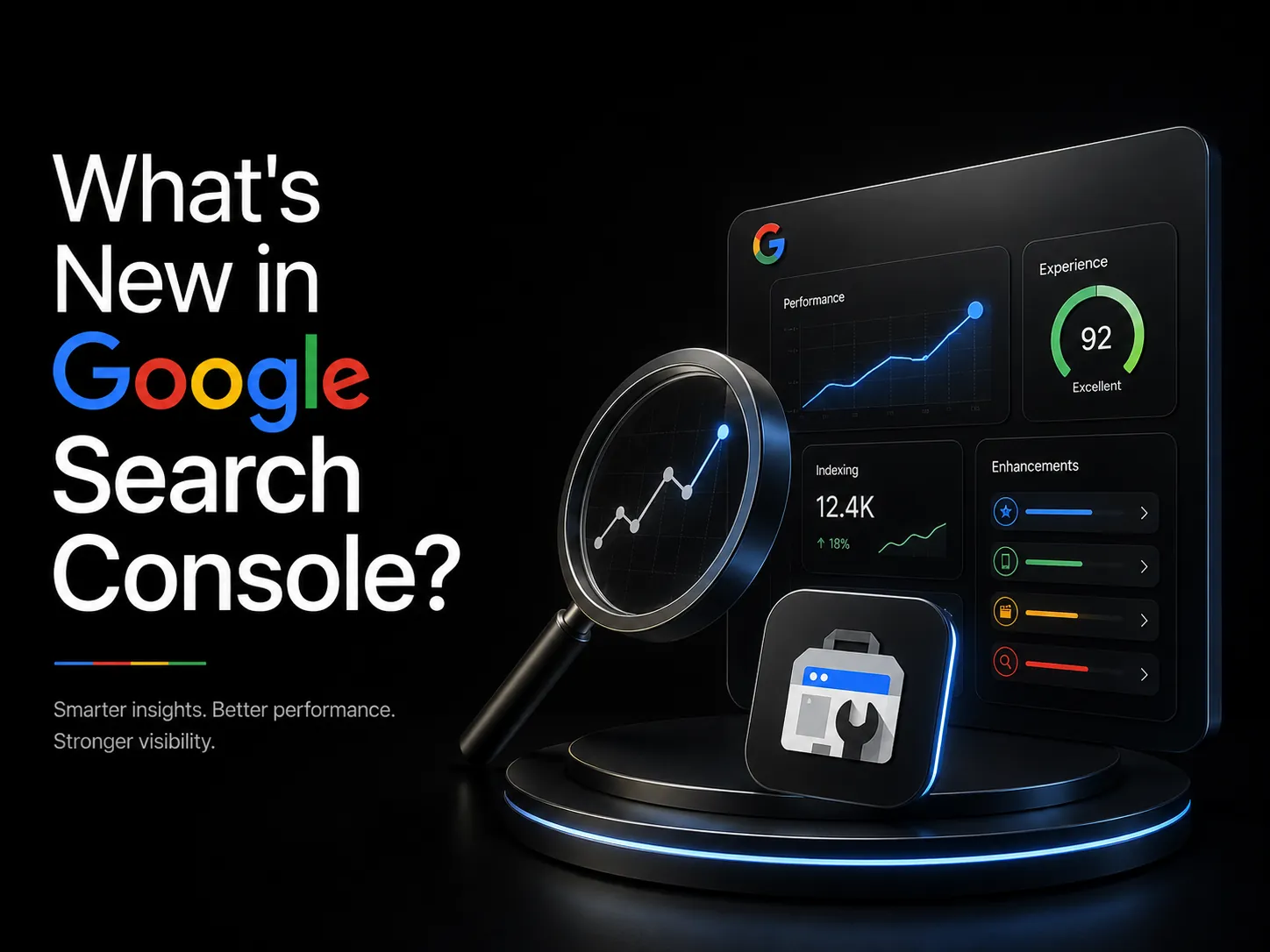
Core Web Vitals in 2026: Still Relevant?
Are Core Web Vitals still important in 2026? Learn how site speed, responsiveness, and stability impact SEO, AI search visibility, and business performance.

Are Core Web Vitals still important in 2026? Learn how site speed, responsiveness, and stability impact SEO, AI search visibility, and business performance.
Real projects across branding, packaging, websites and growth.
Straight answers on this topic from the UnFoldMart team.





From branding and packaging to Webflow websites, SEO, AEO and GEO, UnFoldMart brings strategy, design and growth under one team for 250+ brands across 10 markets. Tell us where you want to grow and we'll show you the fastest way there.
When Core Web Vitals were introduced, they quickly became one of the most discussed topics in SEO.
Teams scrambled to optimize loading speeds, reduce layout shifts, and improve responsiveness. Performance dashboards became boardroom talking points. Entire development roadmaps were reshaped around these metrics.
Fast forward to 2026, and the search landscape looks very different.
AI-generated answers dominate many queries. Zero-click results reduce direct traffic. Authority and trust increasingly determine visibility.
Naturally, many businesses are asking a critical question: Do Core Web Vitals still matter?
The answer is yes, but not in the same way as before.
Performance is no longer a competitive advantage on its own. It is a baseline requirement for credibility, usability, and inclusion in modern search experiences.
Core Web Vitals are a set of performance metrics designed to measure real-world user experience.
The current metrics focus on three key aspects:
LCP measures how quickly the main content becomes visible.
A good LCP score indicates that users can begin engaging with the page quickly.
INP evaluates responsiveness by measuring how quickly a page reacts to user interactions.
Slow interaction responses can frustrate users and reduce engagement.
CLS measures visual stability.
Unexpected layout movements—such as buttons shifting during loading—create poor user experiences and reduce trust.
These metrics rely on real user data rather than lab simulations, making them strong indicators of actual experience.
The introduction of Core Web Vitals aimed to improve the overall quality of the web.
Search platforms recognized that slow or unstable pages create frustration.
The initiative encouraged websites to:
Performance became a signal of usability and quality.
Performance metrics still contribute to ranking signals, especially when evaluating similar pages.
If two pages provide comparable value, the faster one may rank higher.
When content relevance and authority are similar, performance can become the deciding factor.
Better performance improves behavioral metrics such as:
These outcomes reinforce perceived usefulness.
AI-powered search introduces new considerations.
Even when users do not visit every cited source, AI platforms prefer reliable, accessible websites.
Performance affects:
Fast pages allow crawlers to retrieve and process information more efficiently.
Stable websites reduce the risk of errors during content extraction.
Some AI systems retrieve content dynamically. Slow pages may be excluded in favor of faster alternatives.
If users click through from AI responses and encounter slow pages, the recommendation experience suffers.
Speed therefore supports credibility.
Even small delays can reduce conversion rates. Users expect responsive experiences when evaluating products or services.
A fast website encourages visitors to explore more content and interact with additional resources.
Mobile users often rely on slower networks. Performance optimization ensures accessibility across devices.
Website speed communicates professionalism and reliability.
A slow experience can suggest outdated systems or lack of attention to detail.
Performance alone does not determine visibility.
Situations where vitals may have limited influence include:
Users may tolerate slower pages if the content is uniquely valuable.
However, relying on this tolerance is risky.
Myth: Fixing Core Web Vitals guarantees higher rankings. Reality: Performance is only one ranking signal.
Myth: Speed alone drives traffic. Reality: Content relevance and authority remain primary drivers.
Myth: Only developers should care about performance. Reality: Marketing, UX, and revenue outcomes are affected.
Myth: Good scores equal perfect experience. Reality: Metrics measure important signals but not every usability factor.
Removing useful features just to improve scores may harm usability.
Optimization should enhance experience rather than restrict it.
Field data provides the most accurate insight into actual performance trends.
After reaching acceptable thresholds, additional optimization may produce minimal impact.
Resources might be better invested elsewhere.
User experience evaluation will likely expand beyond current metrics.
Potential developments include:
Performance will remain foundational but increasingly integrated with broader quality signals.
Core Web Vitals remain relevant in 2026, but their role has evolved.
They are no longer a shortcut to higher rankings. Instead, they establish a baseline for credibility, usability, and reliability.
A fast, stable site enables success—but it does not guarantee it.
Organizations that combine strong performance with authoritative content and strategic visibility will achieve the best outcomes in modern search environments.
If your website generates traffic but struggles to convert visitors into qualified leads, performance issues may be undermining trust and engagement.
Book a strategy consultation with UnFoldMart to transform your website into a high-performing growth engine.
Got Questions? We’ve Got Answers – Clear, Simple, and Straight to the Point
Mobile performance typically has greater impact due to usage patterns.
Yes, if content is highly valuable, but performance issues may limit growth.
Generally, under 2.5 seconds is considered strong.
Indirectly. Performance supports accessibility and reliability, which influence inclusion

.webp)