Answer Engine Optimization vs Traditional SEO: What Businesses Must Know
Discover the differences between Answer Engine Optimization (AEO) and traditional SEO. Learn how to stay visible in AI-driven search and zero-click environments.
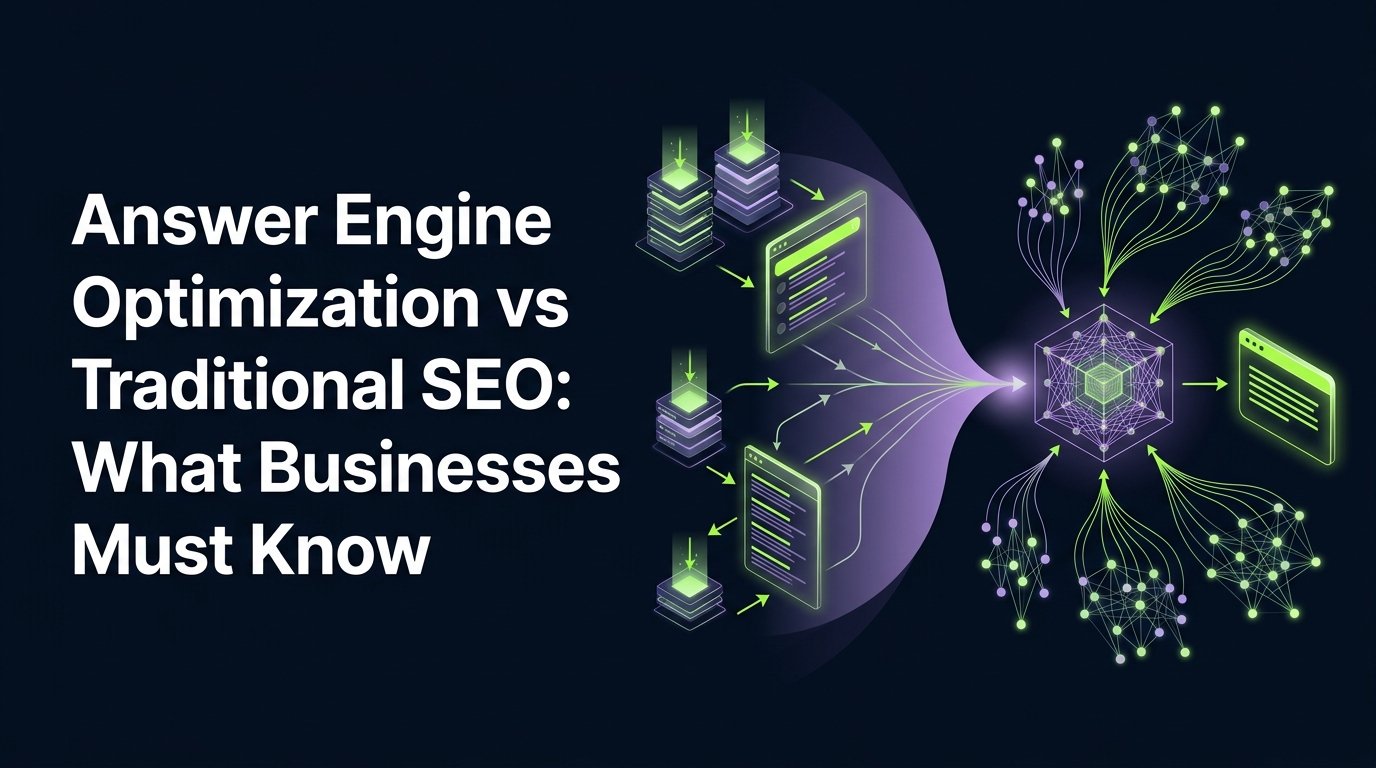
Discover the differences between Answer Engine Optimization (AEO) and traditional SEO. Learn how to stay visible in AI-driven search and zero-click environments.
Real projects across branding, packaging, websites and growth.
Straight answers on this topic from the UnFoldMart team.




From branding and packaging to Webflow websites, SEO, AEO and GEO, UnFoldMart brings strategy, design and growth under one team for 250+ brands across 10 markets. Tell us where you want to grow and we'll show you the fastest way there.
Search is undergoing one of the biggest transformations since the early days of the internet.
For decades, success meant ranking high in search results and attracting clicks to your website. Businesses focused on keywords, backlinks, and technical optimization because traffic translated into leads and sales.
Today, users increasingly receive answers without visiting any website at all.
AI-powered search systems, voice assistants, and conversational interfaces now deliver instant responses by combining information from multiple sources.
Traditional Search Engine Optimization focuses on improving a website’s ranking in search results to drive organic traffic.
The assumption behind this model is that users click search results to access information.
Answer Engine Optimization focuses on structuring content so AI systems can extract and present it as a direct answer.
Instead of optimizing purely for rankings, AEO aims to become a trusted source referenced by answer engines.
Search platforms increasingly synthesize information rather than presenting only lists of links.
Many queries are answered directly on the results page.
Voice assistants often deliver a single spoken answer.
Chat-based search encourages dialogue rather than browsing multiple pages.
Inclusion depends on usefulness rather than ranking position alone.
These fundamentals support both SEO and AEO strategies.
Identify real questions your audience asks and answer them clearly.
Begin sections with concise explanations that answer engines can extract easily.
Maintain consistent brand information across platforms to strengthen recognition.
Use case studies, examples, and real-world insights to demonstrate authority.
AEO can increase brand exposure even when direct clicks decrease.
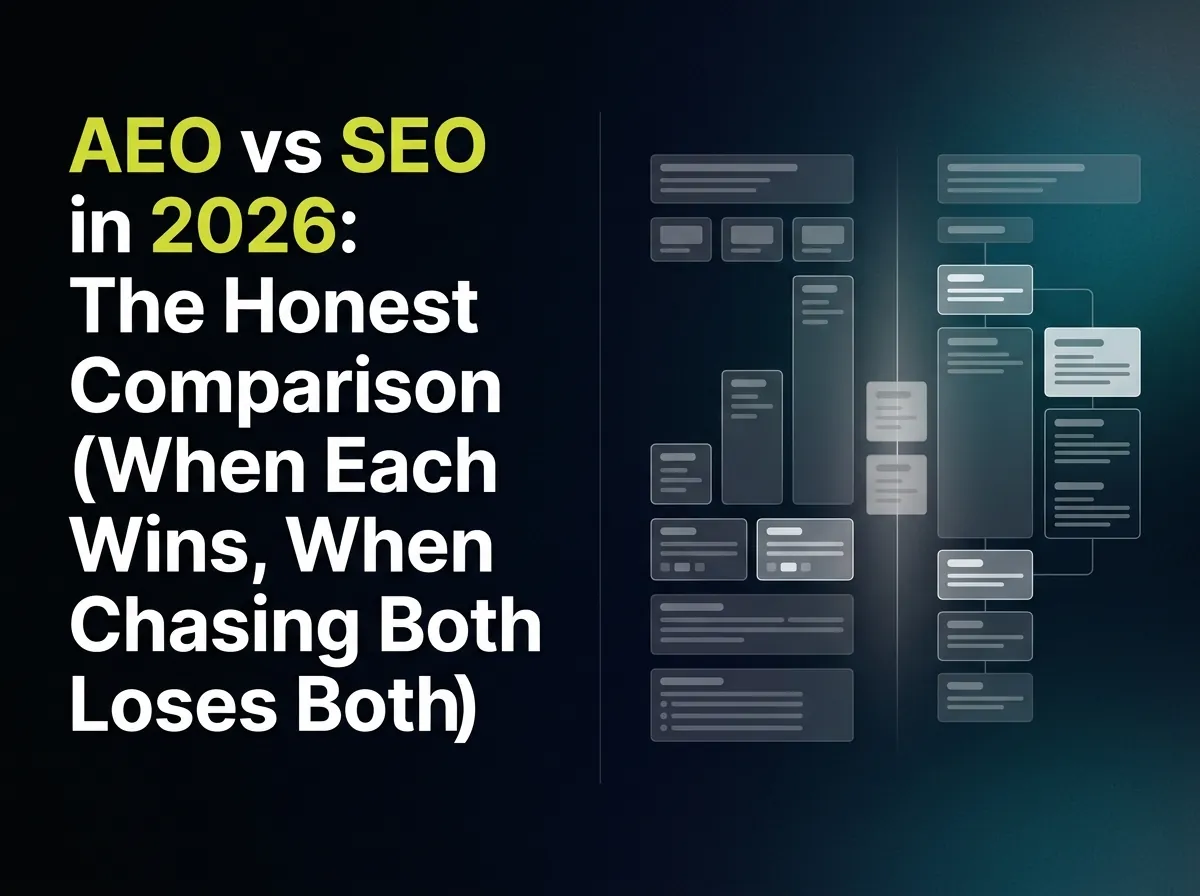
AEO does not replace traditional SEO.
Instead, both approaches complement each other:
In these sectors, users research extensively before making decisions.
Search is evolving toward conversational and multimodal experiences.
Traditional SEO helped businesses rank pages. Answer Engine Optimization helps businesses become the source of trusted information.
In modern search environments, being referenced may matter more than being clicked.
If your website generates traffic but fails to convert that visibility into leads, your strategy may focus on clicks rather than influence.
Book a consultation with UnFoldMart to implement an SEO strategy designed for modern AI-driven search environments.
Got Questions? We’ve Got Answers – Clear, Simple, and Straight to the Point
Increasingly the same team, with an expanded skill set. AEO isn't a separate function — it depends on solid technical SEO, on-page work, and content strategy as its foundation. What's added is prompt-level research, schema and entity architecture at a deeper level than most SEO teams historically owned, and AI-citation tracking. Agencies that split AEO into a separate service line often duplicate work and confuse reporting. The stronger model, and the one UnFoldMart operates, treats AEO as an integrated layer within a modern SEO engagement rather than a standalone product.
Categories where buyers use AI engines for research and comparison feel the impact fastest — B2B software, professional services, financial products, healthcare information, and considered consumer purchases (cars, appliances, electronics). Local services, transactional queries, and impulse purchases feel it least, because those users still default to Google or direct search. A useful test: check your top 20 buyer prompts inside ChatGPT and Perplexity. If competitors are being cited and you aren't, AEO is already a live pipeline issue for you, whatever the industry.
Content briefs shift in three concrete ways. First, every H2 mirrors a real user question rather than a keyword phrase. Second, each section leads with a 40–60 word direct answer before elaborating, so AI engines can extract a self-contained response. Third, briefs specify entity coverage — which brands, tools, people, or concepts must be named and how they connect — alongside the traditional keyword list. UnFoldMart's AEO content briefs also require an author with linked Person schema and at least one first-hand angle no AI could synthesise from public sources.
Featured snippets are a Google-only, single-source format — one page gets pulled into position zero. AEO covers the newer, multi-source citation model used by generative engines, where an AI stitches together information from several sources and lists them as references. Featured-snippet tactics (short direct answers, clean formatting) still help with AEO, but AEO adds requirements those tactics never had: schema depth, explicit entity signals, verifiable authorship, and off-site trust markers. AEO is the successor category, not a rename.
Answer Engine Optimization (AEO) is the discipline of structuring content so AI-powered answer engines — ChatGPT, Perplexity, Google AI Overviews, Copilot — can extract, trust, and cite it inside their generated answers. It's a specific subset of SEO focused on the citation moment rather than the ranking moment. AEO doesn't replace SEO; it addresses the layer above it, where the AI decides which of the ranked sources to actually quote. The businesses that need AEO most are ones whose buyers ask AI engines the questions their brand should be answering.