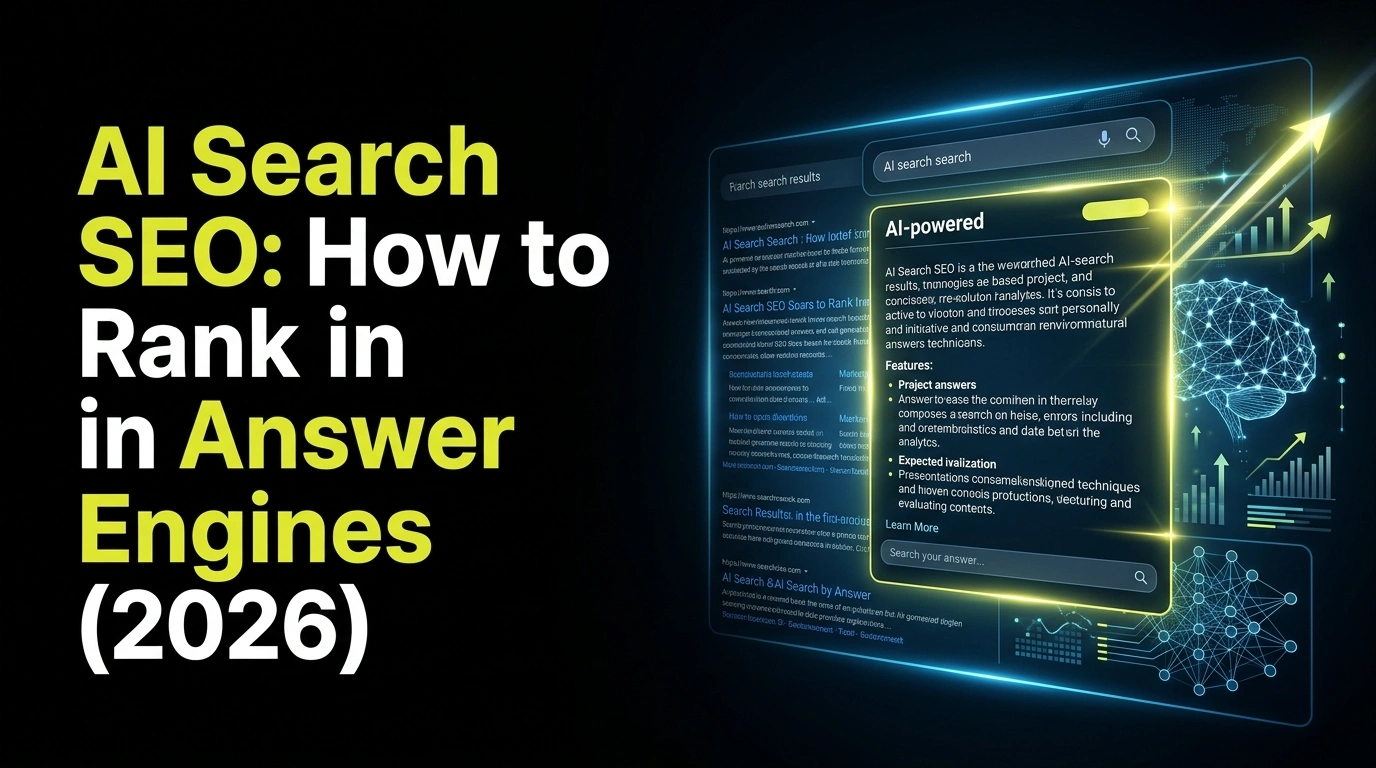
AI Search SEO: How to Rank for Answer Engines in 2026
Learn how to rank in AI-powered answer engines in 2026. Discover AI Search SEO strategies, entity optimization, zero-click tactics, and citation-focused visibility.
Learn how to rank in AI-powered answer engines in 2026. Discover AI Search SEO strategies, entity optimization, zero-click tactics, and citation-focused visibility.
Real projects across branding, packaging, websites and growth.
Straight answers on this topic from the UnFoldMart team.




From branding and packaging to Webflow websites, SEO, AEO and GEO, UnFoldMart brings strategy, design and growth under one team for 250+ brands across 10 markets. Tell us where you want to grow and we'll show you the fastest way there.
Search has changed permanently.
For years, SEO meant ranking in the top ten blue links. If you ranked first, you earned the click. If you earned the click, you earned the opportunity.
In 2026, that model no longer defines visibility.
AI-powered answer engines now summarize, interpret, and respond directly to users. Instead of sending traffic to websites, they often generate complete answers within the search interface.
This shift has created a new discipline.
AI Search SEO, also called Answer Engine Optimization, is the strategy of structuring your website so AI systems choose your content as a trusted source.
If your business depends on discoverability, you must adapt.
AI Search SEO is the practice of optimizing content and site structure to increase visibility within AI-generated answers rather than traditional ranking positions.
Instead of focusing purely on keyword placement and backlinks, AI Search SEO focuses on:
Traditional SEO aims for clicks. AI Search SEO aims for citations and inclusion in generated responses.
In this new environment, being referenced matters more than being ranked.
Answer engines are AI-driven systems that generate direct responses to user queries by analyzing and summarizing multiple sources.
Examples include:
Unlike traditional search engines that display ranked results, these platforms:
This reduces clicks but increases the importance of brand visibility.
If your content is cited, your brand becomes part of the answer.
AI models do not randomly select sources. They rely on signals.
AI systems prioritize recognizable entities. If your brand is consistently associated with a topic across the web, your chances of citation increase.
Surface-level articles rarely get cited. Comprehensive coverage signals authority.
Clear headings, concise explanations, and logical formatting make extraction easier.
AI prefers content that directly answers questions without unnecessary filler.
Author bios, case studies, data references, and social proof strengthen credibility.
Brands that communicate consistent positioning across channels appear more reliable.
AI favors clarity and authority over clever writing.
Here is how the strategy has evolved.
Traditional SEO still matters, but it is no longer sufficient.
The new goal is to become a trusted knowledge source.
Search engines increasingly understand brands as entities rather than websites.
Entity clarity increases AI trust.
Single blog posts rarely dominate AI citations.
Topical clusters outperform isolated keyword pages.
AI extracts information from structure.
Structure improves extractability.
AI models are designed to reduce misinformation.
Trust increases citation probability.
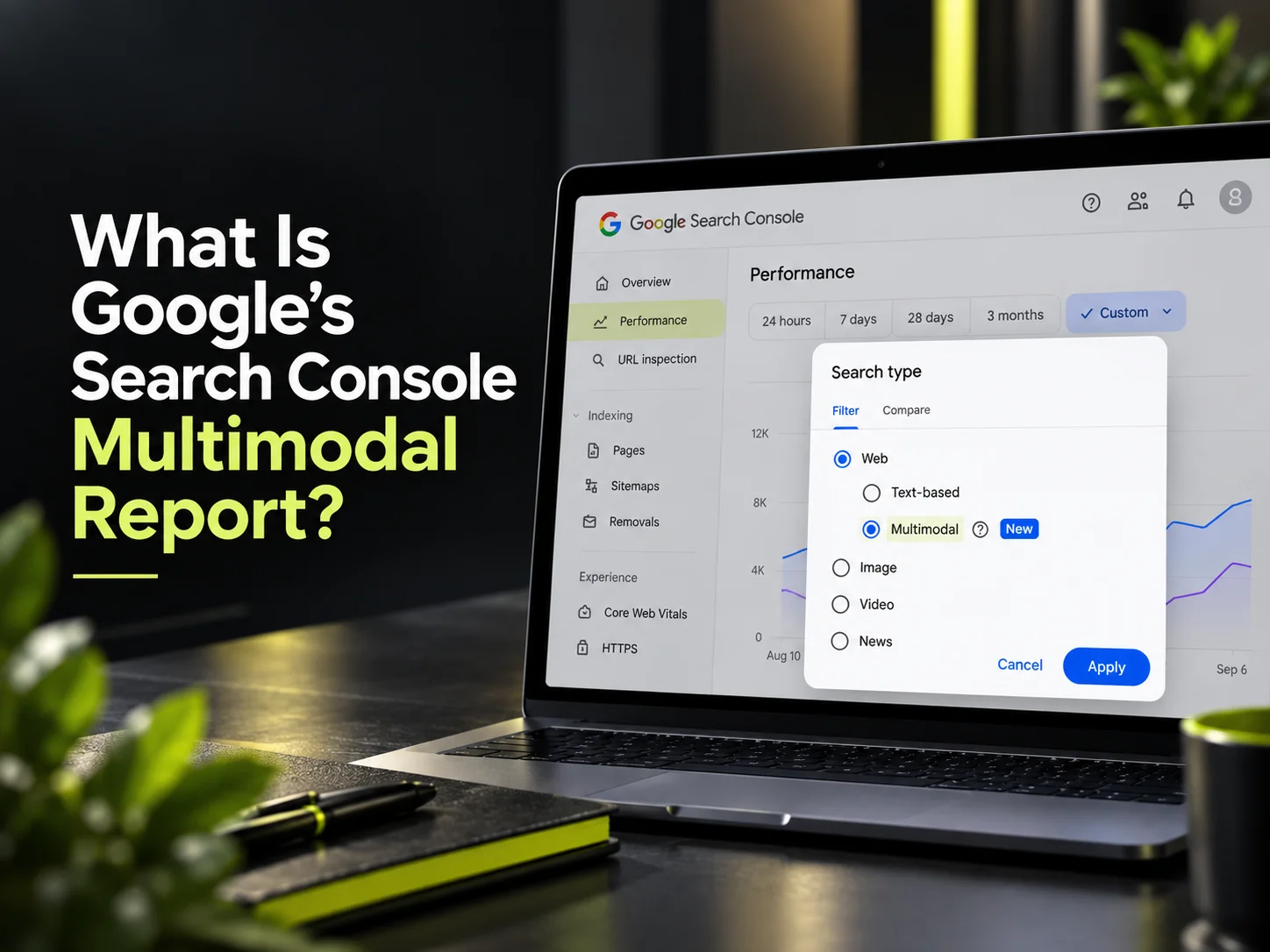
Search is no longer text-only.
Optimizing visual elements and schema improves visibility across multimodal search.
One of the biggest shifts in 2026 is the rise of zero-click search.
Users receive answers without visiting websites.
Benefits of AI citation include:
AI prefers clean, readable architecture.
AI models reward depth, authority, and precision.
SEO is not disappearing. It is evolving.
The focus is shifting from page-level competition to knowledge-level authority.
AI Search SEO is not a replacement for traditional SEO.
It is an expansion.
If you want to rank in answer engines in 2026, focus on:
The goal is simple.
Become the source AI trusts.
AI search is accelerating faster than most businesses realize.
If your website is not structured for answer engines, you are already losing invisible visibility.
At UnFoldMart, we help brands build entity authority, topical dominance, and AI-ready SEO systems.
Got Questions? We’ve Got Answers – Clear, Simple, and Straight to the Point
Yes — a well-structured, expert-authored page from a small site can absolutely earn citations. Answer engines don't just favour high-DR domains; they favour whichever source most cleanly answers the specific query with verifiable authority behind it. Small sites win by picking narrow, high-intent topics where big publishers write shallow content, and by combining depth, tight schema, and a real author with credentials. It's actually one of the few places in 2026 where topical specialisation still outperforms domain scale.
Only partly. Traffic still matters, but two new metrics deserve equal weight: citation share (how often your brand is quoted inside AI answers for target prompts) and assisted-conversion rate from AI-referred visitors, who typically arrive further down the funnel and convert at higher rates than classic organic traffic. Some brands see traffic decline while pipeline grows, because AI is filtering out low-intent visitors upstream. UnFoldMart's client reports pair traffic with citation share and pipeline attribution so the full picture is visible.
AI queries are longer, more conversational, and more intent-loaded than classic Google queries. Instead of "best CRM for SaaS," users type "which CRM handles product-led SaaS onboarding under €450 a month." Optimising for answer engines means researching the actual prompts people type into ChatGPT, Perplexity, and AI Overviews — not just Google keyword volumes — and building pages that answer the full conversational query. UnFoldMart layers prompt research (Otterly, Peec, manual sampling) on top of traditional keyword research for every AEO project.
Answer engines pull sources based on how confidently they can attribute a specific claim to a specific page. That confidence is built from four things: (1) the page contains a short, direct answer to the exact question asked; (2) the claim is corroborated on other trusted sources the model already knows; (3) the site has clear entity signals (Organization, Person, sameAs schema); and (4) the author or brand has visible expertise. Pages that check all four boxes get cited repeatedly. UnFoldMart's answer-engine audits score every top page against these four dimensions.
A search engine returns a list of links for the user to evaluate; an answer engine synthesises a single answer and cites the sources it used. That shift changes the goal of SEO. Ranking in position one on Google still matters, but no longer guarantees the click — the user may read the AI summary and never scroll. Winning for answer engines means being one of the two or three sources the AI actually quotes when composing its response. UnFoldMart treats these as parallel jobs: keep classic rankings, and separately optimise for citation share inside AI answers.

.webp)