Headless CMS platforms promise speed, scalability, and complete design freedom. By separating the content layer from the presentation layer, organizations can deliver experiences across websites, apps, and emerging interfaces using a single backend.
However, this flexibility comes with a hidden cost: SEO responsibility shifts almost entirely from the CMS to the development architecture.
Many companies migrate to headless systems expecting performance gains, only to experience unexpected declines in organic traffic. The causes are rarely content quality issues. Instead, they stem from technical barriers such as rendering failures, incomplete metadata implementation, broken crawl paths, or inconsistent routing.
Search engines cannot index what they cannot reliably access, interpret, or render.
In 2026, AI-driven search systems intensify this challenge. Modern ranking and citation models evaluate not just content relevance but structural clarity, accessibility, and machine-readable signals across entire websites.
A headless site can deliver an exceptional user experience while remaining partially invisible to search engines.
Developer flexibility alone does not guarantee discoverability. Visibility requires deliberate SEO engineering.
What Is SEO for Headless CMS Websites?
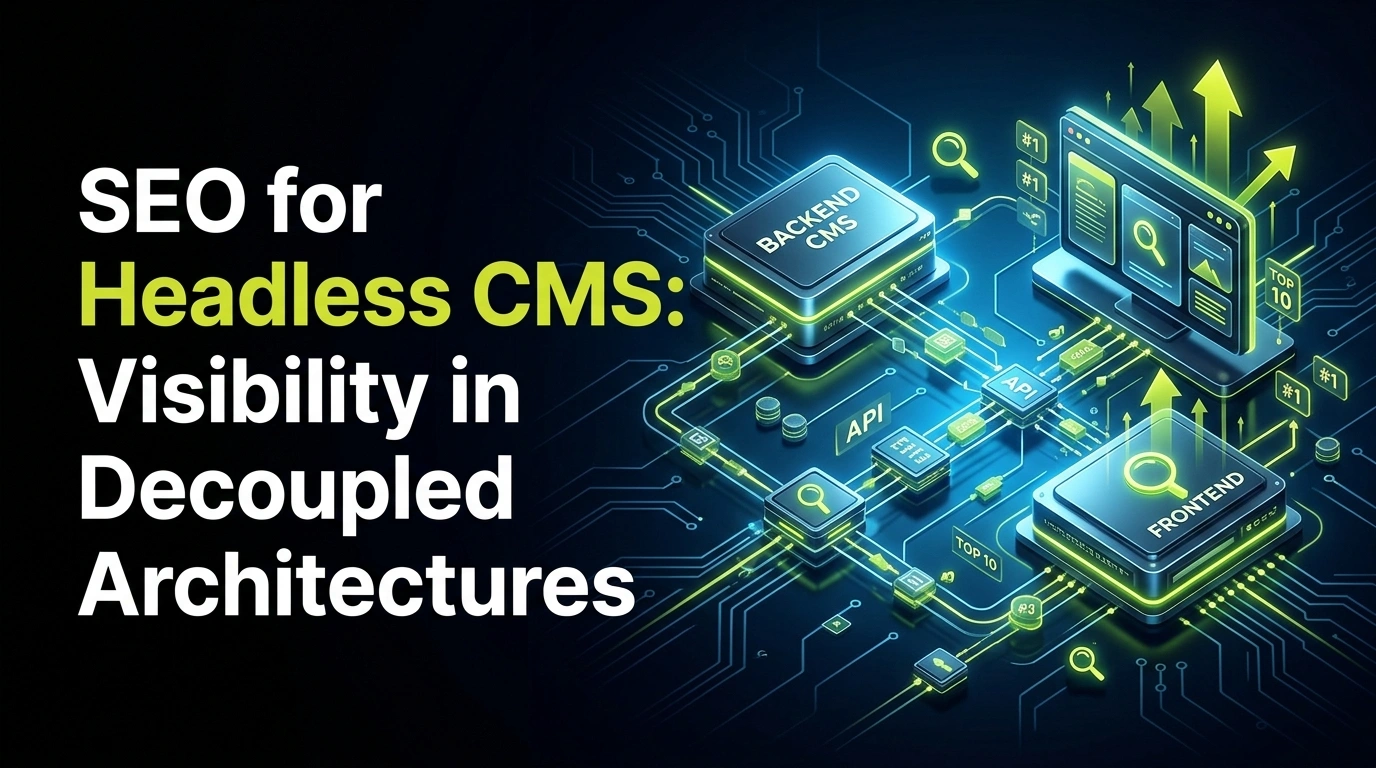
SEO for headless CMS websites refers to the technical and structural practices required to ensure search engines can crawl, render, understand, and index content delivered through a decoupled architecture.
In traditional CMS platforms, content, templates, metadata, and routing are tightly integrated. Many SEO features work out of the box. Headless systems remove these defaults.
Key characteristics of headless environments include:
- Content stored in a backend system
- Delivery via APIs
- Independent frontend frameworks
- Dynamic rendering possibilities
- Custom routing logic
Because presentation is handled separately from content storage, SEO elements must be explicitly implemented.
This includes:
- Page rendering strategy
- Metadata injection
- Structured data generation
- Internal linking logic
- Sitemap creation
- Redirect handling
Headless SEO is less about plugins and more about architecture.
Why Architecture Matters in Headless SEO
Architecture determines how search engines discover and interpret your website.
Without predefined page templates, headless systems rely on routing frameworks and rendering logic to expose content. If these mechanisms are inconsistent or opaque, crawlers may miss important pages entirely.
Optimized architecture provides several benefits:
- Reliable crawl paths across all URLs
- Predictable URL structures
- Clear relationships between content types
- Reduced rendering failures
- Stronger topical signals
Poor architecture can produce orphan pages, duplicate routes, inconsistent metadata, or hidden content accessible only through scripts.
Core Principles of SEO for Headless Websites
Crawlability First
Every important page must be reachable through crawlable links. XML sitemaps should complement internal linking rather than replace it.
Renderability
Content must appear in the HTML that search engines ultimately process. Heavy reliance on JavaScript rendering can reduce indexing reliability.
Metadata Control
Headless systems do not automatically populate titles, descriptions, canonical tags, or robots directives. These must be generated programmatically.
Performance Optimization
Headless architecture can deliver excellent speed but requires careful optimization of scripts, APIs, and rendering methods.
Consistency
Predictable patterns across routes and templates help search engines understand site structure.
Rendering Strategies Explained
Server-Side Rendering (SSR)
Pages are generated on the server and delivered as complete HTML.
- Reliable crawlability
- Immediate content visibility
- Strong compatibility with search engines
Static Site Generation (SSG)
Pages are built during deployment and served as static files.
- Excellent performance
- Minimal server overhead
- Highly reliable indexing
Incremental Static Regeneration (ISR)
A hybrid model where pages are rebuilt selectively as content updates.
Client-Side Rendering (CSR)
CSR loads minimal HTML and renders content via JavaScript in the browser.
This approach can cause SEO issues such as delayed content visibility and indexing gaps.
URL Structure and Routing in Headless Systems
Clean URLs remain fundamental to search visibility.
Best practices include:
- Descriptive, human-readable URLs
- Stable routing patterns
- Consistent slug generation
- Avoidance of hash-based navigation
Example:
/blog/headless-cms-seo/
/blog/headless-cms-seo/rendering-strategies/
Such structures clearly communicate topical hierarchy.
Metadata and Structured Data Implementation
Page-Level Metadata
- Unique title tag
- Descriptive meta description
- Canonical URL
- Robots directives when needed
Social Metadata
Open Graph tags help maintain consistent content previews across platforms.
Structured Data
Schema markup improves machine understanding of page content.
Common schema types include:
- Article
- Product
- Organization
- FAQ
Programmatic generation ensures scalability.
Internal Linking Strategy for Headless Websites
Internal links must exist in rendered HTML to pass SEO signals effectively.
- Use standard anchor links
- Prevent orphan pages
- Maintain logical hierarchy
- Link related content contextually
Contextual links provide stronger semantic signals than navigation-only links.
Common SEO Mistakes in Headless Implementations
- Overreliance on client-side rendering
- Missing metadata across templates
- Incorrect canonical tags
- Broken redirects during migrations
- Inconsistent URL structures
These issues often occur when development decisions overlook crawlability and indexing requirements.
How Headless Architecture Impacts AI Search Visibility
AI-powered search systems prioritize reliable and structured sources.
Optimized headless sites can perform exceptionally well because they offer:
- Fast load speeds
- Clean semantic markup
- Structured content models
- Flexible schema implementation
Poorly rendered pages, however, may be excluded from AI-generated summaries.
Maintaining SEO Performance Over Time
Headless websites require continuous monitoring.
- Track crawl errors
- Audit metadata coverage
- Review rendering updates
- Monitor Core Web Vitals
Because deployments are frequent, SEO regressions can occur if changes are not carefully tested.
Conclusion: Freedom Requires Responsibility
Headless CMS platforms offer unmatched flexibility and scalability.
However, they remove many built-in SEO safeguards.
Successful headless SEO depends on deliberate architectural planning, reliable rendering strategies, structured metadata, and continuous monitoring.
When implemented correctly, headless websites can outperform traditional platforms in both user experience and search visibility.
Discoverability must be engineered.
Call to Action
If your headless website delivers powerful experiences but struggles to generate organic traffic or qualified leads, technical SEO gaps may be limiting visibility.
Book a strategy consultation with UnFoldMart to unlock the full search potential of your headless platform.

.webp)