How AI Is Changing Local Search Rankings in 2026
Discover how AI is transforming local search rankings in 2026, from personalized results to reputation signals, and learn how businesses can stay visible and competitive.
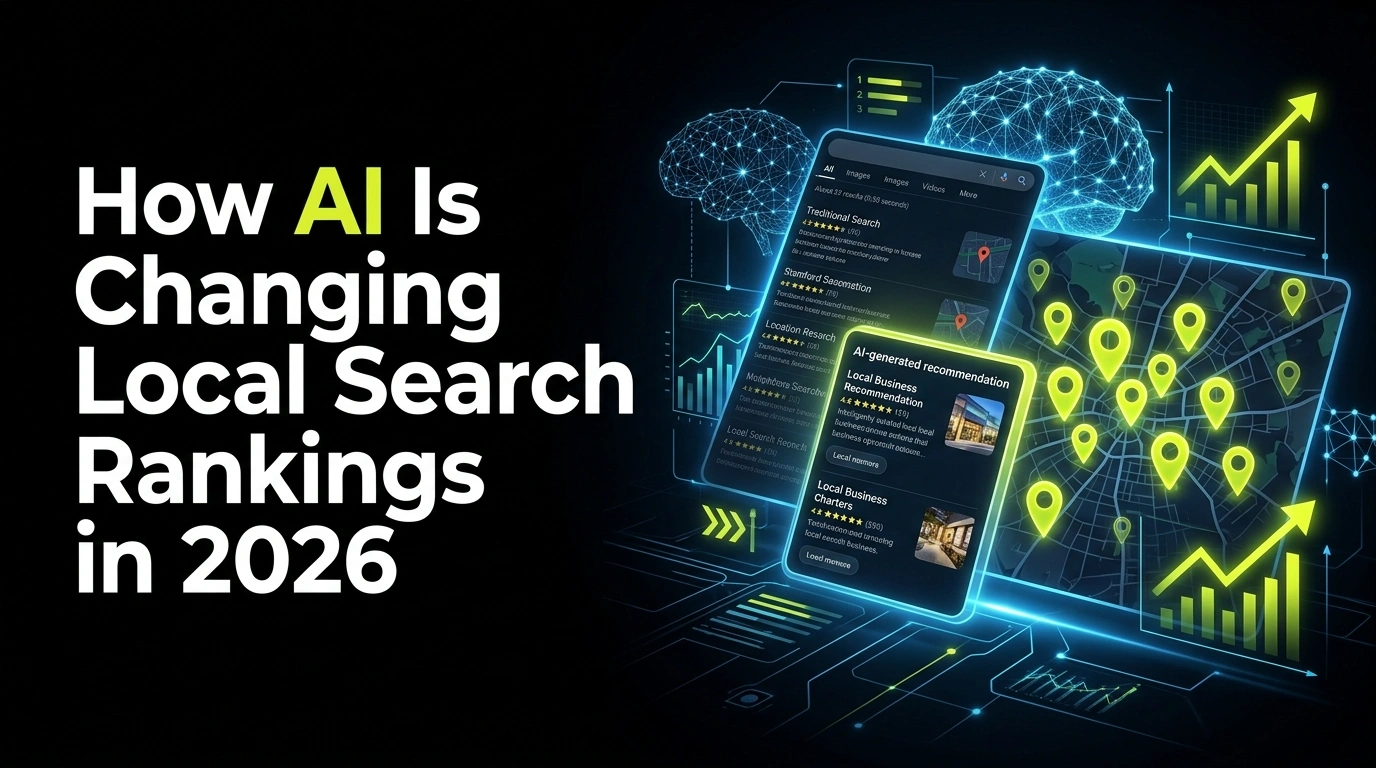
Discover how AI is transforming local search rankings in 2026, from personalized results to reputation signals, and learn how businesses can stay visible and competitive.
Real projects across branding, packaging, websites and growth.
Straight answers on this topic from the UnFoldMart team.




From branding and packaging to Webflow websites, SEO, AEO and GEO, UnFoldMart brings strategy, design and growth under one team for 250+ brands across 10 markets. Tell us where you want to grow and we'll show you the fastest way there.
For years, local search optimization followed a fairly clear formula. Businesses leaned on distance, keyword match, directory listings, and backlinks to lift local results.
If a business was near the searcher and set up well, it had a strong chance of showing in the local pack.
That old geo SEO playbook is now shifting fast.
AI now plays a central role in which local businesses show up, how they rank, and whether users see normal listings at all.
Search engines now read context, intent, user preferences, and real-world conditions before they show results.
This means two people in the same place may see different businesses for the same query.
AI-driven systems also power chat-style search, voice tools, map tips, and zero-click answers. For brands, that means SEO, GEO and AEO now work together.
Instead of just listing nearby options, these systems try to point to the best fix for a specific case.
Many businesses see rank swings even with no clear tech change, because the way search is scored has changed.
Distance alone no longer gives visibility. Relevance, trust, engagement, and context now decide if a business is shown or missed.
AI-driven local search uses machine learning, language tech, and live data to give context-aware location results.
Old local search leaned on set signals such as business categories, keywords, citations, and distance.
Modern systems go further. They study how users engage with businesses and what results meet their needs.
Key parts of AI-powered local search include:
For example, a search for "coffee near me" at 7 a.m. on a weekday may bring different results than the same search late at night or on a weekend trip.
AI systems also pull data from maps, reviews, photos, bookings, menus, and other sites to build a fuller view of each business.
Instead of ranking static listings, they point users to the entities that best fit intent.
The move to AI-led scoring has changed how relevance is set.
Keyword match alone cannot cover the range of real-world needs.
Someone searching for "best dentist" may put emergency help, insurance fit, patient reviews, or distance first, based on the case.
AI systems analyze signals such as:
Live data also matters more.
A restaurant that is busy now or closed now may be ranked lower than one with similar long-term stats.
Local SEO has moved from fixed setup to live performance checks.
AI reads queries in a wider setting, including time, device type, and location context.
Search engines try to solve tasks, not just match words.
Results are shaped by each user's tastes and past behavior.
Rankings rise and fall with live conditions and trends.
Businesses with strong trust signals, such as reviews and brand name, are more likely to be picked.
Modern search engines treat businesses as entities with traits and links.
An entity is a clear thing, such as a restaurant, clinic, or store, tied to data across the web.
Entity strength depends on:
Strong entity signals help AI systems know what a business offers and when it matters.
Local search has long balanced three factors:
AI is changing how these parts work together.
Prominence may beat proximity if a business has much stronger trust signals.
Relevance is judged more closely based on the intent behind each query.
Customer feedback now works as rich data for AI systems.
Search engines read review text to spot themes such as service quality, pricing, and reliability.
Important trust signals include:
Actions like calls, direction requests, and bookings also shape rankings.
Voice tools lead users to longer, more natural queries.
Users might ask, "Where can I get thin-crust pizza open right now near me?"
Businesses benefit from:
Chat-style search values clear, full answers. AEO matters here because answer engines want direct replies.
These weak spots cut trust and may cause businesses to be left out of results.
Maps now act more like discovery engines than simple lists.
AI curates results based on likely use, popularity, and personal fit.
Signals such as crowd size, fresh reviews, and trending spots affect visibility.
To stay competitive, businesses should focus on:
A strong entity profile, backed by trust signals, raises the chance of AI recommendations.
AI has turned local search from a fixed rank system into a live suggestion engine.
Visibility now depends on trust, engagement, and context, not just distance.
Businesses that give steady value and keep a strong digital identity are more likely to show across maps, assistants, and chat tools.
Local search is no longer just about being close. It is about being the best answer.
If your business depends on local customers but still struggles to drive steady calls or leads from search, old SEO may be holding you back.
Book a strategy consultation with UnFoldMart to turn local search visibility into steady customer growth.
Got Questions? We’ve Got Answers – Clear, Simple, and Straight to the Point
They can change frequently due to real-time signals and personalization.
Yes, but it is balanced with relevance and prominence.
Extremely important. Both ratings and written feedback influence AI assessments.
Yes. Strong customer relationships and authentic reviews can outweigh large marketing budgets.
Yes, but foundational tactics must be supplemented with reputation management and engagement strategies.

.webp)