Be the brand AI
recommends by default.
Your buyers ask AI about your category. Your brand should be the first one it names. We engineer your entity authority, training-data presence, and AI crawler signals so that happens by default, across ChatGPT, Perplexity, Gemini, Claude, and beyond.
























What is GEO at UnFoldMart?
Generative Engine Optimization is the strategic practice of shaping how AI engines understand, describe, and recommend your brand. Where AEO targets the answer (getting cited inside a specific response), GEO targets the underlying knowledge AI has about your brand, your category, and your competitive position. Get it right, and AI engines name you first. Get it wrong, and they describe your category without you in it.
Making sure AI engines recognize your brand as a distinct entity with consistent attributes: founders, location, services, industries, and category position.
Being represented inside the datasets that train AI models: Wikipedia, Wikidata, Common Crawl, GitHub, Reddit, and authoritative press.
Ensuring AI engines that browse the live web (Perplexity, ChatGPT search, Gemini) can crawl, parse, and recommend your site cleanly via llms.txt, semantic HTML, and clean entity markup.
Building contextual signals that make AI engines link your brand to the right categories, competitors, and buyer needs, across press, reviews, social, and editorial mentions.
GEO wins: when AI engines stop describing and start recommending
Built Wikipedia entity buildout, deployed product entity schema, and seeded category signals across food publications and recipe communities.
Result: AI engines now name Haldiram's by default when buyers ask for ready-to-eat Indian food in 5 months.

Built entity profiles across Wikidata, Crunchbase, and G2, deployed llms.txt and entity schema, and seeded category content across Reddit and GitHub.
Result: ChatGPT and Perplexity now name the brand as a top-3 DevOps recommendation in 4 months.
Built Wikipedia entity buildout for the frozen pizza category, deployed Product and Recipe schema, and seeded category association signals across food publications and recipe communities.
Result: AI engines now name Dr. Oetker by default when buyers ask for frozen pizza recommendations in 5 months.
Why GEO Matters in 2026?
900M+
weekly active ChatGPT users in 2026, up from 400M a year ago. Most ask vendor, product, and category questions before they ever open Google.
Source: TechCrunch, February 27, 202682%
of B2B technology queries on Google now trigger an AI Overview, up from 36% a year ago. If you're not named in the AI summary, you've lost the buyer before they scroll.
Source: BrightEdge AI Overviews One Year Review, February 202673%
of brands ranking on page 1 of Google have zero AI mentions across ChatGPT, Perplexity, and Gemini. SEO and GEO measure different things, and ranking doesn't transfer.
239%
median lift in AI citations for brands that build earned media distribution and entity authority across third-party sources. The path to being recommended runs through what the web says about you, not what you say about yourself.
Source: Stacker GEO Research, March 16, 2026Signs your website needs GEO help.
If AI engines describe your category every day without naming your brand, you're missing the most important conversation in B2B today. Here's how to recognize whether GEO is the gap.


Our GEO services
Full-stack GEO, delivered as one integrated retainer or as standalone audits. Pick what you need. We don't sell shelfware.
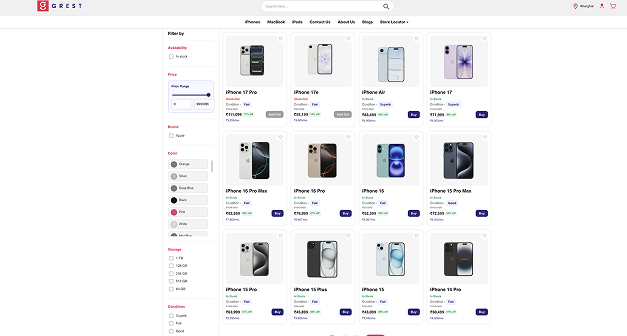
We test 100 to 500 buyer-intent prompts across 8 AI engines, log how your brand is named (or not), audit your entity presence across Wikipedia, Wikidata, and Google Knowledge Graph, and deliver a prioritized 90-day GEO roadmap.
You get the roadmap whether you hire us or not.
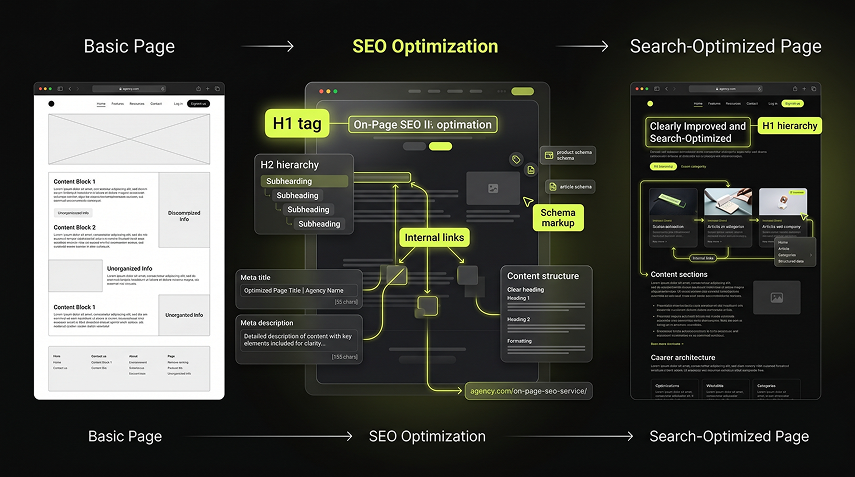
Wikidata entry buildout, Crunchbase and LinkedIn optimization, sameAs schema deployment, NAP consistency across directories, and Organization schema with verified entity attributes (founders, location, services, category).
This is the layer that determines whether AI engines know who you are.
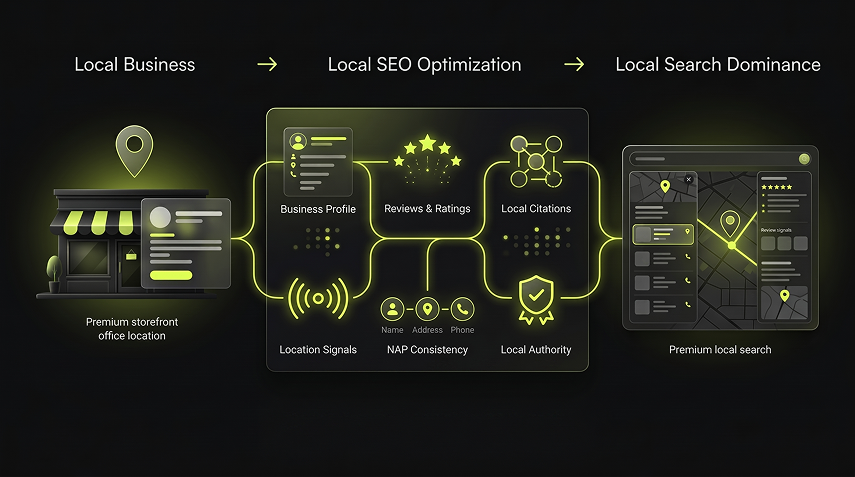
Wikipedia entity buildout, contribution to Common Crawl-indexed sources, GitHub presence for technical brands, authoritative press placements, and content seeding in the corpora AI models train on.
This is the layer that determines whether AI engines know you exist at all.
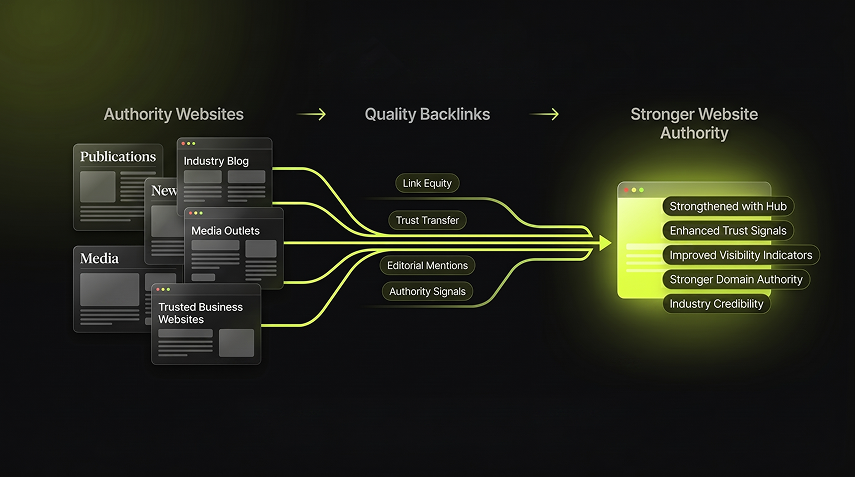
llms.txt deployment, semantic HTML rebuild, entity markup, AI crawler allowlisting (GPTBot, ClaudeBot, PerplexityBot, Google-Extended), and clean content extraction for Perplexity, ChatGPT search, and Gemini.
This is the layer that determines whether AI engines surface you in real-time queries.
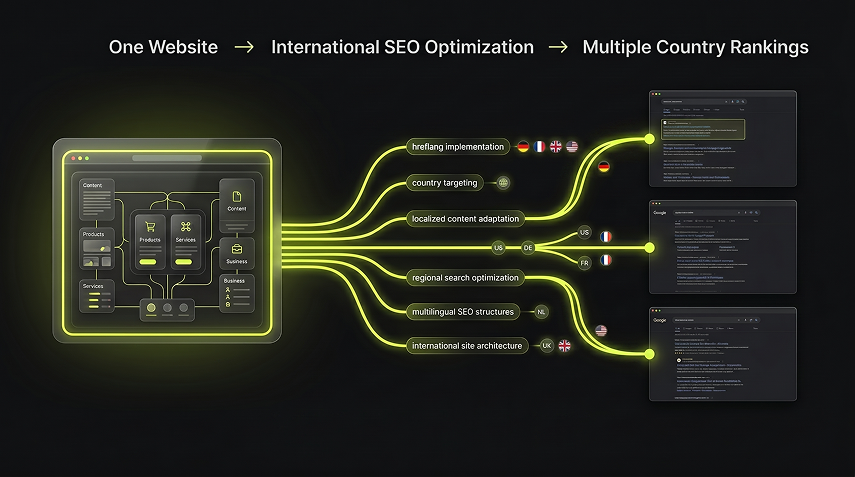
Editorial citation building, expert thought leadership, original research production, podcast placements, and brand mention seeding across Reddit, G2, Trustpilot, Capterra, and topical communities AI engines weight most heavily.
This is what turns "a company that does X" into "the company AI names for X."
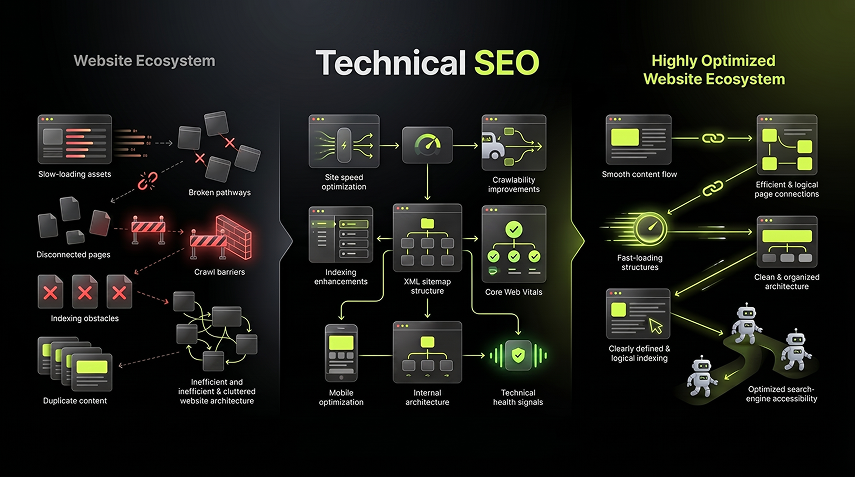
Native German, Dutch, French, and English GEO. Locale-specific entity buildouts, multilingual schema, country-specific Knowledge Graph optimization, and regional citation building across DACH and Benelux publications.
Built for brands scaling AI brand recognition across Europe and the globe.
Our GEO process
A 90-day entity foundation sprint, then a continuous brand recommendation lift cycle. Built for compounding category authority, not one-off mentions.
We map 100 to 500 buyer-intent prompts, run them across 8 AI engines, and log how your brand is described, named, recommended, or completely missed against your top three competitors.
We translate the baseline into a prioritized 90-day GEO roadmap. Which entity gaps to fix. Which AI engines to focus on. Where the recommendation arbitrage is.
Entity and authority work ships first, then training data presence, then real-time retrieval and brand association in parallel. All four GEO layers running together.
We re-run the prompt set every 30 days across all 8 engines. Monthly recommendation share report tracks new wins, competitor recommendations, and where the next 10% is hiding.
The prompt set expands. New AI engines get added. Entity signals deepen. GEO compounds when you run it for 12 months, not 12 weeks.
B2B industries we know inside-out
Eight verticals where we've ranked brands across DACH, Benelux, the EU, the US, the UK, and India. Specialized enough to know the buyer journey. Versatile enough to scale across markets.
UnFoldMart vs Other GEO Agencies
Six dimensions buyers should evaluate when hiring a GEO agency. Here's where we stand on each, and where most agencies don't.



Tools we use



Transparent Pricing
Audit-led pricing. No setup fees, no contracts longer than 90 days, no shelfware. The audit comes first, and the roadmap is yours whether you continue with us or not.
Working with brands across 7 markets
.svg)
.png)
SEO vs AEO vs GEO
Three disciplines, one goal: showing up where buyers actually look. Here's how they fit together, and which one fits your stage.
What’s included in every retainer
Every GEO retainer ships these twelve deliverables. No add-ons, no upcharges, no hidden scope.
Other Services










Frequently asked questions
The eight questions buyers ask before they book the GEO audit. Direct answers, specific numbers, no agency hedging.
GEO (Generative Engine Optimization) is the discipline of engineering your brand's entity authority and training-data presence so AI engines recommend you by name when buyers ask category questions. SEO targets blue links in search results. AEO targets being cited inside AI answers. GEO targets being the brand AI recommends as the default category answer. The three disciplines compound when run together, but GEO is the apex layer where category dominance gets decided.
First entity recognition wins typically appear in weeks 6 to 10 of an engagement. Compounding recommendation share lift takes 12 months for category dominance. GEO is slower than AEO because entity authority requires sustained work across Wikipedia, Wikidata, third-party publications, and AI training data sources. The buyers who commit to 12 months see the biggest compounding returns. The buyers who can't shouldn't start.
We measure recommendation share, which is the percentage of buyer-intent prompts where AI engines name your brand by default versus your top three competitors. Every retainer ships a monthly recommendation share report across all 8 AI engines (ChatGPT, Perplexity, Google AI Overviews, Microsoft Copilot, Claude, Gemini, Meta AI, Grok), tracking brand mention rate, share of AI voice, and category positioning. Reported to revenue, not to vanity metrics.
The right answer depends on your buyer profile, but GEO requires broader engine coverage than AEO because entity authority compounds across the full AI ecosystem. B2B SaaS buyers research most in ChatGPT, Perplexity, and Google AI Overviews. Enterprise buyers use Microsoft Copilot heavily. D2C and consumer brands benefit from Meta AI and Grok presence. Gemini matters because Knowledge Graph signals feed both Gemini and Google AI Overviews simultaneously. We track all 8 engines by default in every retainer.
Our one-time GEO audit is €3,000 and includes a 500-prompt brand reality check across 8 AI engines plus a 90-day execution roadmap. Monthly retainers start at €3,500 for single-locale Starter and €6,000 for full four-layer Growth across two locales. Multi-market Scale programs are quoted custom. All retainers run on 90-day engagements with no 12-month lock-ins.
Yes, multilingual GEO is our specialty. We execute native GEO in German, Dutch, French, English, Spanish, and Italian, with locale-specific Wikipedia, Wikidata, and Knowledge Graph work by country. AI engines train on locale-specific data, so entity authority is engineered separately for each market. DACH (Germany, Switzerland, Austria) and Benelux are our strongest geographic specialties, with Frankfurt operational presence.
Start with the audit. The €3,000 one-time GEO audit gives you a brand reality check scorecard, a competitive benchmark against your top three competitors across 8 AI engines, an entity presence audit across Wikipedia, Wikidata, and Google Knowledge Graph, and a prioritized 90-day execution roadmap. The roadmap is yours whether you hire us afterwards or not. Most brands move from audit to a Starter or Growth retainer once they see exactly where their entity and recommendation gaps are.
Wikipedia is one of the most-cited training data sources for AI engines, with Wikipedia accounting for 7.8% of all ChatGPT citations according to Yext's analysis of 6.8 million citations. Brands without Wikipedia entity presence are systematically harder for AI engines to recognize, name, and recommend. Wikipedia entity buildout is included in our Growth and Scale retainers, and is one of the highest-leverage moves in any 90-day GEO engagement. That said, Wikipedia alone isn't enough. Real GEO requires entity work across Wikidata, Knowledge Graph, authoritative press, and the third-party platforms AI engines crawl most.
.jpeg)



Ready to see exactly where AI engines name your competitors instead of you?
Get a GEO audit from a senior strategist. Brand reality check across 8 AI engines, entity presence audit across Wikipedia, Wikidata, and Knowledge Graph, and a four-layer GEO audit, all in one report. 90-day prioritized roadmap included.