What Is AI SEO? A Complete Guide for Businesses in 2026
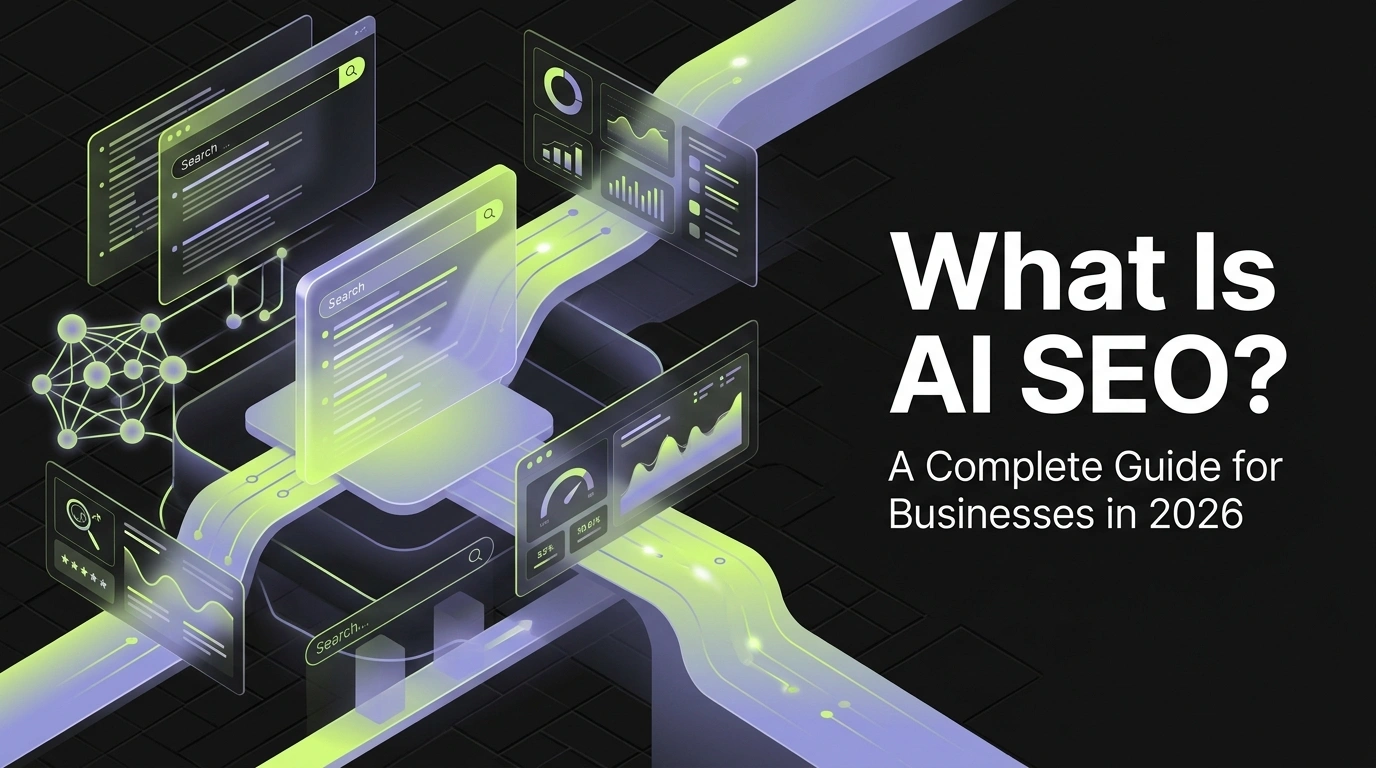
Search engine optimization is no longer what it used to be. With the rise of AI-driven search experiences, including Google’s AI-powered results and conversational search engines, businesses are facing a new reality. Traditional SEO alone is no longer enough.
In 2026, search is becoming more intelligent, more predictive, and more user-focused than ever before. Users are no longer just typing keywords. They are asking questions, expecting personalized answers, and interacting with search engines in a more natural way.
For businesses, especially startups, mid-size companies, and enterprises expanding across Europe, this shift presents both a challenge and an opportunity.
This is where AI SEO comes in.
AI SEO combines artificial intelligence with search engine optimization strategies to help businesses improve rankings, scale content, and make smarter, data-driven decisions.
In this guide, we will explore what AI SEO is, how it works, how it compares to traditional SEO, and how businesses in Europe can use it to drive sustainable digital growth.
What is AI SEO?
AI SEO refers to the use of artificial intelligence technologies such as machine learning, natural language processing (NLP), and data analytics to enhance and automate various aspects of search engine optimization.
Instead of relying solely on manual processes, AI SEO leverages tools and algorithms to:
- Analyze large volumes of search data
- Identify keyword opportunities
- Optimize content for search intent
- Automate technical SEO tasks
- Predict ranking trends
In simple terms, AI SEO makes SEO faster, smarter, and more scalable.
While traditional SEO focuses on manual research and execution, AI SEO introduces automation and predictive insights. This allows businesses to stay ahead of constantly evolving search algorithms.
How AI Is Changing SEO in 2026
Artificial intelligence is fundamentally transforming how search engines work and how businesses need to approach SEO.
1. AI-Powered Search Experiences
Search engines now provide direct, AI-generated answers instead of just listing links. This means businesses must optimize content not only for rankings but also for inclusion in AI-generated responses.
2. Natural Language and Conversational Search
Users are increasingly using conversational queries like:
“What is the best marketing strategy for startups in Germany?”
“How can I improve SEO using AI tools?”
AI helps search engines understand context, intent, and nuance behind these queries.
3. Semantic Search and Intent Understanding
Search engines now focus less on exact keywords and more on user intent. AI enables deeper understanding of topics. This means content must be comprehensive and context-rich.
4. Automation of SEO Tasks
Tasks like keyword clustering, internal linking, and content optimization can now be automated using AI tools. This saves time and improves efficiency.
5. Predictive SEO and Data Insights
AI can analyze patterns and predict which keywords, topics, or strategies are likely to perform well in the future. This helps businesses stay ahead of competitors.
Key Components of AI SEO
AI SEO is not a single tactic. It is a combination of multiple capabilities working together.
AI Keyword Research and Clustering
AI tools can analyze thousands of keywords and group them based on intent. This helps businesses target entire topic clusters instead of individual keywords.
AI Content Creation and Optimization
AI assists in generating content ideas, optimizing structure, improving readability, and ensuring alignment with search intent.
Technical SEO Automation
AI can identify technical issues such as broken links, slow page speeds, and crawl errors, often in real time.
AI-Driven Link Building
Advanced tools can identify high-quality backlink opportunities and outreach strategies based on data.
SERP Analysis and Predictive Insights
AI can analyze top-ranking pages and identify patterns that contribute to success. This helps refine content strategies.
Voice Search Optimization
With the rise of voice assistants, AI helps optimize content for natural, spoken queries.
Verdict:
Traditional SEO still plays a role, but AI SEO offers a clear advantage in speed, scalability, and data-driven decision-making. This makes it essential for businesses aiming to grow quickly.
Benefits of AI SEO for Businesses
1. Faster Execution
AI reduces manual work, allowing teams to execute SEO strategies more efficiently.
2. Better Keyword Targeting
AI identifies high-potential keywords based on intent and competition, improving ranking opportunities.
3. Improved Search Rankings
By optimizing content based on data and user intent, AI increases the likelihood of higher rankings.
4. Cost Efficiency
AI reduces the need for large teams by automating repetitive tasks.
5. Scalability
Businesses can produce and optimize large volumes of content without compromising quality.
6. Data-Driven Decisions
AI provides actionable insights, enabling smarter marketing strategies.
Challenges and Limitations of AI SEO
While AI SEO offers significant advantages, it is not without challenges.
Over-Reliance on Automation
Excessive dependence on AI can lead to generic or low-quality content.
Content Quality Risks
AI-generated content may lack originality, creativity, or brand voice if not reviewed by humans.
Need for Human Oversight
Strategic thinking, storytelling, and brand alignment still require human expertise.
Ethical and Accuracy Concerns
AI tools may generate inaccurate or biased information if not properly managed.
Key takeaway: AI should enhance human efforts, not replace them.
When Should Businesses Invest in AI SEO?
AI SEO is particularly valuable in the following scenarios:
- Startups scaling rapidly and needing fast execution
- Companies expanding into new markets, especially in Europe
- Businesses with high content demands
- Organizations relying on data-driven growth strategies
For companies aiming to grow quickly and efficiently, AI SEO can provide a significant competitive advantage.
AI SEO for Businesses Expanding in Europe
Expanding into European markets presents unique SEO challenges. Each country has different languages, search behaviors, and competitive landscapes.
For example:
- A SaaS startup entering Germany may need German-language content optimized for local search intent in cities like Berlin and Munich.
- An ecommerce business expanding into the Netherlands may focus on localized campaigns in Amsterdam and Rotterdam.
- A healthtech company targeting Switzerland may need multilingual SEO strategies for regions like Zurich and Geneva.
AI SEO helps businesses scale these efforts by:
- Automating multilingual keyword research
- Generating localized content
- Analyzing regional search trends
- Optimizing campaigns for different markets
This makes AI SEO particularly valuable for companies pursuing European market expansion strategies.
The Future of SEO: AI + Human Collaboration
The future of SEO is not AI vs humans. It is AI working alongside human expertise.
- AI provides speed, automation, and data insights
- Humans provide strategy, creativity, and brand voice
Businesses that combine both will achieve the best results.
This hybrid approach ensures:
- High-quality content
- Strong brand alignment
- Scalable growth
Ready to Strengthen Your AI-Driven SEO Strategy?
As search continues to evolve, businesses need more than traditional SEO strategies to stay competitive, especially in dynamic markets like Germany, the Netherlands, and Switzerland.
At UnFoldMart, we help startups, mid-size businesses, and enterprises leverage AI-driven SEO strategies to scale visibility, improve rankings, and drive measurable growth across European markets.
Whether you are looking to optimize your current SEO strategy or expand into new regions, our team can help you build a future-ready digital growth plan.
👉 Book a strategy call with UnFoldMart to explore your growth opportunities.
FAQs
Got Questions? We’ve Got Answers – Clear, Simple, and Straight to the Point
Still have questions?
No question is too small—let’s talk

Want to Turn Your Brand Into a Scalable Growth Engine?
We help modern businesses unify branding, websites, SEO, and paid media into one performance-driven system designed to scale.