What Is an AI SEO Framework?
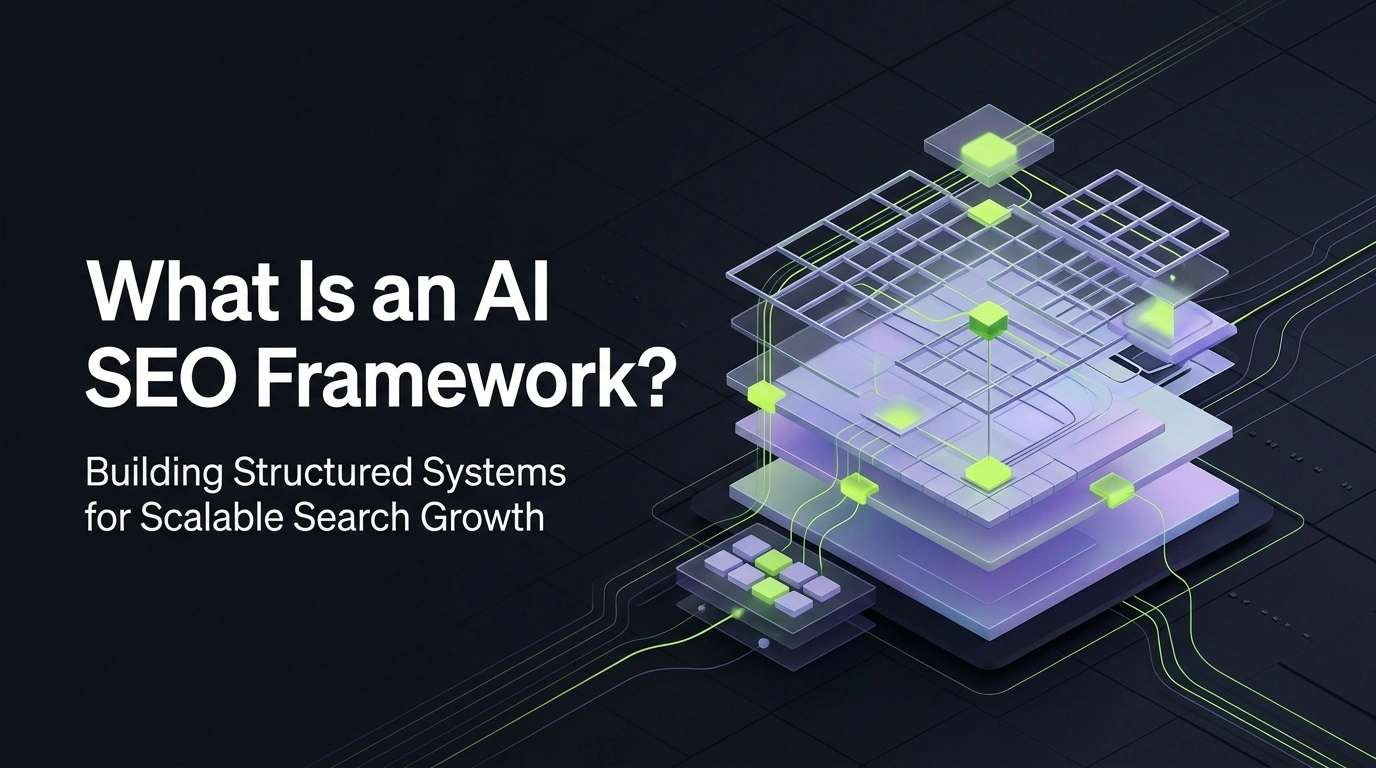
An AI SEO framework is a structured model that integrates artificial intelligence into every stage of search engine optimization.
Instead of treating SEO as a series of disconnected tasks, the framework organizes activities into interconnected layers. Each layer serves a specific purpose, from research and content creation to technical optimization and performance analysis.
At its core, an AI SEO framework combines:
- Data-driven insights powered by AI
- Strategic content planning based on user intent
- Scalable execution through automation
- Continuous optimization through analytics
The result is a system that is not only efficient but also adaptable to changes in search behavior and technology.
Why Businesses Need an AI SEO Framework in 2026
The need for a structured approach to SEO has never been greater.
Search is becoming more complex, with AI-driven platforms delivering answers instead of just links. Businesses must optimize for multiple environments, including traditional search engines and AI-powered systems.
At the same time, content demands are increasing. Companies need to produce more content across different markets, languages, and formats.
Without a framework, these challenges can lead to inefficiency and inconsistency.
An AI SEO framework provides clarity. It ensures that every effort contributes to a larger strategy and that resources are used effectively.
The AI SEO Framework: Core Pillars
A strong AI SEO framework is built on several key pillars. Each one plays a critical role in driving visibility and growth.
Research and Data Layer
Everything begins with data.
This layer focuses on understanding user intent, identifying opportunities, and analyzing search behavior. AI tools can process large volumes of data to uncover patterns that would be difficult to detect manually.
Keyword clustering, intent mapping, and competitor analysis are central to this stage.
Content Strategy Layer
Once insights are gathered, the next step is to build a structured content strategy.
This involves defining topic clusters, prioritizing content based on impact, and ensuring alignment with business goals.
The focus shifts from individual keywords to building authority around entire topics.
Content Creation Layer
Content creation is where strategy becomes tangible.
AI tools can assist with drafting, structuring, and optimizing content, enabling teams to produce content at scale. However, human input remains essential for maintaining quality, creativity, and brand voice.
The goal is to balance efficiency with depth.
Technical SEO Layer
A strong technical foundation ensures that content is accessible and performs well.
This layer includes site performance optimization, crawlability, indexing, and error detection. AI can automate many of these processes, making it easier to maintain technical health.
Generative Engine Optimization Layer
As AI-driven search platforms grow, businesses need to optimize for visibility within AI-generated answers.
This layer focuses on structuring content in a way that makes it easy for AI systems to interpret and use. Clarity, relevance, and authority are key factors.
Distribution and Authority Layer
Content must reach the right audience to be effective.
This layer focuses on building authority through backlinks, brand mentions, and digital presence across multiple platforms.
A strong distribution strategy amplifies the impact of content and reinforces credibility.
Measurement and Optimization Layer
The final layer focuses on performance.
AI tools can analyze data, track key metrics, and identify areas for improvement. Continuous optimization ensures that the strategy evolves based on results.
This iterative process is essential for long-term success.
How the AI SEO Framework Works
The strength of the framework lies in how these layers connect.
Insights from the research layer inform the content strategy. The strategy guides content creation, which is supported by a strong technical foundation. Distribution amplifies reach, while measurement provides feedback for continuous improvement.
Rather than operating in isolation, each layer feeds into the next, creating a cycle of optimization.
This interconnected approach ensures that efforts are aligned and scalable.
AI SEO Framework vs Traditional SEO Approach
Insight:
The AI SEO framework transforms SEO from a set of activities into a strategic system.
How to Implement the AI SEO Framework
Implementing an AI SEO framework requires a step-by-step approach.
The first step is to define clear objectives. Businesses must understand what they want to achieve, whether it is traffic growth, lead generation, or market expansion.
Next, they need to invest in the right tools. AI-powered platforms can support research, content creation, and analysis, but they must be aligned with the overall strategy.
Building a content strategy is the next step. This involves mapping out topics, creating clusters, and prioritizing efforts based on impact.
Execution follows, with a focus on producing high-quality, structured content. Technical optimization ensures that content is accessible and performs well.
Finally, performance must be monitored and refined continuously. AI tools can provide insights that help improve results over time.
Common Mistakes When Building an AI SEO Framework
Many businesses struggle to implement an effective framework due to a few common mistakes.
One of the biggest issues is a tool-first approach. Relying on tools without a clear strategy often leads to inconsistent results.
Another mistake is ignoring user intent. Without understanding what users are searching for, even well-optimized content may fail to perform.
Some businesses also neglect integration. Treating each layer as separate rather than interconnected reduces the effectiveness of the framework.
Avoiding these mistakes requires a balanced and strategic approach.
AI SEO Framework for Businesses in Europe
The European market adds additional complexity to SEO strategies.
Businesses must manage multiple languages, cultural differences, and varying search behaviors. An AI SEO framework can help scale these efforts, but localization remains essential.
Content must be adapted to each market, reflecting local intent and context. At the same time, regulatory considerations influence how data is used and how strategies are implemented.
For companies expanding across Europe, combining AI capabilities with localized expertise is critical.
Benefits of Using an AI SEO Framework
A well-implemented framework offers several advantages.
It provides clarity, ensuring that all efforts are aligned with a clear strategy. It improves scalability, allowing businesses to expand their content and optimization efforts efficiently.
It also enhances decision-making by leveraging data and insights. This leads to better outcomes and more effective use of resources.
Ultimately, an AI SEO framework creates a competitive advantage.
The Future of AI SEO Frameworks
As AI continues to evolve, SEO frameworks will become more advanced and integrated.
Automation will increase, reducing the need for manual processes. Tools will become more connected, enabling seamless workflows across different stages of SEO.
At the same time, the importance of strategy will grow. Businesses that combine AI capabilities with human expertise will achieve the best results.
Ready to Build Your AI SEO Framework?
SEO is no longer just about tactics. It is about building systems that can scale and adapt.
At UnFoldMart, we help startups, mid-size businesses, and enterprises design and implement AI SEO frameworks that drive measurable growth across European markets.
If you are looking to bring structure to your SEO efforts and unlock the full potential of AI, our team can help you build a framework that works.
👉 Book a strategy call with UnFoldMart to explore your growth opportunities.
FAQs
Got Questions? We’ve Got Answers – Clear, Simple, and Straight to the Point
Still have questions?
No question is too small—let’s talk

Want to Turn Your Brand Into a Scalable Growth Engine?
We help modern businesses unify branding, websites, SEO, and paid media into one performance-driven system designed to scale.