AI Search Ranking Factors: What Determines Visibility in 2026?
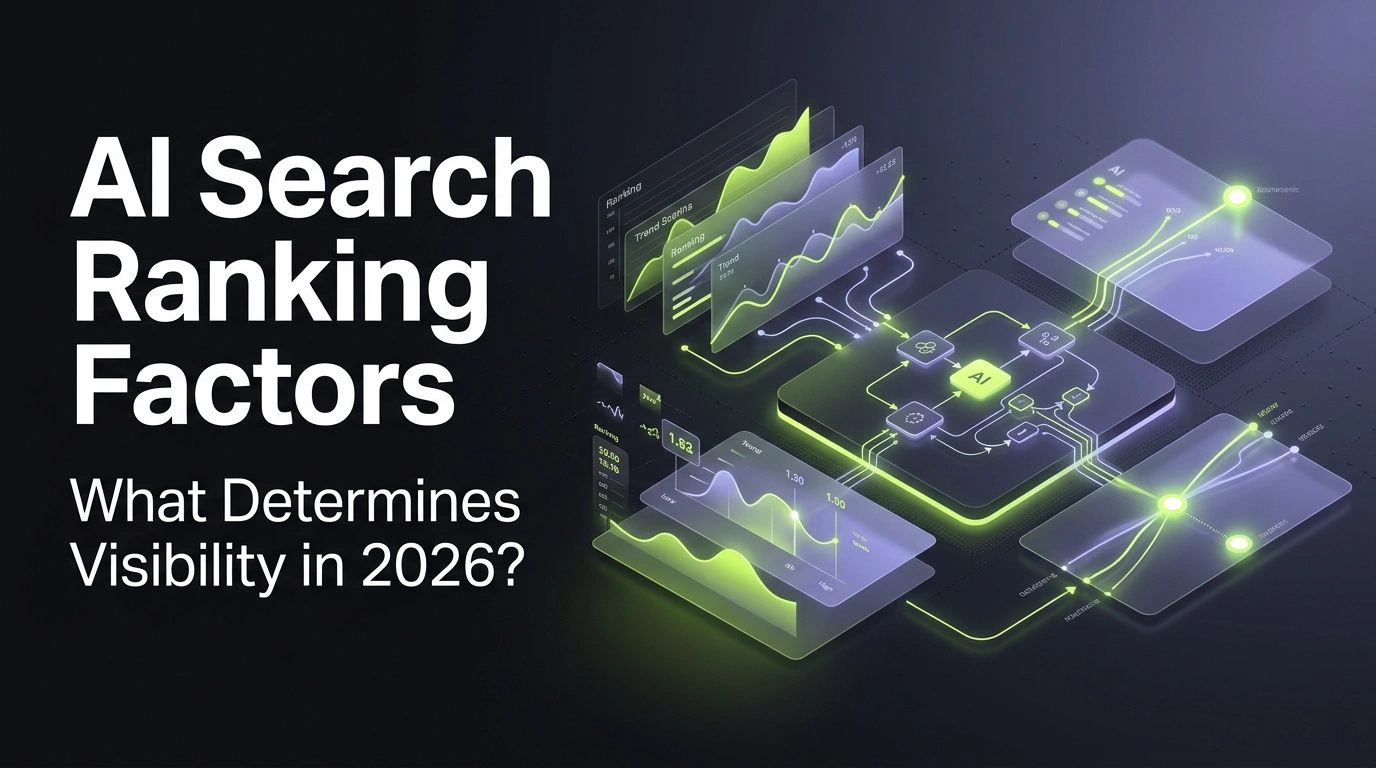
Search rankings are no longer driven by keywords alone. As artificial intelligence becomes deeply integrated into search engines, the way content is evaluated, ranked, and surfaced has fundamentally changed.
Many businesses today are facing a similar challenge. Despite publishing content regularly and following traditional SEO practices, their visibility is either stagnating or declining. The reason is simple. Search engines are no longer just matching keywords. They are interpreting intent, analyzing context, and prioritizing content that delivers real value.
This shift has introduced a new set of ranking dynamics, often referred to as AI search ranking factors.
For businesses operating in competitive and diverse markets like Europe, understanding these factors is not optional. It is essential for maintaining visibility and driving sustainable growth.
In this guide, we will break down how AI search ranking works, the key factors that influence visibility, and how businesses can adapt their strategies to stay competitive in 2026.
What Are AI Search Ranking Factors?
AI search ranking factors refer to the criteria that AI-powered search systems use to evaluate and rank content. Unlike traditional ranking signals that relied heavily on keywords and backlinks, AI-driven systems assess a broader set of elements.
These include search intent, content quality, contextual relevance, user engagement, and overall authority.
In practical terms, this means that ranking is no longer about optimizing for a single keyword. It is about creating content that fully addresses a user’s need while being clear, credible, and easy to interpret.
AI search systems are designed to answer questions, not just display results. As a result, the content that performs best is content that is comprehensive, structured, and genuinely useful.
How AI Search Differs from Traditional Ranking Systems
To understand the importance of AI ranking factors, it helps to compare them with traditional SEO approaches.
Traditional search engines relied heavily on keyword matching and link-based authority. While these signals still matter, they are no longer sufficient on their own.
AI-driven search introduces a more dynamic and layered evaluation process.
Verdict:
AI search shifts the focus from optimization techniques to content effectiveness. It rewards depth, clarity, and relevance over mechanical keyword usage.
Core AI Search Ranking Factors
AI-powered search systems evaluate content using a combination of signals. These factors work together rather than independently, which means a balanced approach is essential.
Content Relevance and Search Intent
At the core of AI ranking is the ability to match content with user intent. Search engines now prioritize pages that directly address what the user is trying to achieve.
Content that answers specific questions, solves problems, or provides clear guidance tends to perform better. This requires going beyond surface-level information and covering topics in a meaningful way.
Content Quality and Clarity
AI systems favor content that is easy to understand and well-structured. Clarity plays a significant role in how information is interpreted and presented.
High-quality content typically demonstrates:
- Logical flow and organization
- Clear explanations without unnecessary complexity
- Accurate and up-to-date information
Content that is difficult to read or poorly structured is less likely to be surfaced in AI-driven results.
Topical Authority and Expertise
Search engines increasingly evaluate whether a website consistently demonstrates expertise in a particular area. This is often referred to as topical authority.
Publishing multiple high-quality pieces around a specific subject helps establish credibility. Over time, this signals to search engines that the website is a reliable source of information.
For businesses, this means moving away from isolated blog posts and toward a more cohesive content strategy.
Context and Semantic Understanding
AI search systems analyze how different concepts relate to each other. This is known as semantic understanding.
Instead of focusing on exact keywords, search engines evaluate whether content covers related ideas, concepts, and entities. This allows them to better understand the depth and completeness of a topic.
Content that connects ideas naturally and provides broader context tends to perform better.
User Engagement Signals
User behavior provides valuable feedback to AI systems. Metrics such as time spent on a page, interaction levels, and return visits help indicate whether content is useful.
If users quickly leave a page, it may signal that the content did not meet their expectations. On the other hand, strong engagement suggests relevance and quality.
While these signals are not always directly visible, they play an important role in ranking decisions.
Content Structure and Formatting
Well-structured content is easier for both users and AI systems to process. Clear headings, logical sections, and concise explanations improve readability and increase the chances of being featured in search results.
Elements that support strong structure include:
- Descriptive headings and subheadings
- Short paragraphs with clear focus
- Organized lists where appropriate
This does not mean over-formatting, but rather creating a clean and intuitive reading experience.
Freshness and Content Updates
Search engines prioritize content that remains relevant over time. Regular updates signal that information is current and reliable.
This is particularly important in industries where information changes frequently, such as technology, healthcare, or finance.
Updating existing content can often be as valuable as creating new content.
Trust, Credibility, and EEAT
Experience, expertise, authority, and trust play a central role in AI-driven ranking systems.
Search engines assess whether content comes from a credible source and whether it can be trusted. This includes factors such as author expertise, brand reputation, and content accuracy.
Building trust is a long-term process, but it is essential for sustained visibility.
Multilingual and Localization Signals
For businesses targeting European markets, language and localization are critical ranking factors.
AI systems evaluate whether content aligns with local search intent and cultural context. Simply translating content is not enough. It must be adapted to reflect how users in each region search and interact with information.
Localized content often performs better because it feels more relevant and specific to the audience.
Technical SEO and Accessibility
While AI introduces new ranking factors, technical SEO remains an important foundation.
Search engines still rely on technical signals to access and interpret content. This includes page speed, mobile responsiveness, and proper indexing.
Structured data also plays a key role by helping search engines understand the content more effectively.
How AI Ranking Factors Impact Businesses
The shift to AI-driven ranking changes how businesses approach content and SEO strategies.
First, it raises the bar for quality. Content must now be genuinely useful, not just optimized for keywords.
Second, it increases the importance of consistency. Building authority requires ongoing effort and a clear focus on specific topics.
Finally, it reduces the effectiveness of shortcuts. Tactics that once delivered quick results are less reliable in an AI-driven environment.
Businesses that adapt to these changes will be better positioned to compete.
How to Optimize for AI Search Rankings
Adapting to AI search requires a more thoughtful and structured approach to content creation.
The starting point is understanding user intent. Every piece of content should aim to answer a specific question or solve a clear problem.
From there, businesses should focus on building depth and authority within their niche. Instead of creating scattered content, it is more effective to develop comprehensive topic clusters.
To improve performance, consider the following principles:
- Prioritize clarity and readability in all content
- Use structured formatting to improve accessibility
- Maintain accuracy and regularly update information
- Focus on building long-term authority rather than quick wins
- Adapt content for different languages and regions when targeting Europe
Ultimately, optimization for AI search is about aligning content with how users think and search.
AI Search Ranking in Europe
The European market introduces additional complexity into AI-driven search strategies.
Language diversity is one of the most significant factors. Businesses must create content that resonates with users across different regions while maintaining consistency in messaging.
Cultural differences also influence how users search and interpret information. This requires a more nuanced approach to content creation.
In addition, regulatory frameworks impact how data is used, which can affect personalization and targeting.
For businesses expanding in Europe, success depends on combining strong AI SEO practices with localized strategies that reflect regional differences.
The Future of AI Search Rankings
AI search is still evolving, and ranking factors will continue to change over time.
However, a few trends are already clear. Search will become more personalized, more conversational, and more focused on delivering direct answers.
The role of keywords will continue to decline in importance, while content quality and authority will become even more critical.
Businesses that invest in understanding these trends now will be better prepared for the future.
Ready to Improve Your AI Search Visibility?
As search continues to evolve, businesses need to rethink their SEO strategies to stay competitive.
At UnFoldMart, we help startups, mid-size businesses, and enterprises build AI-driven SEO strategies that align with modern search systems and deliver measurable growth across European markets.
If you are looking to improve your visibility and stay ahead of AI-driven changes, our team can help you build a strategy that works.
👉 Book a strategy call with UnFoldMart to explore your growth opportunities.
FAQs
Got Questions? We’ve Got Answers – Clear, Simple, and Straight to the Point
Still have questions?
No question is too small—let’s talk

Want to Turn Your Brand Into a Scalable Growth Engine?
We help modern businesses unify branding, websites, SEO, and paid media into one performance-driven system designed to scale.