How AI Is Changing Search in Europe (2026 Guide for Businesses)
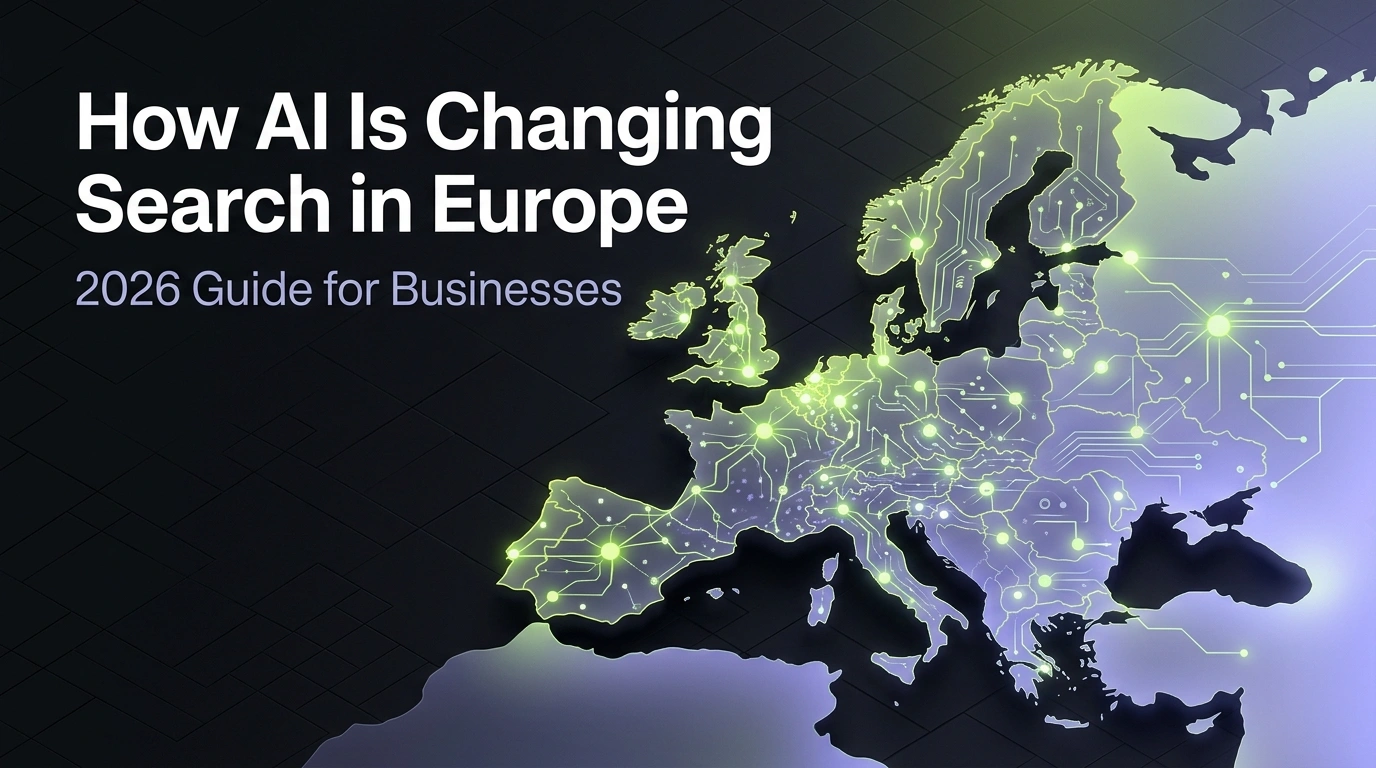
Search is undergoing a fundamental transformation. With the rise of artificial intelligence in search engines, the way users discover information online is rapidly evolving. Traditional search results are being replaced by AI-generated answers, personalized recommendations, and conversational experiences.
In Europe, this shift is even more complex. Businesses must navigate multiple languages, diverse consumer behaviors, and strict data privacy regulations while adapting to AI-driven search.
For startups, mid-size companies, and enterprises expanding across European markets, this presents both a challenge and an opportunity. Companies that adapt early can gain a significant competitive advantage, while those that rely on outdated SEO strategies risk losing visibility.
This is where understanding AI-driven search becomes critical.
In this guide, we will explore how AI is changing search in Europe, what it means for SEO strategies, and how businesses can adapt to stay competitive in 2026 and beyond.
What Is AI-Driven Search?
AI-driven search refers to the use of artificial intelligence technologies such as machine learning and natural language processing to improve how search engines understand and respond to user queries.
Instead of simply matching keywords, AI-powered search engines analyze context, intent, and user behavior to deliver more relevant and personalized results.
This includes:
- AI-generated summaries and answers
- Conversational search responses
- Personalized search experiences
- Predictive search suggestions
In simple terms, AI-driven search focuses on delivering answers, not just links.
Key Ways AI Is Changing Search in Europe
Artificial intelligence is reshaping search behavior and results across European markets in several important ways.
1. AI-Powered Search Results and Zero-Click Searches
Search engines are increasingly providing direct answers within the results page. Users can now get information without clicking on a website.
This trend is leading to a rise in zero-click searches, where visibility depends on being featured in AI-generated answers rather than just ranking high.
2. Multilingual Search Optimization
Europe’s diverse linguistic landscape makes search more complex. AI helps search engines understand and process queries across multiple languages.
For businesses, this means content must be optimized not just for translation, but for local intent and cultural relevance.
3. Personalized Search Experiences
AI enables search engines to tailor results based on user location, preferences, and behavior.
For example, search results in Germany may differ significantly from those in the Netherlands or Switzerland, even for the same query.
4. Rise of Conversational and Voice Search
Users are increasingly using natural, conversational queries instead of short keywords.
Voice search is also growing across Europe, requiring businesses to optimize for spoken language and question-based queries.
5. Semantic Search and Intent Matching
Search engines now focus on understanding the meaning behind queries rather than exact keyword matches.
This requires businesses to create content that covers topics comprehensively and aligns with user intent.
6. Visual and AI-Assisted Search
AI is enabling new search formats, including image-based and multimodal search experiences.
This is particularly important for ecommerce and product-driven businesses across Europe.
Impact on SEO Strategies in Europe
The rise of AI-driven search is changing how businesses approach SEO.
Shift from Keywords to Topics
Businesses must move beyond keyword targeting and focus on building topic authority through comprehensive content.
Importance of High-Quality Content
Content must provide clear, valuable, and well-structured information that can be used in AI-generated answers.
Multilingual SEO Becomes Essential
Optimizing for multiple languages and regions is no longer optional for businesses targeting European markets.
Technical SEO and Structured Data
Structured data helps search engines understand content better and increases the chances of appearing in AI-generated results.
Optimization for AI Search Results
Businesses need to optimize content for featured answers, summaries, and conversational queries.
Traditional Search vs AI-Driven Search: Key Differences
Verdict:
AI-driven search is reshaping how users interact with search engines. Businesses must adapt their SEO strategies to focus on visibility within AI-generated results, not just traditional rankings.
Challenges for Businesses in Europe
Adapting to AI-driven search in Europe comes with several challenges.
Language Diversity
Europe has multiple languages, making content localization complex.
Cultural Differences
User behavior and preferences vary across countries, requiring tailored strategies.
Data Privacy Regulations
Strict regulations such as GDPR impact how businesses collect and use data for personalization.
Market Fragmentation
Each European market operates differently, requiring region-specific SEO strategies.
Increased Competition
As AI lowers barriers to content creation, competition for visibility is increasing.
Opportunities Created by AI Search
Despite the challenges, AI-driven search creates significant opportunities.
Faster Market Entry
AI tools enable quicker localization and content scaling across regions.
Scalable Content Production
Businesses can produce large volumes of optimized content efficiently.
Better Targeting
AI helps identify user intent and deliver more relevant content.
Improved User Experience
Personalized and conversational search improves engagement.
Competitive Advantage
Early adopters of AI-driven SEO can outperform competitors.
How Businesses Can Adapt to AI Search in Europe
To succeed in AI-driven search, businesses need to evolve their strategies.
Invest in AI SEO Tools
Leverage tools for keyword research, content optimization, and data analysis.
Focus on Intent-Driven Content
Create content that answers user questions clearly and comprehensively.
Build Multilingual Strategies
Develop localized content tailored to specific European markets.
Optimize for AI Results
Structure content to appear in summaries, featured answers, and voice search results.
Use Data for Decision-Making
Rely on analytics and insights to refine strategies continuously.
AI Search for Businesses Expanding in Europe
For companies entering European markets, AI-driven search can simplify expansion.
For example:
- A SaaS company entering Germany can use AI to identify local search trends and create German-language content tailored to user intent.
- An ecommerce brand expanding into the Netherlands can optimize product listings and campaigns for local search behavior in cities like Amsterdam and Rotterdam.
- A healthtech company targeting Switzerland can build multilingual strategies for regions such as Zurich and Geneva.
AI reduces the complexity of localization, helping businesses scale faster and more efficiently across markets.
The Future of Search in Europe
The future of search in Europe will be shaped by continued advancements in AI.
Key trends include:
- Increased personalization of search results
- Growth of voice and conversational search
- Expansion of visual and multimodal search
- Reduced reliance on traditional search result pages
- Rise of AI assistants as primary search interfaces
Businesses that adapt to these trends early will be better positioned for long-term growth.
Ready to Adapt to AI-Driven Search in Europe?
As AI continues to transform search, businesses must rethink their SEO strategies to stay competitive, especially in diverse and dynamic European markets.
At UnFoldMart, we help startups, mid-size businesses, and enterprises build AI-driven SEO strategies that improve visibility, drive traffic, and support scalable growth across Europe.
Whether you are entering new markets or optimizing your current strategy, our team can help you navigate the future of search with confidence.
👉 Book a strategy call with UnFoldMart to explore your growth opportunities.
FAQs
Got Questions? We’ve Got Answers – Clear, Simple, and Straight to the Point
Still have questions?
No question is too small—let’s talk

Want to Turn Your Brand Into a Scalable Growth Engine?
We help modern businesses unify branding, websites, SEO, and paid media into one performance-driven system designed to scale.